


The Seesaw Effect
There will be compliance challenges for auto dealers, even while Trump is in office.

Car dealers may be the most regulated and disfavored industry by consumer advocates in the United States.
Pexels/Minh Tran
Elections have consequences, proclaimed a former president. Those consequences portend pendulum swings regarding governmental regulation, and prosecutions, especially for auto dealers.
Regulation declines when conservative forces ascend to power. Conversely, regulation becomes a major thrust when liberal or progressive political elements take control of the government. Car dealers may be the most regulated and disfavored industry by consumer advocates in the United States and become a major target in the latter case. “Disfavored” in this context means a business whose consumer-protection policies are allegedly questionable and hence needing further scrutiny and regulation. The proposed CARS Rule, Junk Fee Rule and other regulations in the past few years bear evidence of these oscillations.
The New Nonregulation Environment
President Trump has said that any new regulation should pair with the repeal of 10 existing regulations. The ratio was one regulation per two repealed ones in his previous administration. In French, the concept is laissez-faire, literally “allow to do” or “let them do it,” an economic policy which advocates for minimal economic government intrusion. This fiscal reasoning ostensibly furthers free markets, which are believed to produce more wealth for society and thereby enhance personal prosperity.
The Great DOGE Eraser – Excising the CFPB
A case in point is the vow of the Department of Government Efficiency, or DOGE, spokesman, Elon Musk, when he endorsed eradicating the Consumer Financial Protection Bureau. This avowal is consistent with the Project 25 agenda, which recommends both abolishing the CFPB and reversing Section 1061 of the Dodd-Frank Act. These actions would return those transferred functions to their original agencies. For example, the Federal Reserve would once again oversee the regulation of the Truth in Lending Act.
Prosecutorial Discretion
In addition to striking current regulations and not adding new ones, the Trump administration plans to employ prosecutorial discretion. This discretion is the authority of an agency to decide how to enforce the law against alleged violators. The Federal Trade Commission, for example, will probably not be as vigorous in its prosecutions under the new administration.
Nature Abhors a Vacuum – When the Teeter is Down the Totter is Up
Progressive politicians abhor a regulation vacuum. The alphabet collective of consumer rights groups, DAGA, PIRG, CFA, NCLC, NACA, ABA, CRL and Public Citizen, along with the ever-eager class-action bar, are preparing to fill this vacuum and totter up. Public Citizen, for example, criticized Musk’s call to eliminate the CFPB as “intolerable corruption.” A major newspaper proclaimed that “[democratic] attorneys general have also become the muscle of the resistance.” Trump’s first administration was sued 155 times by blue-state attorneys general. There is little doubt that certain state attorneys general will increase their role by ramping up their own enforcement actions, as well as participating in multistate actions on dealer infractions. Considering that complaints about cars are the most common complaint state attorneys general receive, dealers need to be vigilant. The NCLC National Consumer Law Center issued a press release about the new Trump administration which is essentially a rallying cry for consumer advocates: “In this second term, we will redouble our efforts to partner with civil rights and grassroots organizations to defend consumer rights.”
State Mini-CFPBs
When Trump first took office in 2017, many states sought to fill a perceived gap in areas previously overseen by the CFPB, creating new consumer-protection agencies or departments, informally deemed “mini CFPBs.” Various states, such as California, Maryland, New Jersey and Pennsylvania, began these programs, with other states adding subagencies for these purposes. The programs will likely be reinitialized to correct for the expected discontinuance of regulatory and prosecutorial activity.
Conclusion – A Word to the Wise
A potential dearth of federal regulatory activity will not yield an absence of consumer law enforcement. There will probably be an increase of investigations and prosecutions in the blue states since those government officials will be more alert to absent federal action. Consumer advocates in the red states will attempt to compensate for this absence. However, all federal and state consumer-protection agencies are required to enforce the law, and they shall continue doing so if the offense warrants such action. Smart dealers will be watching both ends of the seesaw and continue their sanguine compliance efforts.
Originally posted on F&I and Showroom
More Industry

Achromatic Autos
The shades that dominate the U.S. car market don’t call attention to themselves, though grayscale may have plateaued after a 30-year upswing, research shows.
Read More →
Used-Vehicle Affordability Worsens
Listing prices in August defied seasonal trends, rising above $27,000 for the second time this year.
Read More →
First-Half Dealership Deals Up
Buy-sell activity shows that acquirers are looking for value and scale as many retailers seek to leave an increasingly competitive and complex market, Kerrigan Advisors reports.
Read More →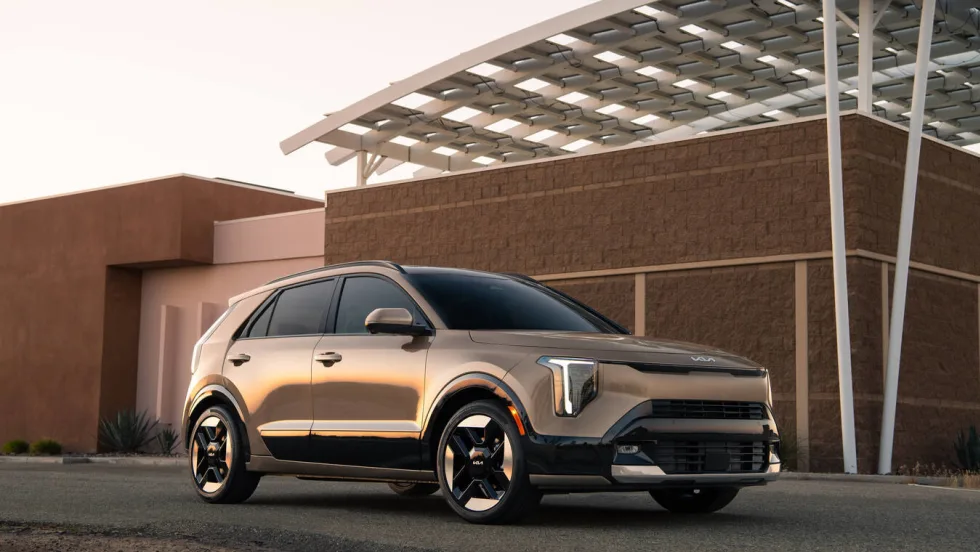
Kia Closes Out Summer With a Bang
Its U.S. subsidiary broke multiple records in August, in part due to a surge of demand for hybrids models.
Read More →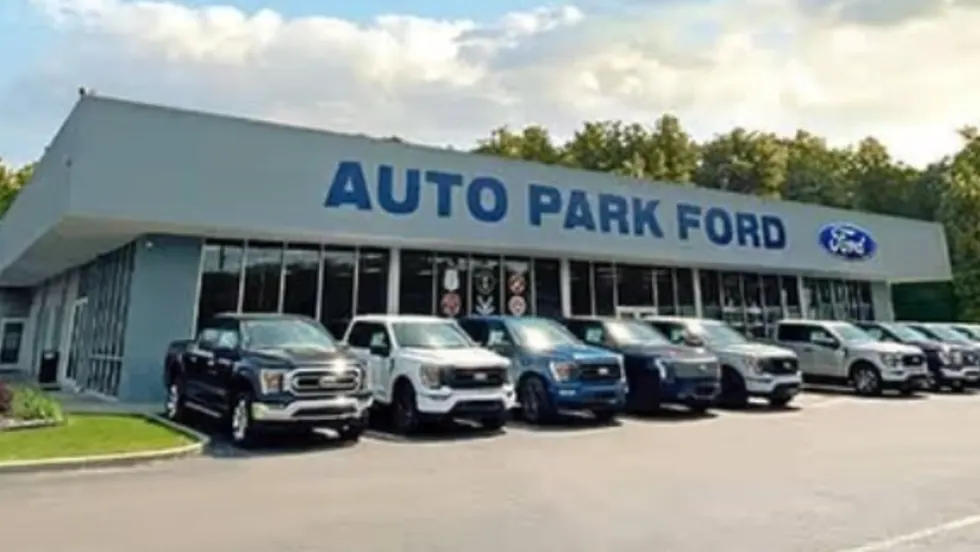
Indiana Dealership Changes Hands
A 30-year-old Ford dealership in Indiana has a new owner and will soon be undergoing renovations to meet manufacturer requirements.
Read More →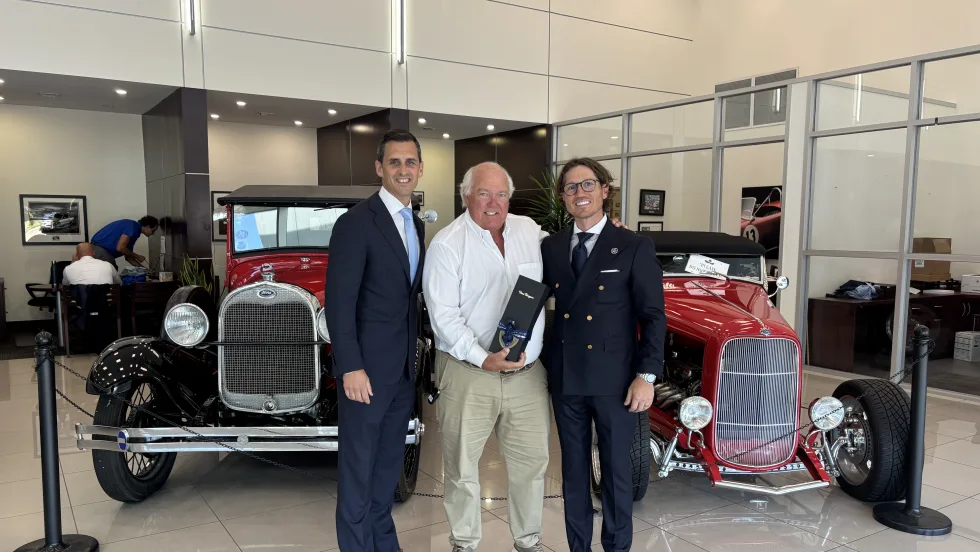
Texas Dealership No Longer in the Family
The Ford store, a longtime cornerstone of the Houston market, is now part of one of the fastest-growing U.S. auto groups.
Read More →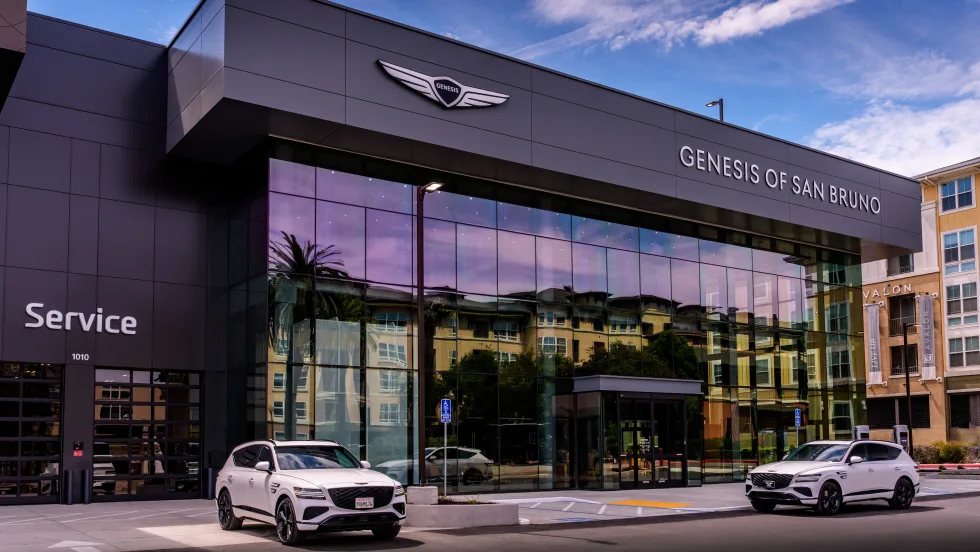
Genesis Grows California Presence
The Cardinale Automotive Group opened its third Genesis rooftop in the Golden State, Genesis of San Bruno, a stand-alone dealership serving the San Francisco Bay Area.
Read More →
August Auto Sales a Mixed Bag
An early forecast shows strong business despite consumer hurdles, and hybrids are a big piece of their affordability coping strategy.
Read More →
EV Market Humming Along
July sales show steady growth as the segment stabilizes from last year’s artificial surge following pullback of federal support.
Read More →
Auto Loan Delinquency Rates Stabilize
Auto loans are a main driver of nonmortgage consumer debt, but delinquency rates stabilized in the second quarter across all credit risk tiers.
Read More →