


Utilizing Vehicle History to Minimize Portfolio Risk
Incorporating vehicle history reports into the lending decisions can help uncover hidden issues with the vehicle and adjust loan terms accordingly.
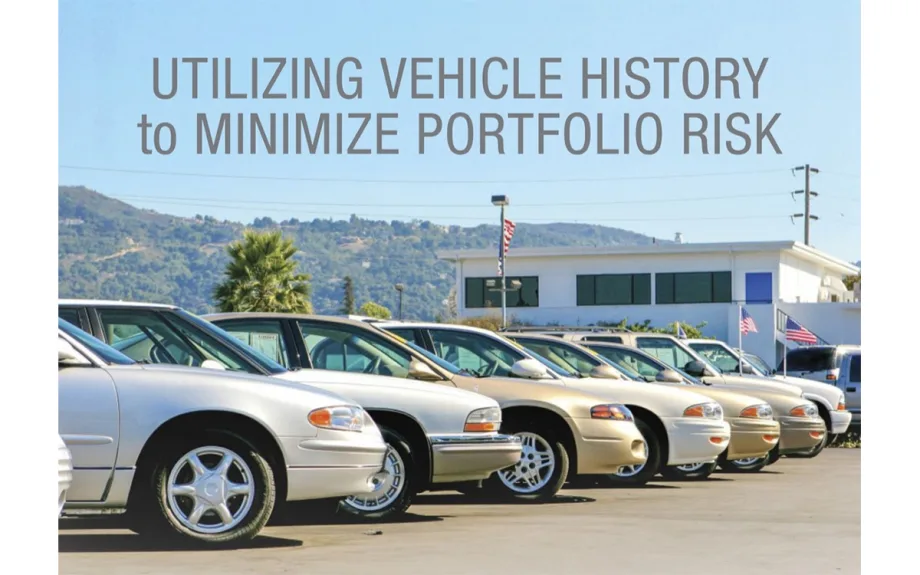
Incorporating vehicle history reports into the lending decisions can help uncover hidden issues with the vehicle and adjust loan terms accordingly.
IMAGE: GettyImages.com
While the automotive industry suffered an immediate impact due to stay-at-home orders and business restrictions during the early stages of COVID-19, it has slowly rebounded over the last several months. Even with the recovery, there’s still economic uncertainty moving forward. Many lenders will look to mitigate portfolio risk while continuing to extend loans to prospective car buyers. To accomplish this, more traditional risk attributes, such as a borrower’s credit score, payment history and utilization rate, will continue to factor into lending decisions. However, during these extraordinary times, lenders should also consider an underutilized tool — vehicle history.
With so much economic uncertainty still lingering, it’s important for lenders to feel confident in the loans they are extending while finding ways to make the loan manageable for consumers.
Often, vehicle history reports are considered a tool for dealers and consumers. But if we drill down into its value proposition — identifying potential hidden defects during the used car buying process — vehicle history reports can benefit lenders as well.
Think about it. A lender’s portfolio risk does not solely rest on the consumer, there’s also inherent risk within the vehicles. For instance, if a vehicle has hidden defects, the owner may have to spend more on maintenance, ultimately hindering their ability to make a monthly payment. Or, if the vehicle is repossessed, unidentified damage that impacts the vehicle’s drivability could hurt a lender’s potential to recoup losses at auction. The more lenders understand about the used vehicles they’re financing, the better positioned they will be to adjust loan terms and mitigate risk exposure.
The Impact of Unidentified Physical Damage
According to Experian’s Q3 2020 Market Trends Review, there are more than 281 million vehicles on the road. And our research indicates approximately four out of 10 of the cars and light-duty trucks on the road have been in at least one accident, and around 20% of all vehicles in operation have been in multiple accidents. That’s a significant volume of vehicles on the road that have been in at least one accident, particularly when considering the universe of used vehicles that could potentially be financed down the line.
Even if a vehicle has been completely reconstructed and repaired, the value of the vehicle still diminishes. A recent Mitchell Industry Trends Physical Damage Report states, in Q2 2019, the average diminished value for a vehicle involved in an accident was $3,151, and the diminished value could be higher depending on the severity of the damage. In other words, if a lender unknowingly finances a vehicle that has been in an accident for $10,000, the actual value of the vehicle may be around $7,000 — a significant discrepancy that could be costly for lenders.
In some cases, lenders rely on intensive expert inspections to evaluate the current condition of an individual vehicle; however, these require significant time and physical access to the vehicle. With business restrictions and social distancing, it isn’t easy to implement the process at scale. Vehicle history reports can make the process more efficient and provide lenders with insight into reported accidents.
The Lending Landscape
The risk associated with financing a used vehicle is more than physical damage. High mileage, older vehicles, numerous owners and excessive usage can make a used vehicle a riskier addition to a lender’s portfolio. But every lender has their own tolerance for risk. Vehicle history will identify and provide details of risk factors which can help lenders make more strategic lending decisions.
For instance, based on a case study by Experian, that surveyed more than seven million loan applications over a three-year period, we found independent dealers had a much higher rate (29.94%) of loan applications for vehicles considered high risk compared to franchise dealers (6.58%). In addition, vehicles associated with loan applications for independent dealers were more likely to experience a negative vehicle history event. Interestingly, minivans had the highest frequency of negative vehicle history events at nearly 55%, while trucks had the lowest at 32.51%.
Extending loans to a wide range of car shoppers is still a priority; however, lenders need to mitigate portfolio risk. While lenders may feel comfortable with the loan applicant, there may be some hidden risk within the vehicle itself. With so much economic uncertainty still lingering, it’s important for lenders to feel confident in the loans they are extending while finding ways to make the loan manageable for consumers. Incorporating vehicle history reports into the lending decisions can help uncover hidden issues with the vehicle and adjust loan terms accordingly.
Kirsten Von Busch is Experian’s senior product manager of AutoCheck.
Originally posted on F&I and Showroom
More Industry

The Powertrain Shift
Electric-vehicle owners are backpedaling, according to new data, with product availability driving many to shift back to gas-powered engines.
Read More →
Achromatic Autos
The shades that dominate the U.S. car market don’t call attention to themselves, though grayscale may have plateaued after a 30-year upswing, research shows.
Read More →
Used-Vehicle Affordability Worsens
Listing prices in August defied seasonal trends, rising above $27,000 for the second time this year.
Read More →
First-Half Dealership Deals Up
Buy-sell activity shows that acquirers are looking for value and scale as many retailers seek to leave an increasingly competitive and complex market, Kerrigan Advisors reports.
Read More →
Kia Closes Out Summer With a Bang
Its U.S. subsidiary broke multiple records in August, in part due to a surge of demand for hybrids models.
Read More →
Indiana Dealership Changes Hands
A 30-year-old Ford dealership in Indiana has a new owner and will soon be undergoing renovations to meet manufacturer requirements.
Read More →
Texas Dealership No Longer in the Family
The Ford store, a longtime cornerstone of the Houston market, is now part of one of the fastest-growing U.S. auto groups.
Read More →
Genesis Grows California Presence
The Cardinale Automotive Group opened its third Genesis rooftop in the Golden State, Genesis of San Bruno, a stand-alone dealership serving the San Francisco Bay Area.
Read More →
August Auto Sales a Mixed Bag
An early forecast shows strong business despite consumer hurdles, and hybrids are a big piece of their affordability coping strategy.
Read More →
EV Market Humming Along
July sales show steady growth as the segment stabilizes from last year’s artificial surge following pullback of federal support.
Read More →