


8 Auto Tech Trends to Watch in 2019
Autotrader has announced the Best New Automotive Technology for 2019, a list that skews toward advanced safety systems and smartphone connectivity.

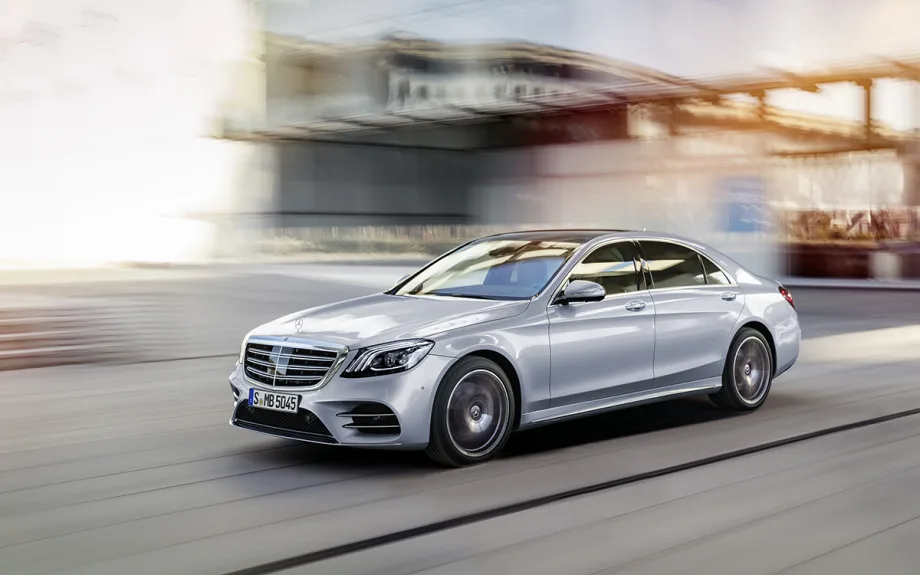
The S-Class is among the Mercedes-Benz models that feature available Magic Body Control, a camera-based road-scanning safety system.
Photo courtesy Mercedes-Benz USA
ATLANTA — Autotrader’s editorial team has released their list of the Best New Automotive Technology for 2019. Designed to help new-car buyers select among available options and features, this year’s list includes several solutions tied to enhanced safety and smartphone integrations.
“From surround-view cameras to steering avoidance, new technology features can give drivers a better look at what’s around them or extra help to prevent collisions,” said Tara Trompeter, managing editor for Autotrader. “Car buyers can find many of these technology options in every segment, from sub-compact cars to full-size SUVs, making it worth checking closely to see what’s available across different models and brands.”
Autotrader’s Best New Automotive Technology for 2019:
• High-resolution, multi-angle surround-view cameras: Surround-view cameras are moving from luxury vehicles into mainstream sedans and family SUVs, including vehicles from Chevrolet and Nissan. These cameras can improve visibility outside of the vehicle to minimize blind spots and assist with parking. They also can be used inside the vehicle to keep an eye on back-seat passengers. Traditionally low-res feeds also are now being replaced with crisp, clean, high-res imagery.
• Apple CarPlay and Android Auto: Many automakers are now offering a better way to connect your smartphone to the vehicle’s infotainment screen, allowing you to take advantage of your apps, contacts and music. Chief among the benefits is the ability to use smartphone navigation apps. A few automakers, such as BMW, also are offering the connection wirelessly.
• Wireless charging: Tired of keeping track of those charging cords? New smartphones from Google, Apple and Samsung offer wireless charging capability. Automakers, including Honda, Hyundai, Ford and Toyota, have taken note and now offer a standard or optional feature to wirelessly charge devices through charging pads, typically in the center console.
• Vehicle control via an app: Taking even greater advantage of your smartphone, automakers are increasingly allowing you to interact with your vehicles remotely using a mobile app. Honk the horn, flash the lights, start the car or monitor the area around your vehicle — all from the app. Tesla is a leader in this segment, while Buick, Chevrolet, BMW, Lincoln, Volvo and others offer their own solutions. Most are free or require a small monthly subscription fee.
• Steering avoidance As we move closer to a fully automated future, new features inch closer to that reality. Vehicles from Volvo, Lexus and others can be had with steering avoidance systems able to automatically swerve to miss objects in the road ahead or keep your car centered in the lane.
• Digital gauges: Digital gauges in some models are replacing static, physical gauges to create a dynamic screen for sharing more relevant and customizable information. Audi’s Virtual Cockpit system is one of the leading designs in the industry, but more mainstream automakers, including Ford and Mazda, have adopted their own variations of the digital gauge cluster as well. These gauges can provide a better view of vehicle behavior and performance, such as fuel efficiency, and also can incorporate navigation directions.
• Road scanning: A more advanced feature found in luxury lines, road scanning uses cameras to search the road ahead for imperfections and automatically adjust the vehicle’s suspension to account for them. Mercedes-Benz’s Magic Body Control is among the leaders in this area. While not widely available yet, road scanning systems can deliver a smoother, quieter ride and should be considered for high-end vehicles.
• Semi-autonomous driving: While we’re still years from a vehicle that can drive itself without any human input, semi-autonomous driving features that compensate for human error are becoming more commonplace. The most noteworthy development in this area is Cadillac’s Super Cruise system, which can pilot the vehicle at speeds of zero to 85 miles per hour, allowing the driver to take their hands off the wheel. Tesla and other automakers have their own versions of this technology, and more automakers are expected to introduce their own versions in the very near future.
For more details and information about Autotrader’s list, click here.
Originally posted on Auto Dealer Today
More Industry
Badger State Dealership Gets New Owner
The longtime southern Wisconsin store moved from one area auto group to another, keeping the business in Dairyland.
Read More →
The Cycle of Negative Equity
Third-quarter data shows consumers still rolling over debt and stretching loan terms, raising their risk of remaining underwater.
Read More →
Charger Network Growth Slows
Despite a projected increase in public EV chargers in 2026, charging infrastructure remains a top concern for consumers as the gap between the most and least EV-friendly places remains substantial.
Read More →
Lenders, Consumers Take on More Auto Loan Risk
September records loosened credit access the most in over a decade as buyers took advantage of the conditions to afford trading, though loan applications fell.
Read More →
Next-Gen Hybrids in Sight
Dealerships can expect to see revamped hybrids from Honda next year as the company rolls out a new system and model lineup.
Read More →
Gem State Stores Change Hands
A larger auto group founded in the industry’s early years sold two franchises to a neighbor group that's on a growth spurt.
Read More →
Charging In Motion
Honda has been researching wireless in-motion charging for electric vehicles since 2025, and new technology developments have put it a step closer to a final product.
Read More →
Twin Cities Stores Sell
Minnesota-based Walser Automotive Group made what it called the most significant acquisition in its history with a three-rooftop deal in Minneapolis.
Read More →
U.S. Auto Sales Still Below Prepandemic Levels
Mobility Global industry observers don’t expect the market to return to the higher volumes that became routine before Covid but to stay well below its potential.
Read More →
The Powertrain Shift
Electric-vehicle owners are backpedaling, according to new data, with product availability driving many to shift back to gas-powered engines.
Read More →