


Car Wreck: Honda and Toyota

Two years ago, Honda Motor Co. and Toyota Motor Corp. were among the most envied auto makers in the world. Today, the combination of a strong Japanese yen, two natural disasters and strategic missteps have made them among the most troubled.
On Monday, Honda said it was powerless to stop the forces afflicting it, withdrawing a profit forecast for the fiscal year and posting earnings that declined 56 percent on production disruptions and weak sales for the quarter ended Sept. 30, according to The Wall Street Journal.
Honda's position bodes ill for other major Japanese car makers and exporters set to release their earnings in coming weeks. The dollar rose from recent postwar lows against the yen on Monday, up 3 percent at ¥78.18, but still shy of the level that big Japanese auto makers have based their fiscal-year forecasts. Honda now expects the dollar to average ¥75 for the second half of the fiscal year ending in March, compared with ¥80 previously.
A strong yen undermines the price competitiveness of Japanese-made autos and other goods and reduces the value of profits earned overseas.
On top of the high yen, Japan's big exporters have been hit by a shortage of autos, electronics and other parts made in Thailand, where flooding has swamped a big swath of its industrial areas. Honda and Toyota both cut production at plants in the U.S., Canada and Asia as a result of the disruption.
Citing the uncertainty brought about by the Thai flooding, Honda officials said it might be difficult to resume production in Thailand in the next few months and a sales executive warned that some U.S. customer orders might not be delivered until December or January.
"Frankly speaking, there is nothing we can do," Honda Chief Financial Officer Fumihiko Ike said Monday during a briefing on quarterly results. Honda last month said it would reduce exports from Japan by 50 percent over the next decade because of the strong yen.
Troubles related to the yen and the Thai floods come as both Honda and Toyota are working to get back to normal operations in the wake of the March 11 earthquake and tsunami in Japan.
Because of shortages of vehicles made in its Japanese plants, Honda is on track to lose more than a percentage point of U.S. market share this year, and Toyota nearly three points of share.
Since the end of 2009, Toyota's U.S. market share has dropped 4.5 percentage points to 12.5 percent through September, a staggering decline in its biggest and most profitable market.
But the problems go beyond production disruptions. Consumers aren't as enamored with the two auto makers' vehicles as they have been in the past. Toyota in particular was hurt by the recall and quality issues it suffered in 2010 that traced to a gas-pedal design that became trapped by floor mats.
Honda's redesigned 2012 Civic compact has been heavily criticized for a less-than-luxurious interior and old technology. For example, it has a five-speed transmission while competitors including the Chevrolet Cruze and Hyundai Elantra, have a six-speed drive. Consumer Reports magazine, which for years gave the Civic glowing reviews, dropped the new model from its recommended list.
Now Honda must do a makeover on the Civic to spice up sales, said Rick Case, whose Ft. Lauderdale, Fla., dealership is among the largest in the U.S. "We've been going along pretty consistently for 40 years, until now. Now we don't know what's going to happen with it."
Mr. Case said his store's sales are finally starting to recover after months of supply shortages caused by the earthquake. His business will be up 20 percent in October compared to September. "But I'll still be down 20 percent from a year ago," he said.
At the same time, vehicles made by the Detroit auto makers have become more much competitive, and Hyundai Motor Co. of South Korea and Nissan Motor Co., which has ramped up production after the March earthquake much faster than Toyota and Honda, have been gaining customers.
Of all challenges Honda and Toyota face, the rising yen is the most serious, say industry experts. On Monday, the Japanese government, which is worried that companies will move production and jobs out of Japan to reduce costs, intervened to prop up the yen.
Honda is already rethinking its dependence on auto production in Japan. Earlier this year it said it is planning to build a plant in Mexico to produce the Fit subcompact, a car now exported from Japan. Nissan has made similar moves. It now produces one model in Thailand and exports it to Japan, a move that was once unthinkable. Japanese chip maker Elpida Memory Inc. and consumer electronics maker Panasonic Corp. also said they should or would shift production overseas.
So far, Toyota has resisted the trend, insisting it remains committed to making three million cars a year in Japan. It exports half of those vehicles. Toyota reports its second-quarter earnings on Nov. 8.
For its latest quarter, Honda said its profit fell to ¥60.4 billion ($796.5 million) from ¥135.9 billion a year ago. On Tuesday, analysts expect the company to report that its U.S. sales declined in October from a year ago.
The reversal of fortune for Toyota and Honda is a remarkable change because 2009 marked the bankruptcies of General Motors Co. and Chrysler Group LLC, a time when the U.S. market shares for Toyota and Honda reached their zenith.
Honda and Toyota are also well behind GM and Volkswagen AG in China, now the world's largest auto market, and have dealt with labor discord there that other auto makers have been able largely to avoid.
"For a long time we've known the yen is going to continue to strengthen over time and Japan become a higher cost of production base, and those companies that were able to move more quickly to lower-cost countries will benefit," said Jim Press, a former Toyota board member and chief of North American operations, who now consults for Nissan. "It's a long-term trend and some have been able to be more proactive."
Toyota, meanwhile, has been adamant about keeping a sizable production base in Japan. Earlier this year, it opened its first new domestic manufacturing plant in rural northeast Japan to export subcompacts. It's difficult to make money on small cars even with normal exchange rates, but nearly impossible now.
Inside Toyota, there is division among the company's leadership about moving more production outside its home market.
Chief Executive Officer Akio Toyoda has been steadfast in his desire to maintain plants in Japan, where he feels the expertise of the workers gives the company a global edge. But Chief Financial Officer Satoshi Ozawa has said on two occasions that he isn't sure it is reasonable to continue doing so.
An adviser to Mr. Toyoda said he is fighting off pressure from other executives to shift more production out of the country, seeing the currency fluctuation as temporary.
Toyota is noted for taking a long view and is willing to wait for the yen to weaken rather than move production, which would require a 10-year training period for the company to feel workers and management are up to speed.
In the early 1990s, the yen strengthened and it hurt Toyota, but the currency later weakened again and led Toyota to report huge profits.
In fact, just five years ago, Toyota executives were privately complaining that they had overbuilt factories in the U.S. at the expense of Japan when the yen was trading at upwards of 120 to the U.S. dollar.
More Industry

Charger Network Growth Slows
Despite a projected increase in public EV chargers in 2026, charging infrastructure remains a top concern for consumers as the gap between the most and least EV-friendly places remains substantial.
Read More →
Lenders, Consumers Take on More Auto Loan Risk
September records loosened credit access the most in over a decade as buyers took advantage of the conditions to afford trading, though loan applications fell.
Read More →
Next-Gen Hybrids in Sight
Dealerships can expect to see revamped hybrids from Honda next year as the company rolls out a new system and model lineup.
Read More →
Gem State Stores Change Hands
A larger auto group founded in the industry’s early years sold two franchises to a neighbor group that's on a growth spurt.
Read More →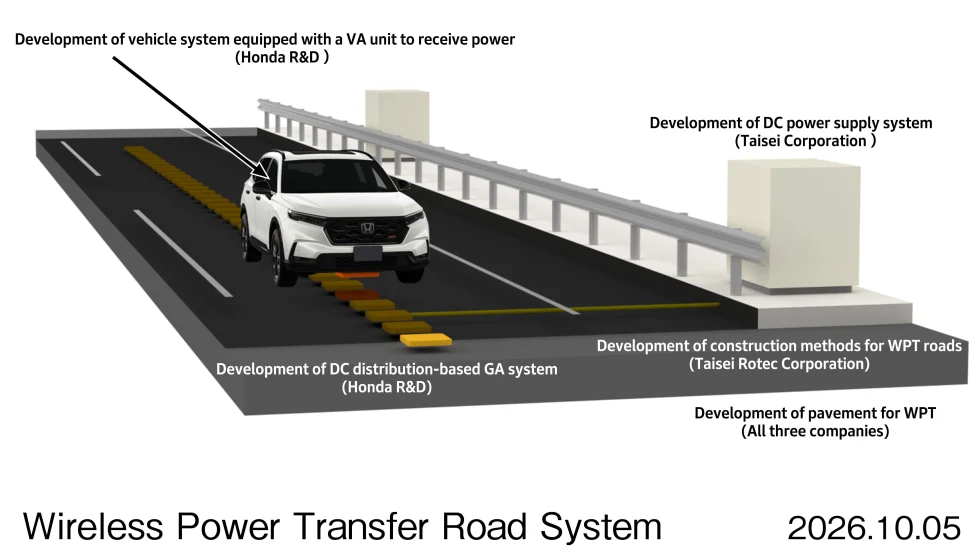
Charging In Motion
Honda has been researching wireless in-motion charging for electric vehicles since 2025, and new technology developments have put it a step closer to a final product.
Read More →
Twin Cities Stores Sell
Minnesota-based Walser Automotive Group made what it called the most significant acquisition in its history with a three-rooftop deal in Minneapolis.
Read More →
U.S. Auto Sales Still Below Prepandemic Levels
Mobility Global industry observers don’t expect the market to return to the higher volumes that became routine before Covid but to stay well below its potential.
Read More →
The Powertrain Shift
Electric-vehicle owners are backpedaling, according to new data, with product availability driving many to shift back to gas-powered engines.
Read More →
Achromatic Autos
The shades that dominate the U.S. car market don’t call attention to themselves, though grayscale may have plateaued after a 30-year upswing, research shows.
Read More →
Used-Vehicle Affordability Worsens
Listing prices in August defied seasonal trends, rising above $27,000 for the second time this year.
Read More →