


Experts Predict Russia-Ukraine Conflict Will Slash Global Vehicle Production
Experts predict the Russian invasion of Ukraine could slash global production of new cars and trucks by millions of units in 2022.

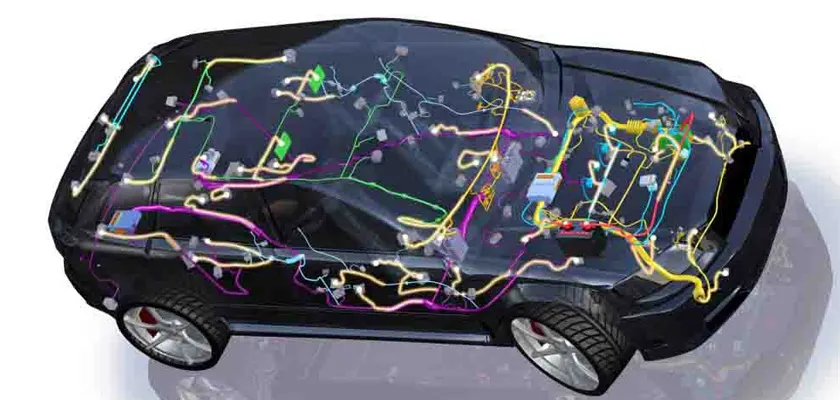
Wire harnesses used in automobiles are the latest part in short supply.
Creative Commons
Experts predict the Russian invasion of Ukraine could slash global production of new cars and trucks by millions of units in 2022.
Russia will see the greatest impacts as companies suspend operations in the country. But experts warn that the longer the war ensures the greater the effect it will have on the global automotive industry.
The Russian invasion has already generated new supply problems in an industry already plagued by supply disruptions. Wire harnesses, which act as a vehicle’s wiring system, are now in short supply. Catalytic converters and semiconductor chips also will be affected as these parts use materials and gases from the region.
Analysts expect the crisis to worse escalating inflation and push vehicle prices even higher.
The U.S. and its allies banned Russian oil use, driving up oil prices to record highs.
AAA reports the national average for one gallon of gas hit 4.009 on Sunday, the highest since July 2008.
Forecasts surrounding the impact on vehicle output vary given the fluidity of the situation. But most say the conflict could reduce output by millions of units.
The European vehicle market will experience the effects faster than the U.S. and other markets. Audi and Mercedes-Benz already announced plans to cut production output due to parts disruptions out of Ukraine.
UBS Analyst Patrick Hummel notes wire harnesses are the most critical bottleneck to date, already leading to significant product interruption among German automakers.
AutoForecast Solutions expects vehicle production this year in Russia and Ukraine to fall 50%, to around 800,000 units, because of the conflict.
Research firm IHS Markit expects the global impact this year to be around 3.5 million fewer vehicles when added to existing semiconductor chip constraints. Russia and Ukraine represent critical sources of neon gas and palladium used in semiconductor chips.
Long-term risks are also a concern. Companies that shuttered production in Russia will likely face backlash if they resume operations, report experts. Matt Gorman, a corporate communications advisor and Republican strategist, says companies will need to provide concrete justification for such a strategy.
Only a few automakers maintain notable operations in Russia. France-based Renault Group, which has a controlling stake in Russian automaker AvtoVAZ, comprises 39.5% of the country’s vehicle production, followed by South Korea-based Hyundai Group at 27.2%.
Volkswagen represents a 12.2% share of the country’s auto output, reports IHS Markit. Japan’s Toyota Motor makes up 5%.
The Russian vehicle market represents 1.6 to 1.75 million in annual unit sales over the last three years. That number is 1/10 the size of the U.S. market and represents just 2% of global vehicle sales in 2021.
Originally posted on Auto Dealer Today
More Industry

Charger Network Growth Slows
Despite a projected increase in public EV chargers in 2026, charging infrastructure remains a top concern for consumers as the gap between the most and least EV-friendly places remains substantial.
Read More →
Lenders, Consumers Take on More Auto Loan Risk
September records loosened credit access the most in over a decade as buyers took advantage of the conditions to afford trading, though loan applications fell.
Read More →
Next-Gen Hybrids in Sight
Dealerships can expect to see revamped hybrids from Honda next year as the company rolls out a new system and model lineup.
Read More →
Gem State Stores Change Hands
A larger auto group founded in the industry’s early years sold two franchises to a neighbor group that's on a growth spurt.
Read More →
Charging In Motion
Honda has been researching wireless in-motion charging for electric vehicles since 2025, and new technology developments have put it a step closer to a final product.
Read More →
Twin Cities Stores Sell
Minnesota-based Walser Automotive Group made what it called the most significant acquisition in its history with a three-rooftop deal in Minneapolis.
Read More →
U.S. Auto Sales Still Below Prepandemic Levels
Mobility Global industry observers don’t expect the market to return to the higher volumes that became routine before Covid but to stay well below its potential.
Read More →
The Powertrain Shift
Electric-vehicle owners are backpedaling, according to new data, with product availability driving many to shift back to gas-powered engines.
Read More →
Achromatic Autos
The shades that dominate the U.S. car market don’t call attention to themselves, though grayscale may have plateaued after a 30-year upswing, research shows.
Read More →
Used-Vehicle Affordability Worsens
Listing prices in August defied seasonal trends, rising above $27,000 for the second time this year.
Read More →