


Words Matter: Use the Right Ones to Define Lenders


Words Matter: Use the Right Ones to Define Lenders
How often have you been in a conversation when the person is using one word, but means something else? It can be confusing and lead to miscommunication. Frequently we do this in the F&I industry without realizing how the words we use can create an inaccurate impression.
While we occasionally indulge in “alternative” definitions, our language choices can have significant implications for our industry and our individual companies when they are taken literally by regulators and courts. Bottom line: Words matter!
Take the word “lender,” for example. It’s used to describe a wide variety of financial entities, from state or national credit unions and banks to dealers acting as retail sellers providing financing. Sometimes people use lender to loosely mean “the original retail creditor and the entity that buys or takes assignment of the finance contract.” Those are a lot of options when trying to determine which type of lender someone is talking about.
In this brief article, we’ll journey into the jungle of lender definitions common in our industry, and I’ll do my best to avoid too much legalese and jargon. Let’s jump right in, shall we?
Dealers and Lenders
In the auto retail environment, a vehicle purchase is often originally financed by the dealership itself. In this instance, the dealership is not a licensed or chartered creditor, but offering the credit to the purchaser within the dealership’s capacity as a retail seller. The credit is extended to the customer as dealer-initiated financing, which is a retail installment sales contract (RISC). The dealer then sells or assigns the RISC to a different type of lender.
This new lender can be a bank, trust company, savings and loan association or credit union, or it could be structured as a sales finance company pursuant to state law. To the consumer purchasing the automobile and signing the RISC, this transaction is almost always transparent. Frequently the dealer already knows which entity will buy the RISC and that entity is often on all of the finance documents. To the consumer, the assigned lender looks as if it is the originating lender.
The overarching difference between the variety of lenders has very little to do with the financing transaction, but with the regulations and regulatory bodies that govern the various institutions. The good news for these entities is that they can choose their regulator when they establish their charters. For example, banks can be regulated either by the Office of the Comptroller of the Currency (OCC), the Federal Deposit Insurance Corporation (FDIC), and/or a state regulatory agency, depending on their charter. Credit unions are in the same boat, with the regulator determined by the structure the institution selects when forming.
Sales Finance Companies
Sales finance companies are permitted under state laws and therefore regulated at the state level. Credit unions have similar distinctions depending on their structure. But regardless of their regulator, a credit union must be non-profit, tax-exempt, and made up of “members” who use the financial services offered by the credit union.
Sales finance companies are another type of entity that can purchase loans originally sold as RISCs. They are defined by state law and frequently permit an otherwise nonfinancial institution to purchase RISCs.
Arizona’s definition of this type of lender is instructive and comparatively simple. It defines a sales finance company as “a person engaged, in whole or in part, in the business of purchasing retail installment contracts from one or more retail sellers.” The statute then goes on to provide a regulatory framework for the entities, without requiring a charter as would a bank, credit union, trust, or other institution.
While we all wait to see what happens with the CFPB’s authorities and structure, that agency understood very well the difference between these types of entities and found creative ways to assert its powers over even state-regulated lending institutions that loan money for vehicle purchases.
In 2015, it took jurisdiction for supervisory authority over large nonbank lending institutions. But this article is not about the CFPB’s perspective on lending institutions. That story would take up much of this publication.
Hopefully this short discussion provided you some context and a reminder about the proper use of terminology when discussing the lenders we work with.
More Industry

Achromatic Autos
The shades that dominate the U.S. car market don’t call attention to themselves, though grayscale may have plateaued after a 30-year upswing, research shows.
Read More →
Used-Vehicle Affordability Worsens
Listing prices in August defied seasonal trends, rising above $27,000 for the second time this year.
Read More →
First-Half Dealership Deals Up
Buy-sell activity shows that acquirers are looking for value and scale as many retailers seek to leave an increasingly competitive and complex market, Kerrigan Advisors reports.
Read More →
Kia Closes Out Summer With a Bang
Its U.S. subsidiary broke multiple records in August, in part due to a surge of demand for hybrids models.
Read More →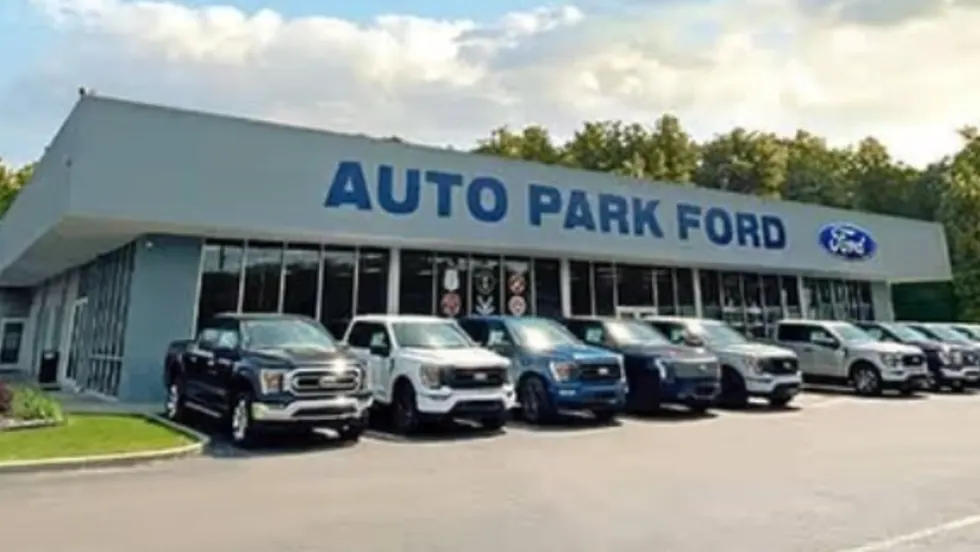
Indiana Dealership Changes Hands
A 30-year-old Ford dealership in Indiana has a new owner and will soon be undergoing renovations to meet manufacturer requirements.
Read More →
Texas Dealership No Longer in the Family
The Ford store, a longtime cornerstone of the Houston market, is now part of one of the fastest-growing U.S. auto groups.
Read More →
Genesis Grows California Presence
The Cardinale Automotive Group opened its third Genesis rooftop in the Golden State, Genesis of San Bruno, a stand-alone dealership serving the San Francisco Bay Area.
Read More →
August Auto Sales a Mixed Bag
An early forecast shows strong business despite consumer hurdles, and hybrids are a big piece of their affordability coping strategy.
Read More →
EV Market Humming Along
July sales show steady growth as the segment stabilizes from last year’s artificial surge following pullback of federal support.
Read More →
Auto Loan Delinquency Rates Stabilize
Auto loans are a main driver of nonmortgage consumer debt, but delinquency rates stabilized in the second quarter across all credit risk tiers.
Read More →