


Ally Introduces Financing Product With 48th Month Sell Option

Ally Financial Inc. debuted in five markets yesterday a new financing product that offers the benefits of leasing, but provides the advantages of owning a vehicle at a fixed rate and payment. The difference is that buyers who opt for the program can sell their vehicle back to Ally at the 48th month at a pre-determined price.
Called Ally Buyer’s Choice, the financing option was introduced more than a year ago to the Canadian Market in response to the Bank Act, which prevents banks there from offering leasing. Now Ally is bringing it to the U.S. market, introducing it yesterday at General Motors and Chrysler dealerships in California, Florida, Illinois, New York and Texas, according to F&I and Showroom magazine.
“As a bank, you can’t lease in Canada. So, what gave rise to it up there is we were looking for something that would allow us to have the benefits of leasing in a financing arrangement,” said Tim Russi, executive vice present for Ally’s North American Operations. “After we saw how the program performed up there, we thought there would be a reasonably-sized opportunity in the U.S. [market] to provide the product.”
As for the 48-month sell option, Russi said the predetermined value is calculated the same way Ally sets its lease residuals. He added that loan terms do not factor into the calculation, as two people who finance the same vehicle at different terms will get the same amount back if opt for the sell option. As for how the company landed on month 48 for the sell option, Russi said that’s the average life of the company’s financing arrangement.
The main thrust of the product is to eliminate consumer fears of making a large purchase in these still-unsettling economic times, Russi said. But the product also aims to reduce consumer buying cycles, drive floor traffic, and, maybe, help dealers replenish their used-vehicle inventory. He also noted another possible advantage to the program.
“We don’t do a lot of 84 [months], but we’d like to see 84 with this type of structure,” said Russi. “But if you’re a consumer who is signing up for 84 months’ worth of payment, you’d love to drop that term and have an idea of the value you can get out with.”
Russi added that dealers were trained on a new calculator the company developed to help them structure deals under the new program. He added that if the value of the vehicle is higher than the predetermined price at the 48th month, the owner can opt to sell the vehicle on his or her own or continue making payments.
“I think dealers see the value in it because it gives them another way to meet consumers’ needs and overcome some of their fears in making a large purchase,” Russi said. “For the consumer, there might be a lot of reasons why [he or she] may need to get out of the deal — it could be an employment- or a family-related [reason]. So, this just provides the consumer with certainly in that they can sell their vehicle to us at a set price if [he or she] needs to.”
More Industry
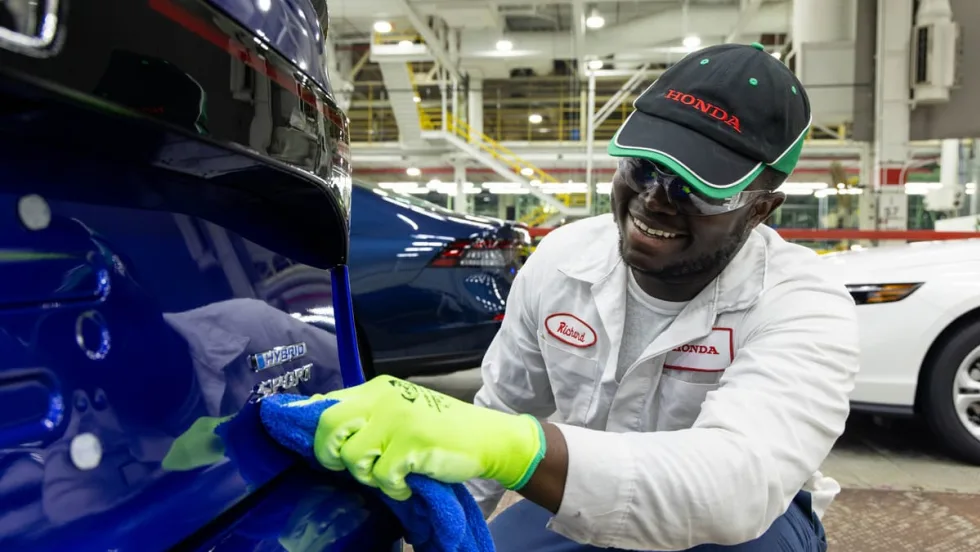
Honda Embraces Hybrid Fever
The automaker plans a new Ohio factory, along with investments in existing U.S. and Canadian plants, to significantly boost hybrid production here.
Read More →
Dealerships Must Show Up Where It Matters
How car buyers find your dealership has fundamentally changed. New evidence reveals the importance of your presence on social media, Google search, and large language models.
Read More →
CPO Sales Could Take Off in the Right Conditions
A recent Cox Automotive consumer survey reveals the size of an undertapped market for the vehicle segment given affordability pressures.
Read More →
Global Consumer Trends Diverge
Price remains a top consideration for U.S. car buyers, and they are the most brand-loyal consumers to established automakers, according to a new survey.
Read More →
Badger State Dealership Gets New Owner
The longtime southern Wisconsin store moved from one area auto group to another, keeping the business in Dairyland.
Read More →
The Cycle of Negative Equity
Third-quarter data shows consumers still rolling over debt and stretching loan terms, raising their risk of remaining underwater.
Read More →
Charger Network Growth Slows
Despite a projected increase in public EV chargers in 2026, charging infrastructure remains a top concern for consumers as the gap between the most and least EV-friendly places remains substantial.
Read More →
Lenders, Consumers Take on More Auto Loan Risk
September records loosened credit access the most in over a decade as buyers took advantage of the conditions to afford trading, though loan applications fell.
Read More →
Next-Gen Hybrids in Sight
Dealerships can expect to see revamped hybrids from Honda next year as the company rolls out a new system and model lineup.
Read More →
Gem State Stores Change Hands
A larger auto group founded in the industry’s early years sold two franchises to a neighbor group that's on a growth spurt.
Read More →