


Ally to Build its Used-Vehicle Finance Business after Strong Q3 Profits

DETROIT - Ally Financial Inc., the former GMAC Financial Services auto and home mortgage lender, has been a small player in used-vehicle financing but intends to target that business for growth, CEO Michael Carpenter said.
Ally, which became a bank holding company in December 2008, boasted that it was the top new-vehicle retail lender in the first nine months of 2010, based on Experian AutoCount data, Automotive News reported.
But the lender holds just a 1.5 percent share of the fragmented used-vehicle retail finance business through September, behind Wells Fargo Dealer Services at 3.6 percent, Chase Auto Finance at 2.3 percent, Toyota Financial Services at 2.0 percent and Capital One Auto Finance at 1.6 percent, the Experian data show.
The used-vehicle finance market is about twice that of the new-vehicle market, making it a “great opportunity for business,” Carpenter said during Ally’s third-quarter conference call this morning.
Ally also intends to build its vehicle leasing business and to finance more vehicles for people with fair and poor credit. During the credit crisis, the lender shrank those businesses to clean up its balance sheet, but “the pendulum swung a little too far,” said James Mackey, interim CFO.
The company increased its nonprime and lease volume this year, but the business is much smaller than it was in 2006 when it was GMAC.
“We need to increase that volume to be a full-spectrum lender,” said Mackey, but at lower levels than a few years ago.
Globally, retail auto finance lending increased 48 percent during the third quarter to $11.4 billion, compared with $7.7 billion in the third quarter of last year. The total includes $9.0 billion in new-vehicle loans and $1.3 billion in used-vehicle loans.
Ally’s new-vehicle lease volume was $1.1 billion, up from just $100 million in the third quarter of last year.
In the United States, total retail originations were $8.3 billion, up from $5.6 billion in the third quarter of 2009 and $8.0 billion in the second quarter of 2010.
At the same time, Ally’s subvented business -- financing enhanced with factory incentives -- is down. “We are competing fair and square in the marketplace,” Carpenter told analysts.
General Motors-subsidized financing was 76 percent of Ally’s retail loan and lease volume in 2006; currently, it’s just 20 percent of Ally’s business.
The trend was reversed in the past year. In the third quarter of 2010, GM subsidized $1.7 billion in new-vehicle loans and leases, while Ally wrote $2.0 billion in standard loans and leases. That’s down significantly from the third quarter of 2009, when GM subsidized $3.0 billion in loans and leases, and Ally wrote $1.2 billion in standard loans and leases.
Ally’s wholesale penetration in the United States has dipped for both GM and Chrysler dealers from the second quarter of this year. For GM dealers, penetration is also down year over year.
The company financed 83.7 percent of new GM vehicles in inventory in the third quarter, down from 86.6 percent in the second quarter of this year and 85.9 percent in the third quarter of last year. Ally financed 76.2 percent of the new Chrysler Group vehicles in stock, down from 77.1 percent in the second quarter of this year and up from 31.7 percent in the third quarter of 2009.
But Ally contends its commercial business remains strong. “It encompasses floorplan financing, working-capital loans, store upgrades,” Carpenter said. “We’re an embedded, committed competitor in this industry and have been for 90 years.”
Ally reported net income of $269 million in the third quarter of 2010, up from a net loss of $767 million in the third quarter of 2009.
The company has seen three straight profitable quarters overall and seven profitable quarters in a row for its core automotive finance business.
Ally’s North American third-quarter auto finance profit was $568 million, almost double its profit year over year. It reported a $74 million profit in international auto finance, also up substantially year over year. Income for Ally’s insurance business, which serves car dealerships, totaled $114 million, up about 5 percent year over year.
Carpenter cited consistent market share, a more diversified product mix and the addition of Fiat as an auto partner in the United States. Carpenter said he is “optimistic about the long-term prospects for the company.”
More Industry
Charger Network Growth Slows
Despite a projected increase in public EV chargers in 2026, charging infrastructure remains a top concern for consumers as the gap between the most and least EV-friendly places remains substantial.
Read More →
Lenders, Consumers Take on More Auto Loan Risk
September records loosened credit access the most in over a decade as buyers took advantage of the conditions to afford trading, though loan applications fell.
Read More →
Next-Gen Hybrids in Sight
Dealerships can expect to see revamped hybrids from Honda next year as the company rolls out a new system and model lineup.
Read More →
Gem State Stores Change Hands
A larger auto group founded in the industry’s early years sold two franchises to a neighbor group that's on a growth spurt.
Read More →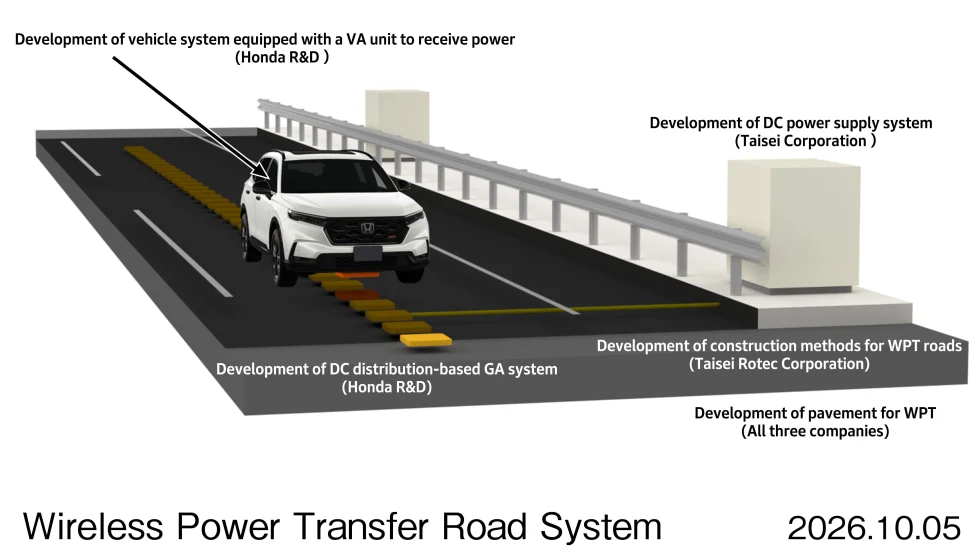
Charging In Motion
Honda has been researching wireless in-motion charging for electric vehicles since 2025, and new technology developments have put it a step closer to a final product.
Read More →
Twin Cities Stores Sell
Minnesota-based Walser Automotive Group made what it called the most significant acquisition in its history with a three-rooftop deal in Minneapolis.
Read More →
U.S. Auto Sales Still Below Prepandemic Levels
Mobility Global industry observers don’t expect the market to return to the higher volumes that became routine before Covid but to stay well below its potential.
Read More →
The Powertrain Shift
Electric-vehicle owners are backpedaling, according to new data, with product availability driving many to shift back to gas-powered engines.
Read More →
Achromatic Autos
The shades that dominate the U.S. car market don’t call attention to themselves, though grayscale may have plateaued after a 30-year upswing, research shows.
Read More →
Used-Vehicle Affordability Worsens
Listing prices in August defied seasonal trends, rising above $27,000 for the second time this year.
Read More →