


Auto Industry Reacts to Tariff
As the world absorbs separate reciprocal duties on imported goods, the sector starts adjusting to the 25% tariff on vehicles, awaits parts equivalent.

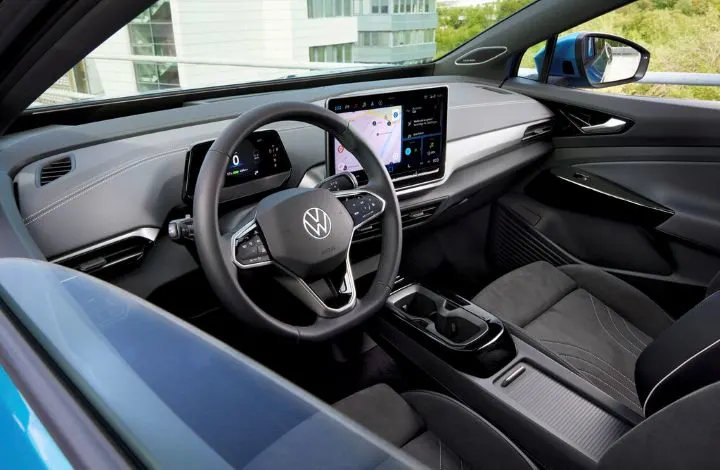
Volkswagen is among automakers that stand to be impacted the most by the auto tariffs because it imports about 80% of its U.S.-sold vehicles.
Volkswagen
Twenty-five percent U.S. tariffs on vehicle imports took effect Thursday as the world reeled from separate reciprocal tariffs on imported goods.
Though the sweeping reciprocal tariffs won’t be stacked on top of the vehicle duties, the latter will be added to tariffs on steel and aluminum imports, as well as 25% tariffs on certain auto parts set to take effect on May 3.
Industry analysts have said they expect the tariffs to result in at least a 10% increase on already high new- and used-vehicle prices. Though many vehicles sold in the U.S. are assembled here, they’re made with parts from around the world.
Both U.S.-based and overseas automakers reacted to the vehicle tariffs in various ways.
Ford extended employee vehicle discounts to the public – “You pay what we pay,” it says on its website.
Jeep maker Stellantis said it will temporarily shut down a plant each in Canada and Mexico and lay off 900 U.S. workers as it metabolizes the tariffs and decides how to move forward.
Germany-based automaker Volkswagen, along with German cohort Mercedes, plus Volvo, Mazda and Hyundai, is among automakers most exposed to the new tariff. It imports about 80% of its U.S. sales units, according to S&P Global Mobility.
The German Association of the Automobile Industry, issuing a statement calling for European unity along with openness to negotiation, said the auto tariffs “mark a fundamental turning point in trade policy.”
“It represents the US's departure from the rules-based global trading order - and thus a departure from the foundation for global value creation and corresponding growth and prosperity in many regions of the world,” the trade group said. “This is not America first; this is America alone.”
LEARN MORE: OEM Group Protests Auto Tariffs
Originally posted on F&I and Showroom
More Industry

Charger Network Growth Slows
Despite a projected increase in public EV chargers in 2026, charging infrastructure remains a top concern for consumers as the gap between the most and least EV-friendly places remains substantial.
Read More →
Lenders, Consumers Take on More Auto Loan Risk
September records loosened credit access the most in over a decade as buyers took advantage of the conditions to afford trading, though loan applications fell.
Read More →
Next-Gen Hybrids in Sight
Dealerships can expect to see revamped hybrids from Honda next year as the company rolls out a new system and model lineup.
Read More →
Gem State Stores Change Hands
A larger auto group founded in the industry’s early years sold two franchises to a neighbor group that's on a growth spurt.
Read More →
Charging In Motion
Honda has been researching wireless in-motion charging for electric vehicles since 2025, and new technology developments have put it a step closer to a final product.
Read More →
Twin Cities Stores Sell
Minnesota-based Walser Automotive Group made what it called the most significant acquisition in its history with a three-rooftop deal in Minneapolis.
Read More →
U.S. Auto Sales Still Below Prepandemic Levels
Mobility Global industry observers don’t expect the market to return to the higher volumes that became routine before Covid but to stay well below its potential.
Read More →
The Powertrain Shift
Electric-vehicle owners are backpedaling, according to new data, with product availability driving many to shift back to gas-powered engines.
Read More →
Achromatic Autos
The shades that dominate the U.S. car market don’t call attention to themselves, though grayscale may have plateaued after a 30-year upswing, research shows.
Read More →
Used-Vehicle Affordability Worsens
Listing prices in August defied seasonal trends, rising above $27,000 for the second time this year.
Read More →