
Product & Technology
Set Yourself Apart
Product providers can follow the lead of industry cohorts in the practice of leveraging their brands through private labeling, pumping new energy into their platforms to stand out from competitors.

 MENU
MENU SEARCH
Data, video and artificial intelligence are driving service performance today, when inspection performance is closely tied to key business outcomes.
Inspections also help reduce friction in the service experience.
Pexels/Sergey Meshkov
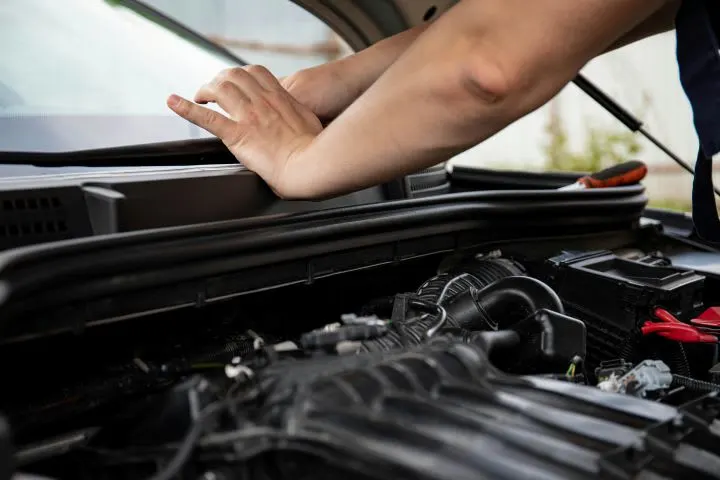
Vehicle inspections play a central role in dealership service operations, providing the foundation for assessing vehicle condition and guiding maintenance recommendations.
As digital tools become more deeply embedded in the service workflow, inspections are generating richer data and stronger insights.
Video, structured data capture, and artificial intelligence are enabling more consistent documentation, clearer communication, and greater visibility into how inspections are performed.
The shift comes at a time when dealerships are placing increased emphasis on fixed-operations performance, elevating the inspection process as a measurable contributor to both operational efficiency and revenue.
The earliest inspection processes were manual and highly variable. Technicians worked from paper forms, checking off items such as tires, brakes and filters, while service advisers translated those findings into recommendations for customers.
The quality and completeness of inspections often depended on the individual technician, and communication gaps were common. The transition to digital multipoint inspections introduced consistency, creating standardized workflows and centralized records of vehicle condition.
Even with these improvements, however, the customer experience still required a level of trust, as vehicle owners were asked to approve work based on descriptions rather than direct evidence.
The introduction of video reshaped that experience. By enabling technicians to visually demonstrate vehicle conditions, video inspections created a more transparent and engaging interaction. Customers could see worn components, hear explanations in real time, and better understand the rationale behind recommended services.
The shift elevated inspections into one of the most important touchpoints in the service journey, directly influencing how customers perceive the dealership and its recommendations.
The evolution comes at a critical time, as customer expectations continue to rise. Service shopper data shows that 31% of vehicle owners say they are doing everything possible to extend the life of their vehicles, making maintenance decisions more deliberate and value driven, according to a recent CDK survey of service customers.
At the same time, digital trust signals have become increasingly influential, particularly among younger generations. More than 75% of generation Z and millennial customers rely on reviews when choosing a service provider, underscoring the importance of trust and transparency in every interaction, according to the survey.
OEMs have accelerated the adoption of video inspections by establishing utilization expectations across dealer networks. Early programs helped set the stage, and broader adoption by manufacturers reflects how quickly video has become standard practice.
As adoption matures, attention is shifting toward execution. Dealers are focusing on how effectively inspections are performed and how clearly they communicate findings to customers.
The change has led to the emergence of quality measurement frameworks, such as artificial intelligence and machine learning, to evaluate inspection performance based on clarity, completeness and communication effectiveness. Early results show customers who engage with a high-quality, scored inspection approve approximately $130 more per repair order.
AI is further expanding the capabilities by introducing a new level of precision and consistency into the inspection process. Advanced tools are being developed to analyze inspection content, identify whether critical components are captured, and assess how effectively technicians explain findings.
Measurement capabilities can estimate elements such as tire tread depth, while wearable technologies allow technicians to capture inspections more efficiently.
Together, the innovations are helping reduce variability, which has historically been one of the biggest challenges in dealership service operations.
As inspections become more measurable, they are also becoming more manageable. Quality scoring introduces a structured way for service leaders to evaluate technician performance and identify opportunities for improvement.
That creates a continuous feedback loop in which best practices can be reinforced, training can be targeted, and performance can be benchmarked across locations. For dealer groups, that level of visibility allows for greater consistency and scalability, turning inspections into a repeatable driver of operational excellence.
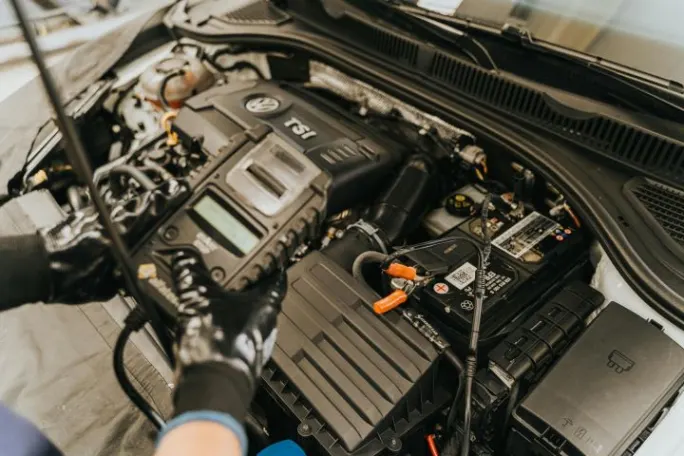
The effectiveness of inspection strategies continues to depend on the alignment of people, process and tools.
Pexels/Daniel Andraski
The business impact of inspections extends well beyond the service lane itself. Today, inspection performance is closely tied to three key business outcomes:
Dealers utilizing videos from technicians are seeing an average 29% increase in hours and a $152 average increase in parts-and-labor revenue per repair order, according to data compiled by CDK and industry partner TruVideo.
That includes a 41% increase in labor revenue (an additional $83 per order) and a 34% increase in parts revenue (an additional $69 per order), underscoring how video-enabled inspections directly drive measurable financial performance.
Inspections also help reduce friction in the service experience. Customers frequently encounter obstacles, such as long phone wait times and complex scheduling processes. Nearly a quarter of customers report waiting nine minutes or longer on hold when booking appointments, often encountering additional friction, such as navigating phone menus or being transferred between staff.
While inspections often occur later in the journey, they represent a critical point when clarity can eliminate uncertainty. By presenting straightforward, visual evidence, they make it easier for customers to make informed decisions without hesitation.
Despite rapid advances in technology, the effectiveness of inspection strategies continues to depend on the alignment of people, process and tools.
When those elements come together, inspections move from being a routine task to a scalable driver of performance.
Looking ahead, the role of inspections will continue to expand as data and AI capabilities mature. Inspections are increasingly becoming a foundational data layer within fixed operations, offering insights into vehicle condition, technician execution and customer behavior.
As predictive capabilities develop, inspections will begin to inform not only current service needs but also future maintenance planning, enabling more proactive and personalized engagement.
The transformation of vehicle inspections reflects a broader shift within dealership service operations. What was once a routine procedure has become a strategic asset, and one that connects technical expertise with customer understanding, strengthens trust, and delivers measurable business value.
As dealerships navigate a more complex and competitive environment, the ability to execute high-quality, data-driven inspections will play an increasingly central role in driving operational performance and long-term growth.
LEARN MORE: Service Drives Gen Z Loyalty
Kim Saylor is senior director of fixed operations at CDK.
EDITOR’S NOTE: This article was authored and edited according to Providers & Administrators’ editorial standards and style. Opinions expressed may not reflect that of the publication.
Loading data...
Product & Technology
Product providers can follow the lead of industry cohorts in the practice of leveraging their brands through private labeling, pumping new energy into their platforms to stand out from competitors.







Product & Technology
It’s important for finance-and insurance administrators to build the technology into their existing systems instead of bolting it on.
Compliance
Recent state insurance department regulator actions signal that it’s expanding regulatory risk for the VSC industry, whose players should prepare themselves for compliance.
Product & Technology
Data, video and artificial intelligence are driving service performance today, when inspection performance is closely tied to key business outcomes.
Awards
Buffeted by trial after trial as a young man, David Wright knew he’d found his life path when he stumbled into auto retail after all other doors slammed shut. The 2026 Time Dealer of the Year shares the lessons he learned along the way.
Industry
Understanding the risks and benefits of retail accounting and Super CFCs can help you better present options to your dealer partners.
Actuary
The Kerper Bowron Method is a patent-pending approach that builds on established actuarial principles but applies them at the individual contract level.
Industry
Providers and administrators should clearly and credibly communicate their experiences since their numbers will draw more scrutiny this year.
Compliance
In Trump’s first year, just 60,917 pages were printed in the Federal Register, the official journal of the federal government, down 42%.
Industry
As America turns 250, explore how the automotive industry shaped jobs, culture, innovation, and mobility from Detroit assembly lines to today’s EV era.