


Crash Tests Show Automatic Braking Needs Tweaks
AAA study finds technology chokes at higher speeds, moving vehicles in its path at intersections.

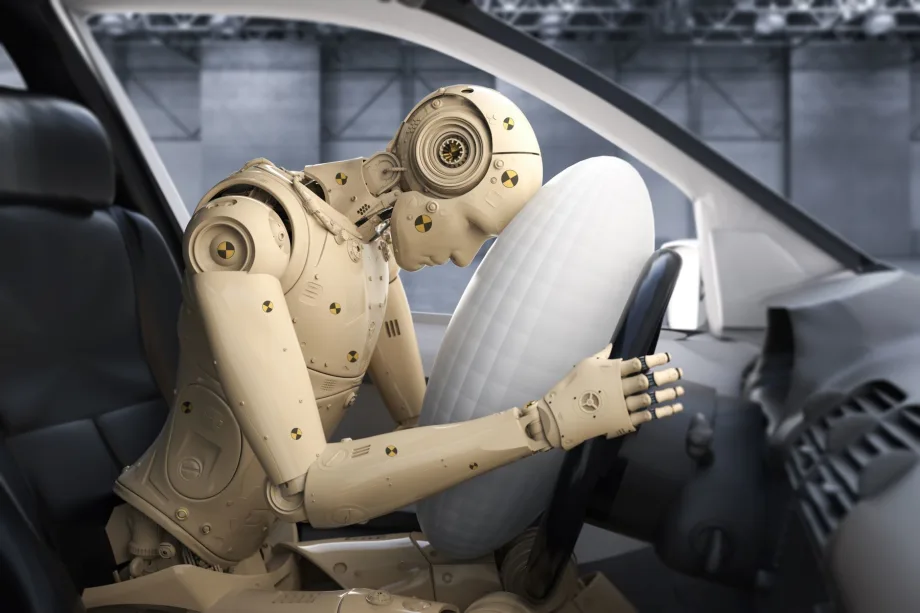
AAA says better design, test protocols needed.
IMAGE: Getty Images/PhonlamaiPhoto
AAA says its research shows automatic emergency braking doesn’t work as it should.
The motor club federation conducted crash tests on the 2022 models of the Chevrolet Equinox LT, Ford Explorer XLT, Honda CR-V Touring and Toyota RAV4 LE.
Though AAA says the crash-prevention technology of AEB has cut down on injuries and fatalities, its current generation doesn’t adequately handle higher speeds or detect moving vehicles in its path at intersections.
“Automatic Emergency Braking does well at tackling the limited task it was designed to do. Unfortunately, that task was drawn up years ago, and regulator’s slow-speed crash standards haven’t evolved,” said Greg Brannon, director of AAA’s automotive engineering and industry relations.
“Testing requirements for this technology, or any vehicle safety system for that matter, must be updated to handle faster, more realistic speeds and scenarios with the greatest safety benefit for drivers.”
AAA tested the technology’s performance on rear-end crashes against stationary vehicles at speeds of 30 miles per hour and 40 miles per hour, plus crashes against moving vehicles at intersections – T-bone and unprotected left-turn collisions. The AEB struggled at higher speeds and failed to detect moving vehicles in its path at intersections, AAA said.
At 30 mph, the technology prevented a rear-end collision for 17 of 20 tests runs. In tests resulting in a crash, the impact speed was reduced by 86%. At 40 mph, though, it prevented a rear-end crash in only six of 20 tests. For tests resulting in a crash, the impact speed was reduced by 62%.
In the T-bone and left-turn tests, crashes happened every time, as the technology failed to alert the driver and slow the vehicle’s speed, AAA reported.
AAA urged carmakers and regulators to zero in on AEB design and test protocols for the kinds of crashes that commonly involve injuries and fatalities.
Originally posted on F&I and Showroom
More Product & Technology

Set Yourself Apart
Product providers can follow the lead of industry cohorts in the practice of leveraging their brands through private labeling, pumping new energy into their platforms to stand out from competitors.
Read More →
EVs Excel at Longevity
Research finds that after a certain mileage point, they outlast gas and diesel vehicles despite being driven more.
Read More →
Integrating AI Into Your Admin System
It’s important for finance-and insurance administrators to build the technology into their existing systems instead of bolting it on.
Read More →
Public EV Charging Improves
The infrastructure buildout in the U.S. is providing more availability and safety at a better cost, according to the latest EV experience study by JD Power.
Read More →
AI in the Dealership
A Cox Automotive poll shows most dealers use it, but only some have found the smartest ways to adapt the surging technological sensation.
Read More →
AAA Honors Service and Repair Facilities
Three automotive dealerships made AAA's Service Providers of Excellence and Best in Repair list this year.
Read More →
EFG Launches Product Admin Platform
The company says the offering is designed to empower administrators, service contract providers, and product marketers to expand automotive and power-sports capabilities.
Read More →
Optimized Charging Could Reduce Costs
According to an Alliance for Automotive Innovation analysis, optimized EV charging could cut costs for drivers and improve grid infrastructure - potential adoption incentives.
Read More →
From Inspection to Impact
Data, video and artificial intelligence are driving service performance today, when inspection performance is closely tied to key business outcomes.
Read More →
Car Karaoke Gets Official Platform
The in-vehicle karaoke and sing-along platform by Samsung arm is meant to add traveling enjoyment safely in technology that automakers can tailor to their specific needs.
Read More →