


Ford Motors and GM Race to Capture EV Market
The automakers take two very different approaches to EV production but with many of the same goals in mind.

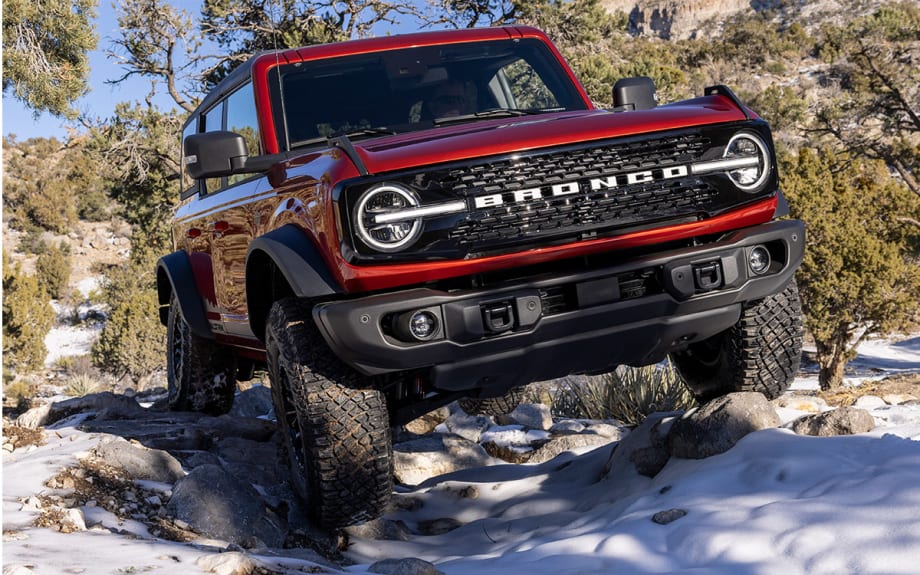
The automakers take two very different approaches to EV production but with many of the same goals in mind.
IMAGE: Ford
Ford Motors and GM have always been in a competitive race against each other. Each hoping to race ahead in sales, performance and styling of new vehicles.
Most recently GM has gained a competitive edge with better financials and early moves to electric vehicles (EVs). The automaker’s third quarter results bested Ford’s by a landslide.
But when it comes to EVs, the future remains uncertain. GM has diversified as much as possible around its emerging battery and self-driving vehicle businesses as part of a plan to exclusively offer EVs by 2035. Ford is also driving toward EVs while also maintaining investments in its traditional businesses. Ford plans at least 40% of its global sales to be EVs by 2030.
Wall Street analysts report they’re watching carefully to see when or if one of the Detroit automakers will distinguish itself.
“It’s a very competitive industry, and they all tend to be pretty fast followers from that regard,” Edward Jones analyst Jeff Windau told CNBC. “It becomes difficult to really be differentiated over a long period of time.”
GM restructured years ago under CEO Mary Barra, a move that is helping ease the company's challenges with the chip shortage. Ford, however, more recently took on a broad restructuring as part of CEO Jim Farley’s turnaround plan, Ford+.
Still, Wall Street maintains an average rating of “overweight” on both stocks, finds analyst reports compiled by FactSet. Both automakers' financials are off more than 30% this year.
Ford recently announced plans to disband its Argo AI autonomous vehicle unit, saying that autonomous vehicles will not be a profit center for some time. But GM Cruise CEO Kyle Vogt remains upbeat about the growth of the company’s robotaxi business, citing a “rapid scaling phase” with “meaningful revenue” in 2023. The automaker recently expanded its robotaxi service to cover most of San Francisco.
“GM clearly is looking at this as a longer-term opportunity that they want to be part of,” Sam Abuelsamid, principal analyst at Guidehouse Insights, told CNBC. “Ford is saying, ‘We think they’ll get there eventually, but it’s going to take a lot longer, and we have other fish to fry right now.’”
GM also was among the first automakers to announce billions of dollars in new EV investments and set a target to end sales of vehicles powered by internal combustion engines by 2035.
Still, Ford far outsells GM in EVs, while GM prioritizes luxury models with its new battery technologies, including $100,000+ Hummers and Bolt EVs, which use older battery technology. Ford sold 41,236 EVs through the first nine months of this year, while GM sold 22,830, most of which were older Bolt models.
Ford benefits from an EV strategy that enables it to ramp up production faster than GM and get more vehicles to dealers. GM, in contrast, has built a dedicated EV architecture, something Ford plans to do eventually. Ford's current approach has driven a head start in EV sales. Ford also continues to produce hybrids and plug-in hybrid electric vehicles, which GM has opted not to do.
Both companies are in a dead heat to produce battery technologies in the U.S. GM is the only automaker besides Tesla that produces its own battery cells through a joint venture in the U.S. The company has announced plans for four joint venture battery plants in the U.S., including one in Ohio that started commercial production of the cells earlier this year. Ford has similar plans and has allocated $5.8 billion to build twin lithium-ion battery plants in central Kentucky through a joint venture with South Korea-based SK. However, production will not start until 2026.
Originally posted on Auto Dealer Today
More Industry

Charger Network Growth Slows
Despite a projected increase in public EV chargers in 2026, charging infrastructure remains a top concern for consumers as the gap between the most and least EV-friendly places remains substantial.
Read More →
Lenders, Consumers Take on More Auto Loan Risk
September records loosened credit access the most in over a decade as buyers took advantage of the conditions to afford trading, though loan applications fell.
Read More →
Next-Gen Hybrids in Sight
Dealerships can expect to see revamped hybrids from Honda next year as the company rolls out a new system and model lineup.
Read More →
Gem State Stores Change Hands
A larger auto group founded in the industry’s early years sold two franchises to a neighbor group that's on a growth spurt.
Read More →
Charging In Motion
Honda has been researching wireless in-motion charging for electric vehicles since 2025, and new technology developments have put it a step closer to a final product.
Read More →
Twin Cities Stores Sell
Minnesota-based Walser Automotive Group made what it called the most significant acquisition in its history with a three-rooftop deal in Minneapolis.
Read More →
U.S. Auto Sales Still Below Prepandemic Levels
Mobility Global industry observers don’t expect the market to return to the higher volumes that became routine before Covid but to stay well below its potential.
Read More →
The Powertrain Shift
Electric-vehicle owners are backpedaling, according to new data, with product availability driving many to shift back to gas-powered engines.
Read More →
Achromatic Autos
The shades that dominate the U.S. car market don’t call attention to themselves, though grayscale may have plateaued after a 30-year upswing, research shows.
Read More →
Used-Vehicle Affordability Worsens
Listing prices in August defied seasonal trends, rising above $27,000 for the second time this year.
Read More →