


Ford Outlines Dealer Requirements to Sell EVs
No-haggle prices and sizeable investments in charging infrastructure are required to sell the automaker’s electric vehicles.

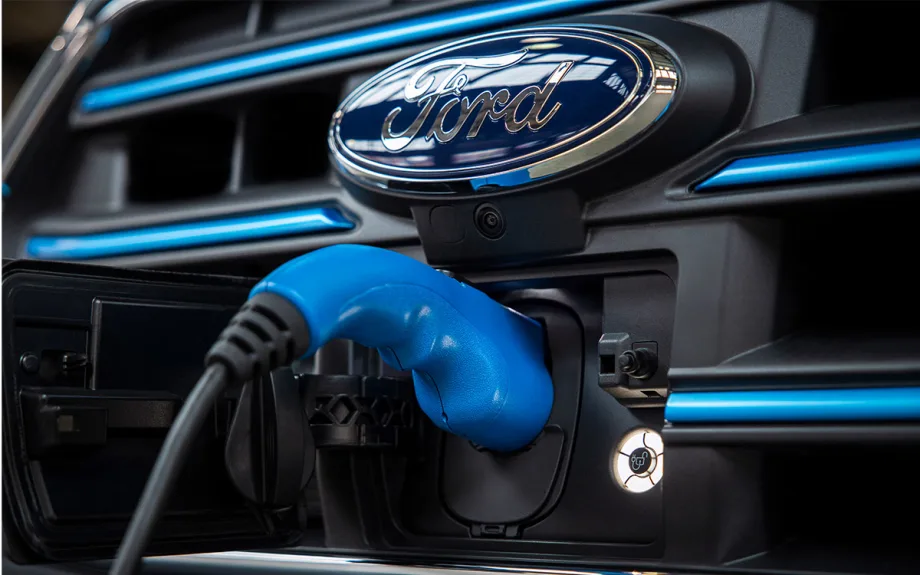
The automaker gave dealers until Oct. 31 to opt into one of two EV certification tiers.
Selling electric vehicles will not come without a cost for Ford dealers.
The automaker has outlined a series of requirements dealers must meet before selling its EVs. These include setting no-haggle prices and investing over $1.2 million in upgrades, including charging infrastructure, according to Automotive News.
Ford framed the investments for the automaker as necessary to remain competitive against direct-sale competitors, such as Tesla, at a conference in Las Vegas this week.
The automaker gave dealers until Oct. 31 to opt into one of two EV certification tiers. The higher tier will cost dealers $900,000 up front. The benefits of the higher tier include more EVs to sell and “elite” certification.
The automaker will only allow dealers who opt out of these programs to sell the company’s legacy internal combustion engine and hybrid vehicles.
The cash outlay will be spent on dealership DC fast chargers, one of which must be accessible to customers.
Installing EV chargers comes at high expense. A public Level 2 charger can cost around $2,000 but a DC fast charger of 150kW or more can have a $100,000 to $250,000 price tag. Currently, only a few dozen of the automaker’s nearly 3,000 US dealers have high-speed chargers.
The automaker also urged that dealers cut up to $2,000 from the cost of delivering an EV to a customer, also to help the automaker better compete with Tesla.
Dealers also learned EV prices were to be non-negotiable and that dealers could not carry plug-in vehicles in inventory.
“We’re betting on the dealers. We will not go direct. But we need to specialize,” CEO Jim Farley told reporters Tuesday after briefing dealers about the plans. “The main message I have for the dealers, which I’ve never said before, because I didn’t believe it was true, is that you could be the most valuable franchise in our industry.”
Ford has no plans to follow General Motors brands like Cadillac and Buick in offering buyouts to dealers who don’t want to make investments to sell EVs.
“We want them to have the choice,” Marin Gjaja, chief customer officer of Ford’s Model e electric vehicle business, told CNBC.
READ MORE: Biden Announces Funds for EV Chargers at Auto Show
Originally posted on Auto Dealer Today
More Industry
Badger State Dealership Gets New Owner
The longtime southern Wisconsin store moved from one area auto group to another, keeping the business in Dairyland.
Read More →
The Cycle of Negative Equity
Third-quarter data shows consumers still rolling over debt and stretching loan terms, raising their risk of remaining underwater.
Read More →
Charger Network Growth Slows
Despite a projected increase in public EV chargers in 2026, charging infrastructure remains a top concern for consumers as the gap between the most and least EV-friendly places remains substantial.
Read More →
Lenders, Consumers Take on More Auto Loan Risk
September records loosened credit access the most in over a decade as buyers took advantage of the conditions to afford trading, though loan applications fell.
Read More →
Next-Gen Hybrids in Sight
Dealerships can expect to see revamped hybrids from Honda next year as the company rolls out a new system and model lineup.
Read More →
Gem State Stores Change Hands
A larger auto group founded in the industry’s early years sold two franchises to a neighbor group that's on a growth spurt.
Read More →
Charging In Motion
Honda has been researching wireless in-motion charging for electric vehicles since 2025, and new technology developments have put it a step closer to a final product.
Read More →
Twin Cities Stores Sell
Minnesota-based Walser Automotive Group made what it called the most significant acquisition in its history with a three-rooftop deal in Minneapolis.
Read More →
U.S. Auto Sales Still Below Prepandemic Levels
Mobility Global industry observers don’t expect the market to return to the higher volumes that became routine before Covid but to stay well below its potential.
Read More →
The Powertrain Shift
Electric-vehicle owners are backpedaling, according to new data, with product availability driving many to shift back to gas-powered engines.
Read More →