


Gas Price Hikes Could Hamper Big 3

Auto executives were upbeat at this year's Detroit auto show, buoyed by a sales recovery that's gaining momentum, rising profits and renewed consumer interest in American cars and trucks.
But a rise in gas prices is casting a shadow across the industry's otherwise sunny outlook.
Prices at the pump have climbed above the $3-a-gallon level that catches drivers' notice, and Detroit's automakers are more exposed to rising gas prices than most of their rivals, reported The Detroit News.
General Motors Corp., Ford Motor Co. and Chrysler Group LLC displayed an impressive lineup of small and fuel-efficient cars at the North American International Auto Show. But they still generate their biggest profits from light truck sales.
The U.S. automakers benefited last year from a rebound in truck and SUV sales, underpinned by stable gas prices. Two years earlier, truck sales had collapsed when gas prices surged above $4 a gallon.
Gas prices fell back during the recession, but now they're rising again. Since late August, nationwide prices have risen 15 percent to $3.09 a gallon for regular gasoline. In Michigan, regular gas retails for $3.12 a gallon, on average.
"As fuel prices go up, people put more emphasis on fuel economy," said Ford Chief Executive Alan Mulally. "We saw previously that as gas prices get above $3, people start making different decisions."
Ford's business plan assumes gas prices will be in a range above current prices, said Mark Fields, president of the Dearborn automaker's North and Latin American operations.
"The question now, since it's gradually rising, is atwhat point psychologically are people going to be saying, 'Oh my gosh, I just spent triple digits to fill my tank,'" Fields said.
GM Chairman and Chief Executive Daniel Akerson said rising oil prices would dampen the industry's profitability by skewing sales toward smaller vehicles, with smaller profit margins.
But he said GM is better equipped now to cope with higher gas prices after rolling out small cars, such as the Chevrolet Cruze and Sonic models and a very fuel-efficient Volt extended-range electric car.
"I won't say that we would be without impact, but I'm much more confident of our viability now than I would have been a year or two ago," Akerson told reporters at the show.
Ford also feels better prepared, now that it has a more balanced lineup of cars and trucks and a more flexible manufacturing system.
"If we see changes in the marketplace, we can change pretty quickly," Fields said.
The head of Chrysler Group LLC's Ram truck brand, Fred Diaz, said the Auburn Hills automaker has developed more fuel-efficient engines with its Italian partner, Fiat SpA.
Chrysler also has added the tiny Fiat 500 city car to its U.S. lineup. "We are better able to weather a storm," Diaz said.
Japan's leading automakers appear to be rolling out the right vehicles for a run-up in gas prices. Honda Motor Co. displayed a concept version of the next Honda Civic subcompact at the Detroit show.
Toyota Motor Corp. unveiled a family of Prius hybrids, including a wagon and a concept for a small Prius urban car, and a Lexus hybrid compact, the CT 200h.
"Our timing is really good," said Mark Templin, general manager of Toyota Motor Sales USA's Lexus division. "Once you get to $3.50 (a gallon) on a national basis, I think you're going to see people's habits change again."
Hybrid vehicle sales are closely correlated to gas prices, and last year they declined.
Auto executives weren't sure what price levels would trigger changes in behavior, and some executives said people are not as shocked by rising gas prices as they were in previous years.
"Consumers are getting used to higher fuel," said Peter Schwarzenbauer, global sales chief for Volkswagen AG's premium Audi brand. "If you look at other markets around the world, you can see the same pattern."
In presentations to investors at a Deutsche Bank conference on the sidelines of the show, U.S. auto executives said they hadn't seen any change yet in the mix of vehicles they sell in response to rising gas prices. But for 2011, "the main downside risk to profitability was cited by many as a further rise in oil price," Deutsche Bank analyst Jochen Gehrke wrote in a research note.
In the current context, however, high gas prices provide one advantage for automakers: They increase the relative affordability of high-tech fuel-efficient models that car companies are under pressure to develop to comply with tough emission regulations coming into force in the United States and other regions.
In five years, new U.S. regulations will require all manufacturers' fleets to have an average fuel economy of at least 35.5 miles per gallon. That represents a steep 42 percent increase from current mileage requirements.
Vehicles featuring the leading fuel-saving technologies — diesels, hybrids, battery-powered electric cars — cost at least a few thousand dollars more than similar cars with gas-powered internal combustion engines.
Audi offers diesel versions of its Q7 SUV and A3 small car. Diesels, which are around 20 percent more fuel-efficient than gas-powered cars, account for 43 percent of Q7 sales in the United States and more than half of A3 sales, Schwarzenbauer said.
Audi will offer diesel versions of its A6 and A8 cars in the United States. It is rolling out gas-electric hybrids, too, but expects them to account for only 2 percent to 3 percent of global sales.
Even though most premium car buyers are less sensitive to gas price increases than mainstream car buyers, BMW sees clients reacting by opting for more fuel-efficient engines, shifting from eight-cylinder engines to six-cylinder and diesel motors, said Jim O'Donnell, president of BMW of North America.
Because gas mileage has implications for the environment as well as the cost of driving a car, even the most exclusive luxury brands are working on improving fuel economy.
Bentley Motors will offer an eight-cylinder engine for the new Continental GT, which starts at $205,000. "It's currently powered by a 6-liter W-12," said Franz-Josef Paefgen, chief executive of Bentley. "We'll offer the 4-liter V-8 as an alternative."
More Industry
Charger Network Growth Slows
Despite a projected increase in public EV chargers in 2026, charging infrastructure remains a top concern for consumers as the gap between the most and least EV-friendly places remains substantial.
Read More →
Lenders, Consumers Take on More Auto Loan Risk
September records loosened credit access the most in over a decade as buyers took advantage of the conditions to afford trading, though loan applications fell.
Read More →
Next-Gen Hybrids in Sight
Dealerships can expect to see revamped hybrids from Honda next year as the company rolls out a new system and model lineup.
Read More →
Gem State Stores Change Hands
A larger auto group founded in the industry’s early years sold two franchises to a neighbor group that's on a growth spurt.
Read More →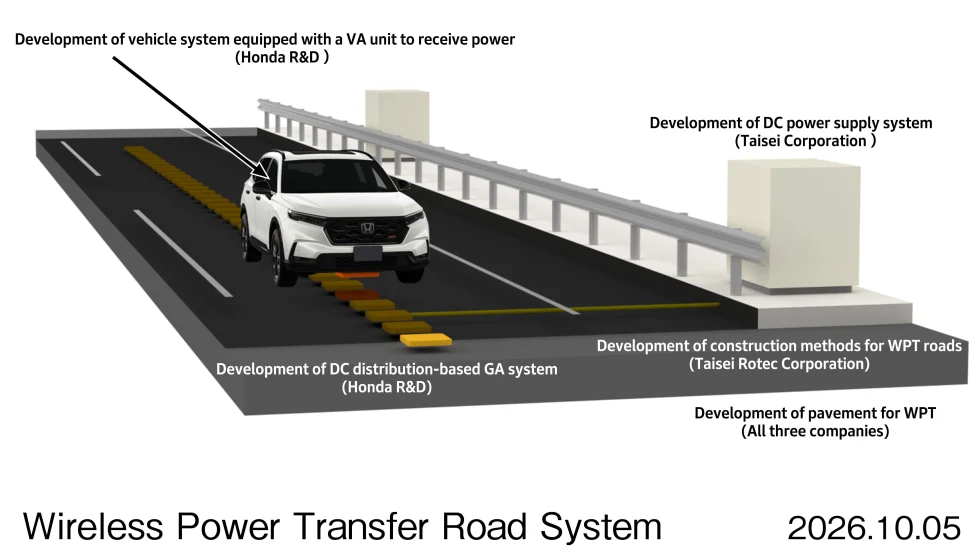
Charging In Motion
Honda has been researching wireless in-motion charging for electric vehicles since 2025, and new technology developments have put it a step closer to a final product.
Read More →
Twin Cities Stores Sell
Minnesota-based Walser Automotive Group made what it called the most significant acquisition in its history with a three-rooftop deal in Minneapolis.
Read More →
U.S. Auto Sales Still Below Prepandemic Levels
Mobility Global industry observers don’t expect the market to return to the higher volumes that became routine before Covid but to stay well below its potential.
Read More →
The Powertrain Shift
Electric-vehicle owners are backpedaling, according to new data, with product availability driving many to shift back to gas-powered engines.
Read More →
Achromatic Autos
The shades that dominate the U.S. car market don’t call attention to themselves, though grayscale may have plateaued after a 30-year upswing, research shows.
Read More →
Used-Vehicle Affordability Worsens
Listing prices in August defied seasonal trends, rising above $27,000 for the second time this year.
Read More →