


GM and Ford CEOs on Heightened Watch for Signs of a Recession
General Motors and Ford Motor Co. CEOs say they are watching for signs of a U.S. recession, despite demand for autos being strong.

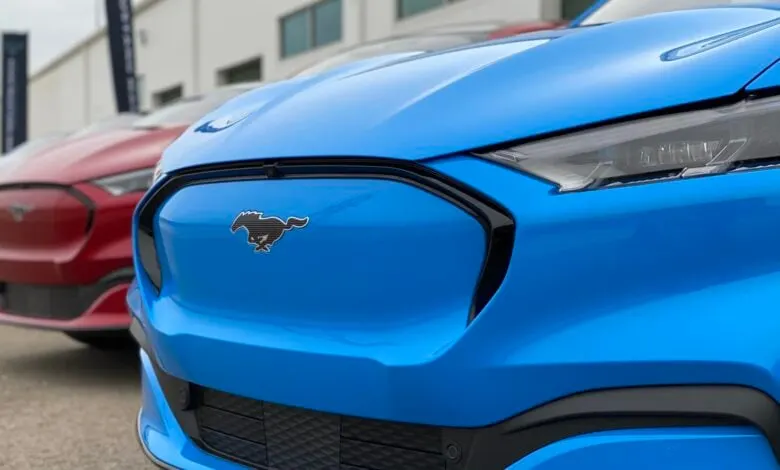
Soaring material costs for electric batteries wiped out expected profits on Ford's electric Mustang Mach-E.
Ford
General Motors and Ford Motor Co. CEOs say they are watching for signs of a U.S. recession, despite demand for autos being strong.
Ford CFO John Lawler told attendees at a Deutsche Bank conference that an economic downturn is a real possibility and that the company is assessing the impacts of inflation and high gasoline prices on the economy. Interest rates may also factor in, as the Federal Reserve approved a 0.75 percentage point rate increase.
Higher commodity costs are also taking a toll on profitability in some areas, reported Lawler. Soaring material costs for electric batteries, for instance, wiped out the profit the automaker expected on its electric Mustang Mach-E.
Lawler also reported Ford Credit, the company’s financing arm, has seen an uptick in auto loan delinquencies. Ford is monitoring the situation closely, he said.
“We’re looking for every indication and every data point we can to get a read on where the consumer is, where they’re headed,” he said.
GM Finance Chief Paul Jacobson says the company plans to maintain flexibility when it comes to raising EV prices, as Ford has already done for the Mustang Mach-E.
“We don’t want to end up in a situation where a customer has ordered a vehicle two, three years out, and we don’t know where inflation is going,” he said.
Still, both CEOs report market dynamics remains automakers’ favor due to pent-up demand for vehicles and low vehicle inventory. However, inflated fuel costs and high inflation could restrain these purchases.
Both executives report they are modeling the outcomes of different recessionary scenarios. GM has increased its scrutiny into hiring decisions and prioritizing its spending on longer-term initiatives, such as in electric vehicles.
Both CEOs said the companies are better-positioned to weather a downturn than in the past. The automakers offer fewer profit-damaging discounts and have less unsold inventory.
“It’s a completely different environment heading into what could be a potential recession than anything I’ve seen in the past,” Lawler said.
Originally posted on Auto Dealer Today
More Industry

Charger Network Growth Slows
Despite a projected increase in public EV chargers in 2026, charging infrastructure remains a top concern for consumers as the gap between the most and least EV-friendly places remains substantial.
Read More →
Lenders, Consumers Take on More Auto Loan Risk
September records loosened credit access the most in over a decade as buyers took advantage of the conditions to afford trading, though loan applications fell.
Read More →
Next-Gen Hybrids in Sight
Dealerships can expect to see revamped hybrids from Honda next year as the company rolls out a new system and model lineup.
Read More →
Gem State Stores Change Hands
A larger auto group founded in the industry’s early years sold two franchises to a neighbor group that's on a growth spurt.
Read More →
Charging In Motion
Honda has been researching wireless in-motion charging for electric vehicles since 2025, and new technology developments have put it a step closer to a final product.
Read More →
Twin Cities Stores Sell
Minnesota-based Walser Automotive Group made what it called the most significant acquisition in its history with a three-rooftop deal in Minneapolis.
Read More →
U.S. Auto Sales Still Below Prepandemic Levels
Mobility Global industry observers don’t expect the market to return to the higher volumes that became routine before Covid but to stay well below its potential.
Read More →
The Powertrain Shift
Electric-vehicle owners are backpedaling, according to new data, with product availability driving many to shift back to gas-powered engines.
Read More →
Achromatic Autos
The shades that dominate the U.S. car market don’t call attention to themselves, though grayscale may have plateaued after a 30-year upswing, research shows.
Read More →
Used-Vehicle Affordability Worsens
Listing prices in August defied seasonal trends, rising above $27,000 for the second time this year.
Read More →