


GM Reports $4.3 Billion Loss

DETROIT — General Motors Co. incurred a $4.3 billion loss in the second half of 2009 as the company grappled with weak U.S. sales and began to repay government loans, reported The Wall Street Journal.
Despite the loss, Chief Financial Officer Chris Liddell said GM still stands a good chance of being profitable in 2010 by improving sales performance and further reducing costs.
"We need to make significant progress is several key areas," he said. "I don't want to sit here and predict profitability and disappoint. But there is nothing I've seen in the first quarter that changes my opinion that we could be profitable."
The results posted Wednesday come as GM disclosed the first official accounting of its balance sheet since the company emerged from bankruptcy protection in July. They aren't comparable with prior years.
They include a $3.4 billion fourth-quarter loss and a $900 million loss for July 10 through September. GM previously said it incurred a loss of $1.2 billion in that period. GM had $136 billion in assets at the end of 2009. The former GM had $91 billion in assets at the end of 2008. The company used $1.9 billion in cash on operating activities in the fourth quarter.
The figures underline the challenge a shrunken-down GM faces in bolstering revenue after shedding brands, models and dealers. GM's global revenue was $32.3 billion in the fourth quarter; a year earlier so-called Old GM had $30.8 billion in revenue.
Liddell said GM will continue to bolster production and look for ways to reduce overhead costs. Obligations shed through bankruptcy have dramatically lowered GM's break-even point, though Liddell wouldn't disclose what that new level is.
The figures are based on fresh-start accounting standards that apply to the company after its exit from Chapter 11 of the U.S. Bankruptcy Code, which required GM to adjust debts and assets of its global operations to reflect their fair-market value.
Before GM can hold a public stock offering to pay off the U.S. government's $50 billion investment in the company, it needs a balance sheet that adheres to federal accounting standards.
More Industry
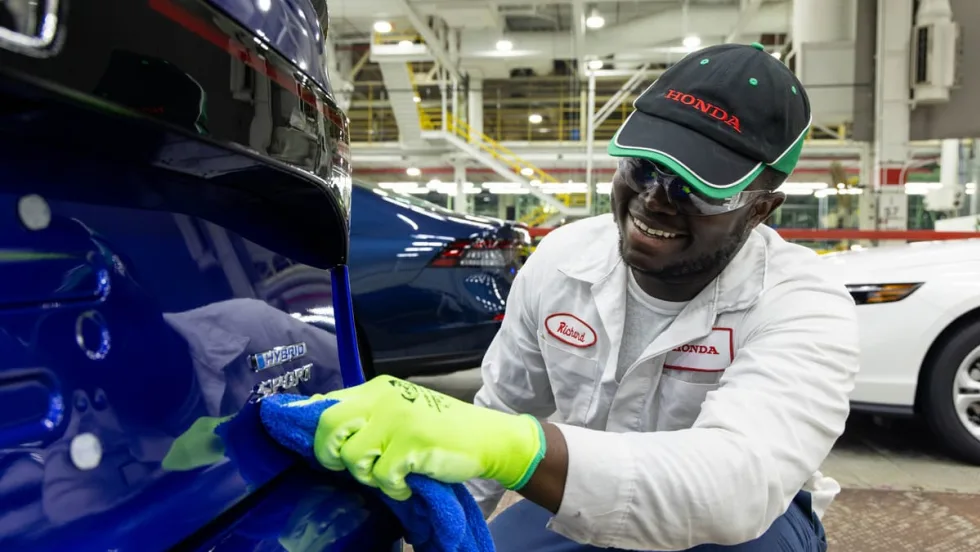
Honda Embraces Hybrid Fever
The automaker plans a new Ohio factory, along with investments in existing U.S. and Canadian plants, to significantly boost hybrid production here.
Read More →
Dealerships Must Show Up Where It Matters
How car buyers find your dealership has fundamentally changed. New evidence reveals the importance of your presence on social media, Google search, and large language models.
Read More →
CPO Sales Could Take Off in the Right Conditions
A recent Cox Automotive consumer survey reveals the size of an undertapped market for the vehicle segment given affordability pressures.
Read More →
Global Consumer Trends Diverge
Price remains a top consideration for U.S. car buyers, and they are the most brand-loyal consumers to established automakers, according to a new survey.
Read More →
Badger State Dealership Gets New Owner
The longtime southern Wisconsin store moved from one area auto group to another, keeping the business in Dairyland.
Read More →
The Cycle of Negative Equity
Third-quarter data shows consumers still rolling over debt and stretching loan terms, raising their risk of remaining underwater.
Read More →
Charger Network Growth Slows
Despite a projected increase in public EV chargers in 2026, charging infrastructure remains a top concern for consumers as the gap between the most and least EV-friendly places remains substantial.
Read More →
Lenders, Consumers Take on More Auto Loan Risk
September records loosened credit access the most in over a decade as buyers took advantage of the conditions to afford trading, though loan applications fell.
Read More →
Next-Gen Hybrids in Sight
Dealerships can expect to see revamped hybrids from Honda next year as the company rolls out a new system and model lineup.
Read More →
Gem State Stores Change Hands
A larger auto group founded in the industry’s early years sold two franchises to a neighbor group that's on a growth spurt.
Read More →