


Rival Automakers Developing Alt-Fuel Engines
Japanese companies announce project to transform ICE technology.

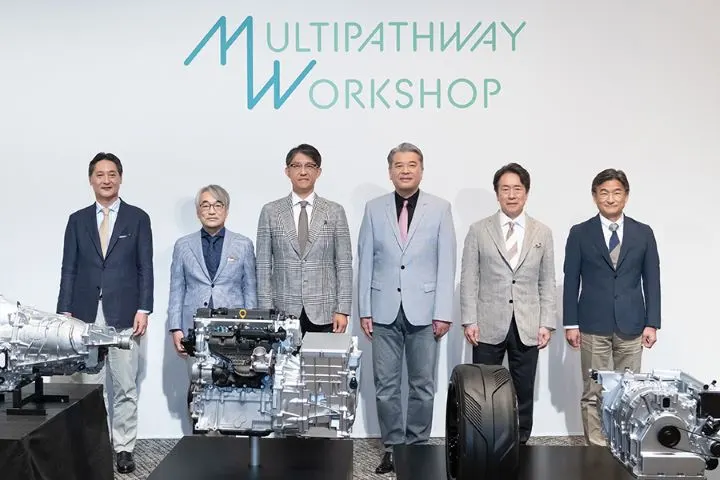
The companies called their technology 'highly efficient and powerful,' and that the more compact engines would make space for improved, more aerodynamic vehicle design, along with greater fuel efficiency.
Toyota
Three Japanese automakers said they’re developing internal-combustion engines to support low emissions as they seek to achieve net-zero pollution.
Mazda, Subaru and Toyota announced the project at a press conference Tuesday, saying they’re working to integrate the engine technology with motors, batteries and “other electric drive units.”
They said the more compact engines will use carbon-neutral fuels in order to “decarbonize” ICE.
The effort aligns with Toyota’s resistance to putting all of its power train eggs in one basket, particularly under former CEO Akio Toyoda, who stepped down and took the chairman role last year, though its new CEO, Koji Sato, quickly set the opposite target. The developing technology may be a way to split the difference and achieve carbon neutralily at the same time. It has lately appeared prescient as electric-vehicle adoption has flattened and hybrid sales taken off.
The three automakers said they’ve tested alternative fuels through their racing teams, including liquid hydrogen, and that the new engines would be compatible with those. Toyota said they will seek to integrate the developing technology with electric technology.
“This process has clarified the role that future engines will play in achieving carbon neutrality,” Toyota said in a press release. “With the next generation of engines, the three companies will seek to not only improve standalone engine performance but also optimize their integration with electric drive units, harnessing the advantages of each.”
The companies called their technology “highly efficient and powerful,” and that the more compact engines would make space for improved, more aerodynamic vehicle design, along with greater fuel efficiency.
“Even as Subaru, Toyota, and Mazda compete in the product arena with unique engines and cars, the companies have a shared dedication to achieving carbon neutrality through a multi-pathway approach,” the press release said.
Originally posted on Auto Dealer Today
More Industry

Charger Network Growth Slows
Despite a projected increase in public EV chargers in 2026, charging infrastructure remains a top concern for consumers as the gap between the most and least EV-friendly places remains substantial.
Read More →
Lenders, Consumers Take on More Auto Loan Risk
September records loosened credit access the most in over a decade as buyers took advantage of the conditions to afford trading, though loan applications fell.
Read More →
Next-Gen Hybrids in Sight
Dealerships can expect to see revamped hybrids from Honda next year as the company rolls out a new system and model lineup.
Read More →
Gem State Stores Change Hands
A larger auto group founded in the industry’s early years sold two franchises to a neighbor group that's on a growth spurt.
Read More →
Charging In Motion
Honda has been researching wireless in-motion charging for electric vehicles since 2025, and new technology developments have put it a step closer to a final product.
Read More →
Twin Cities Stores Sell
Minnesota-based Walser Automotive Group made what it called the most significant acquisition in its history with a three-rooftop deal in Minneapolis.
Read More →
U.S. Auto Sales Still Below Prepandemic Levels
Mobility Global industry observers don’t expect the market to return to the higher volumes that became routine before Covid but to stay well below its potential.
Read More →
The Powertrain Shift
Electric-vehicle owners are backpedaling, according to new data, with product availability driving many to shift back to gas-powered engines.
Read More →
Achromatic Autos
The shades that dominate the U.S. car market don’t call attention to themselves, though grayscale may have plateaued after a 30-year upswing, research shows.
Read More →
Used-Vehicle Affordability Worsens
Listing prices in August defied seasonal trends, rising above $27,000 for the second time this year.
Read More →