


Second Bill Aimed at Reining in the CFPB Passes House by 401-2 Vote

WASHINGTON, D.C. — On the same day Sen. Elizabeth Warren (D-Mass.) called on Congress to impose further reforms on the financial sector that go beyond the Dodd-Frank Act, the House of Representatives passed a bill that aims to bring greater transparency to the Dodd-Frank-created Consumer Financial Protection Bureau (CFPB).
Speaking at the Levy Economics Institute’s 24th annual Hyman Minsky Conference on Wednesday, Warren laid out her view of the basic principles the government should follow when regulating financial markets — that “financial institutions shouldn’t be allowed to cheat people” and that “financial institutions shouldn’t be allowed to get the taxpayers to pick up their risks.”
While the Senator acknowledged that the Dodd-Frank Act has made progress on both fronts, she offered several proposals to further regulate financial markets, including lifting the dealer exemption from the Dodd-Frank Act, strengthening legal accountability for big financial firms and senior executives, breaking up the big banks and restricting the Fed’s emergency lending authority, changing the current tax laws that encourage excessive risk-taking and discourage long-term growth, and regulating what she called the “shadow banking sector.”
“The consumer agency’s early results have been good for consumers and good for the economy as a whole, but there’s more to be done,” Warren said of the CFPB, in part. “Right now, the auto loan market looks increasingly like the pre-crisis housing market, with good actors and bad actors mixed together.
“Auto dealers got a specific exemption from CFPB oversight, and it is no coincidence that auto loans are now the most troubled consumer financial product,” she added. “Congress should give the CFPB the authority it needs to supervise car loans …”
Meanwhile, a bill that aims to apply requirements of the Federal Advisory Committee Act (FACA) — a 1972 law designed to ensure that Congress and the public know what’s being discussed in government consumer advisory committees, among other requirements — to the CFPB was passed by a 401-to-two vote. The proposal, dubbed the Bureau Advisory Commission Transparency Act, was introduced in early March by U.S. Rep. Sean Duffy (R-Wis.).
“The bill ensures we as an American family can see what takes place at the CFPB — it makes complete sense,” Duffy said in support of his bill. “This is about making government work; making it accountable and transparent. That should start at these meetings.”
Duffy argued that despite the announcing it would comply with the FACA, the CFPB’s Credit Union and Community Bank Advisory Committees continue to meet behind closed doors.
The National Automobile Dealers Association has made similar arguments in its defense of the indirect auto finance market against the bureau’s targeting of dealer participation. In a recent press release in support of a separate House bill (H.R. 1737) that would rescind the bureau’s March 2013 guidance on dealer participation, the association noted that the CFPB’s lack of transparency prompted 91 member of Congress to request additional information from the agency “on how it arrived at the conclusions it used to justify its guidance bulletin.” The CFPB has yet to respond to that request, the NADA noted.
CFPB Director Richard Cordray has said the FACA does not apply to the bureau. Only the Central Intelligence Agency, the Federal Reserve and the Director of National Intelligence are exempted from the FACA’s provisions.
Duffy’s Bureau Advisory Commission Transparency Act now heads to the U.S. Senate for consideration. “… I think this is about making government work, making it accountable, making it transparent,” Duffy said prior to the House vote on H.R. 1265, “and that should start at least in the advisory meetings that our government takes part in.”
More Industry

Charger Network Growth Slows
Despite a projected increase in public EV chargers in 2026, charging infrastructure remains a top concern for consumers as the gap between the most and least EV-friendly places remains substantial.
Read More →
Lenders, Consumers Take on More Auto Loan Risk
September records loosened credit access the most in over a decade as buyers took advantage of the conditions to afford trading, though loan applications fell.
Read More →
Next-Gen Hybrids in Sight
Dealerships can expect to see revamped hybrids from Honda next year as the company rolls out a new system and model lineup.
Read More →
Gem State Stores Change Hands
A larger auto group founded in the industry’s early years sold two franchises to a neighbor group that's on a growth spurt.
Read More →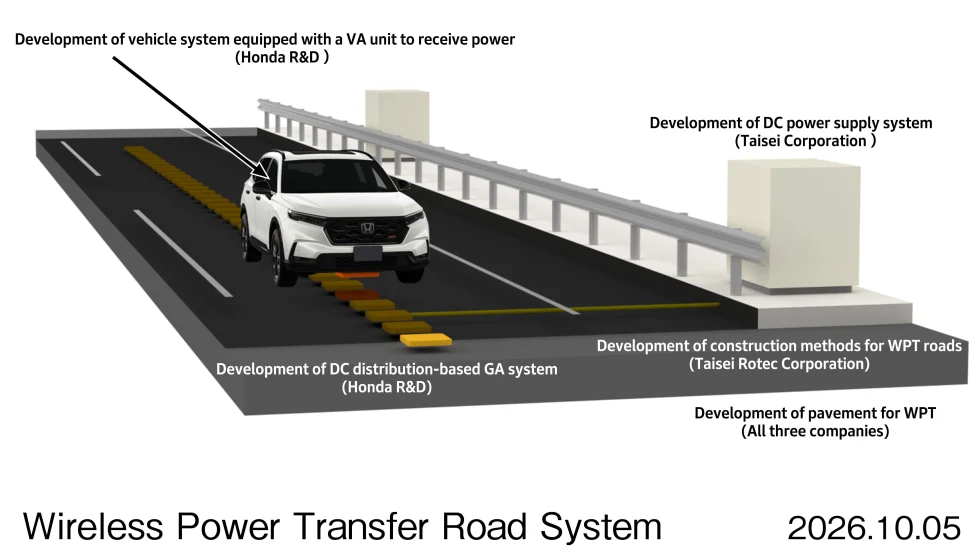
Charging In Motion
Honda has been researching wireless in-motion charging for electric vehicles since 2025, and new technology developments have put it a step closer to a final product.
Read More →
Twin Cities Stores Sell
Minnesota-based Walser Automotive Group made what it called the most significant acquisition in its history with a three-rooftop deal in Minneapolis.
Read More →
U.S. Auto Sales Still Below Prepandemic Levels
Mobility Global industry observers don’t expect the market to return to the higher volumes that became routine before Covid but to stay well below its potential.
Read More →
The Powertrain Shift
Electric-vehicle owners are backpedaling, according to new data, with product availability driving many to shift back to gas-powered engines.
Read More →
Achromatic Autos
The shades that dominate the U.S. car market don’t call attention to themselves, though grayscale may have plateaued after a 30-year upswing, research shows.
Read More →
Used-Vehicle Affordability Worsens
Listing prices in August defied seasonal trends, rising above $27,000 for the second time this year.
Read More →