


Toyota Vehicle Owners Can’t Pursue Economic Losses Under California Law

Toyota Motor Corp. vehicle owners outside California can’t pursue under that state’s laws their claims that unintended acceleration problems lowered the value of their cars, a judge ruled.
Toyota owners say the company drove down the value of their vehicles by failing to disclose or fix defects related to sudden acceleration. Their lawyers asked U.S. District Judge James V. Selna in Santa Ana, California, to allow them to pursue their claims under California law, which gives plaintiffs a better chance than most states of recovering damages, reported Bloomberg.
Toyota asked the judge to find that car owners can’t use California law on suits brought in other states. About 70 percent of the economic-loss cases were filed outside the state. Using California’s law would permit claims to go forward that would be barred by laws in other states, Selna said.
“Application of California law to a nationwide class, at least in some instances, would drastically expand the scope of relief available to plaintiffs (to the detriment of Toyota),” Selna said in yesterday’s ruling. “Application of California law would likely have the effect of reviving a number of claims that would otherwise be time barred.”
Selna had said in court papers filed May 13 that he was likely to rule in the vehicle owners’ favor. He issued the final ruling yesterday.
Using California law helps plaintiffs in the other states pursue claims that might otherwise be dismissed, said Michael I. Krauss, law professor at George Mason University School of Law in Arlington, Virginia.
“The damage they’re claiming is not that they’re driving a dangerous car, but that people will think they’re driving a dangerous car,” he said. “The overwhelming majority of states don’t allow recovery if the only damage is economic damage.”
“We’re gratified the court has recognized that allowing a few handpicked plaintiffs to set the course for customers throughout the United States through this kind of procedural engineering would go against established law, diminish Toyota’s substantive rights and undermine the purposes of these multidistrict proceedings,” Celeste Migliore, a spokeswoman for the Toyota City, Japan-based automaker, said in an e-mailed statement.
“Importantly, approximately 70 percent of the economic- loss cases in this litigation were originally filed outside of California, and many of those states would not allow the claims brought by customers whose vehicles have never manifested a defect,” she said.
Steve W. Berman, a lead lawyer for the vehicle owners, said he was “quite surprised” by the ruling. It won’t be a “huge issue” for the plaintiffs, he said.
“We will prove a defect exists that Toyota hid and if we have to do it state by state, so be it,” Berman said.
Toyota, the world’s largest automaker, recalled millions of U.S. vehicles, starting in 2009, after claims of defects and incidents involving sudden unintended acceleration. The recalls set off a wave of litigation, including hundreds of economic loss suits and claims by individuals or their families alleging injuries and deaths.
Most of the federal lawsuits were combined before Selna, in a multidistrict litigation, or MDL, for evidence gathering and pretrial rulings. In an MDL, while one judge oversees the litigation, individual claims are generally governed by the state law where a lawsuit was brought, Krauss, the law professor, said.
“The basic rule is if somebody buys his Toyota in Iowa and suffers damages in Iowa, they have to use Iowa law.” Allowing the use of one state’s law to cover claims brought in others, is “highly uncommon,” he said.
A number of states, including Alabama, North Dakota, Ohio and Pennsylvania, “would preclude or highly likely preclude some or all of the claims asserted by plaintiffs whose products have manifested no defect,” Selna said in his 22-page ruling.
Allowing the plaintiffs to pursue the claims under California law “would undermine the purposes of the present MDL,” because it wouldn’t “take into account the requirement that cases retain their separate and distinct identities” so they can be returned to their home states for trial, he said.
“Just as the court should not permit filing in the present forum by a singular plaintiff to dictate the choice of substantive law, the court cannot permit the selection of the moving plaintiffs here to dictate the conclusion regarding which state’s substantive law should apply,” he said.
Selna denied Toyota’s motion to dismiss most claims on May 13, finding lawyers for vehicle owners had properly pleaded loss or injury.
“Taking these allegations as true, as the court must at the pleading stage, they establish an economic loss,” Selna wrote. “A vehicle with a defect is worth less than one without a defect.’
Toyota’s series of recalls began in September 2009 with an announcement that 3.8 million vehicles were being recalled because of a defect that may cause floor mats to jam the accelerator pedal. In January 2010, the company recalled 2.3 million vehicles to fix sticking gas pedals.
The carmaker said in February that it was recalling another 2.17 million vehicles in the U.S. for carpet and floor-mat flaws that could jam gas pedals.
Many of the lawsuits claim that loose floor mats and sticky pedals don’t explain all episodes of sudden acceleration and that the electronic throttle system in Toyota vehicles is to blame. Toyota has disputed any flaws in its electronic throttle control system.
More Industry
Charger Network Growth Slows
Despite a projected increase in public EV chargers in 2026, charging infrastructure remains a top concern for consumers as the gap between the most and least EV-friendly places remains substantial.
Read More →
Lenders, Consumers Take on More Auto Loan Risk
September records loosened credit access the most in over a decade as buyers took advantage of the conditions to afford trading, though loan applications fell.
Read More →
Next-Gen Hybrids in Sight
Dealerships can expect to see revamped hybrids from Honda next year as the company rolls out a new system and model lineup.
Read More →
Gem State Stores Change Hands
A larger auto group founded in the industry’s early years sold two franchises to a neighbor group that's on a growth spurt.
Read More →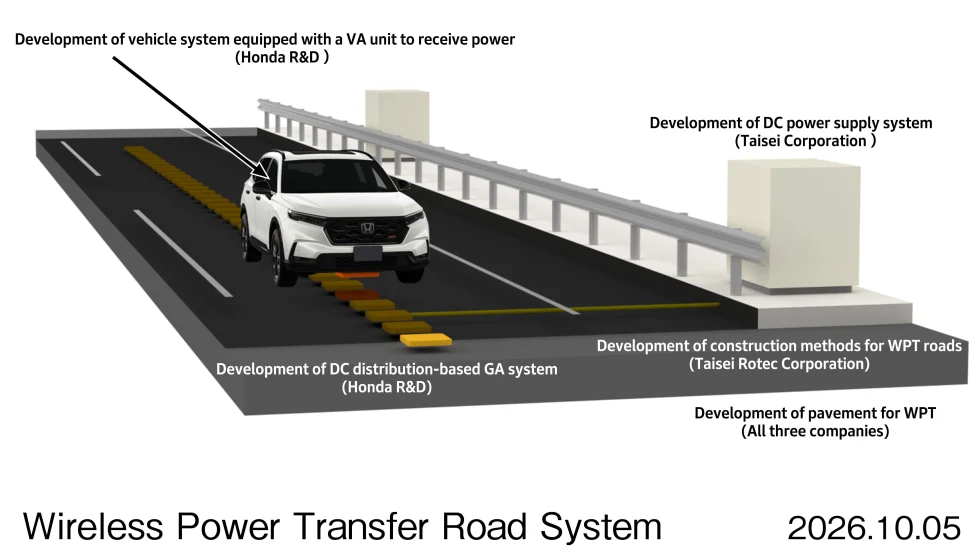
Charging In Motion
Honda has been researching wireless in-motion charging for electric vehicles since 2025, and new technology developments have put it a step closer to a final product.
Read More →
Twin Cities Stores Sell
Minnesota-based Walser Automotive Group made what it called the most significant acquisition in its history with a three-rooftop deal in Minneapolis.
Read More →
U.S. Auto Sales Still Below Prepandemic Levels
Mobility Global industry observers don’t expect the market to return to the higher volumes that became routine before Covid but to stay well below its potential.
Read More →
The Powertrain Shift
Electric-vehicle owners are backpedaling, according to new data, with product availability driving many to shift back to gas-powered engines.
Read More →
Achromatic Autos
The shades that dominate the U.S. car market don’t call attention to themselves, though grayscale may have plateaued after a 30-year upswing, research shows.
Read More →
Used-Vehicle Affordability Worsens
Listing prices in August defied seasonal trends, rising above $27,000 for the second time this year.
Read More →