


U.S. Energy Department Finalizes Loan for GM Battery Venture
The U.S. Energy Department finalized a $2.5 billion loan to a joint venture of General Motors Co. and LG Energy Solution for three lithium-ion battery cell manufacturing facilities.

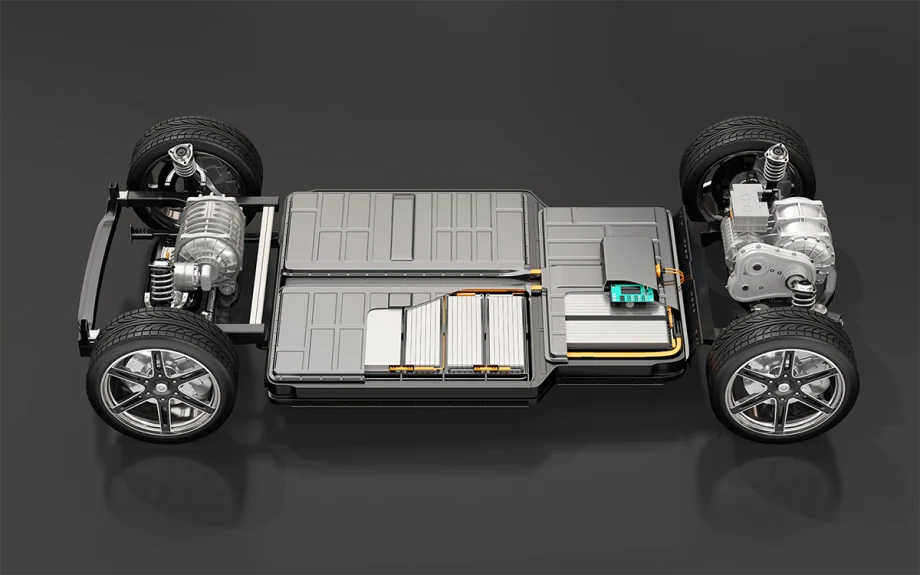
The U.S. Energy Department finalized a $2.5 billion loan to a joint venture of General Motors Co. and LG Energy Solution for three lithium-ion battery cell manufacturing facilities.
IMAGE: Getty Images
The U.S. Energy Department has finalized a $2.5 billion low-cost loan to a joint venture of General Motors Co. and LG Energy Solution to fund three new lithium-ion battery cell manufacturing facilities.
The planned loan to Ultium Cells LLC from the government's Advanced Technology Vehicles Manufacturing (ATVM) loan program will help finance the construction of the new manufacturing facilities in Ohio, Tennessee and Michigan. The facilities are expected to support 6,000 construction jobs and 5,100 operations jobs.
Workers at the $2.3 billion Ultium plant in Ohio recently voted to join the UAW, which is seeking to organize the EV supply chain.
A fourth U.S. battery plant site in Indiana is being considered by the joint venture partners. Work on the $2.6 billion plant in Michigan has already begun. This plant will open 2024. Ultium also recently announed plans to boost its investment in a $2.3 billion Tennessee plant by $275 million.
The Biden Administration approved a $430 billion Inflation Reduction Act (IRA) in August. The legislation included $3 billion for ATVM loan costs and expanded uses to larger vehicles, maritime vessels, aviation,
and other transportation modes.
The Energy Department said the $3 billion will provide an estimated $40 billion in additional loan authority for a total estimated available authority under ATVM of about $55.1 billion before the Ultium loan.
The ATVM loan program also closed on a $102.1 million loan to Syrah Technologies LLC in July. These funds will fund the expansion of a facility producing a key battery component.
The program has supported Ford Motor, Tesla and Nissan Motor projects in the past. GM had applied for $14.4 billion in ATVM loans in 2009 but withdrew the application in 2011.
Originally posted on Auto Dealer Today
More Product & Technology

Set Yourself Apart
Product providers can follow the lead of industry cohorts in the practice of leveraging their brands through private labeling, pumping new energy into their platforms to stand out from competitors.
Read More →
EVs Excel at Longevity
Research finds that after a certain mileage point, they outlast gas and diesel vehicles despite being driven more.
Read More →
Integrating AI Into Your Admin System
It’s important for finance-and insurance administrators to build the technology into their existing systems instead of bolting it on.
Read More →
Public EV Charging Improves
The infrastructure buildout in the U.S. is providing more availability and safety at a better cost, according to the latest EV experience study by JD Power.
Read More →
AI in the Dealership
A Cox Automotive poll shows most dealers use it, but only some have found the smartest ways to adapt the surging technological sensation.
Read More →
AAA Honors Service and Repair Facilities
Three automotive dealerships made AAA's Service Providers of Excellence and Best in Repair list this year.
Read More →
EFG Launches Product Admin Platform
The company says the offering is designed to empower administrators, service contract providers, and product marketers to expand automotive and power-sports capabilities.
Read More →
Optimized Charging Could Reduce Costs
According to an Alliance for Automotive Innovation analysis, optimized EV charging could cut costs for drivers and improve grid infrastructure - potential adoption incentives.
Read More →
From Inspection to Impact
Data, video and artificial intelligence are driving service performance today, when inspection performance is closely tied to key business outcomes.
Read More →
Car Karaoke Gets Official Platform
The in-vehicle karaoke and sing-along platform by Samsung arm is meant to add traveling enjoyment safely in technology that automakers can tailor to their specific needs.
Read More →