


Younger Borrowers Falling Behind in Car Payments
Jerry research reveals their delinquency rates rival those of the financial crisis of 2008 and 2009.


Federal data from the first quarter also shows borrowed amounts decreased.
Andrea Piacquadio, Pexels
An analysis of Federal Reserve data by car insurance comparison application Jerry reveals that millennial and generation Z borrowers are falling behind on their car payments at rates previously observed during the financial crisis of 2008 and 2009.
The quarterly household debt report of the Federal Reserve, which utilizes Equifax data to derive its auto loan delinquency numbers, categorizes borrowers according to age brackets that include 18 to 29 and 30 to 39 years.
According to the report, which covers the period from 2000 to the first quarter of 2023, those age ranges have historically exhibited greater delinquency rates than the national average.
The statistical data across that period shows that the rate of auto loan borrowers who were overdue by 90 days or more was 3.58% for the 18 to 29 age group and 2.62% for the 30 to 39 age group, compared to the average rate of 2.13% for overdue borrowers across all age groups.
For the first quarter of 2023, the study showed the 90-day delinquency rate was:
4.55% for 18- to 29-year-olds, the highest since the fourth quarter of 2009.
3.06% among 30- to 39-year-olds, the worst since the third quarter of 2010.
“Delinquencies are rising at a blistering pace,” Jerry data journalist Henry Hoenig wrote in the June 2 Jerry report. The growth between the first quarter of 2022 to the first quarter of 2023 was termed by him as the steepest in 23 years. Hoenig said the year-over-year increase observed in the first quarter of 2023 among consumers ages 30 to 39 was the most significant bump since 2007.
“The surge in delinquencies coincides, perhaps not surprisingly, with a steep drop in new auto loans, particularly among borrowers with lower credit scores,” Hoenig wrote.
According to his analysis, the federal data shows that in the first quarter, borrowed amounts decreased:
25% among consumers ages 18 to 29
17% in the 30 to 39 age group
18% in the 40 to 49 age group
However, Hoenig observed the reduction in amounts borrowed for vehicles could be because lenders have adopted more stringent lending policies in recent months.
Originally posted on Auto Dealer Today
More Industry

Charger Network Growth Slows
Despite a projected increase in public EV chargers in 2026, charging infrastructure remains a top concern for consumers as the gap between the most and least EV-friendly places remains substantial.
Read More →
Lenders, Consumers Take on More Auto Loan Risk
September records loosened credit access the most in over a decade as buyers took advantage of the conditions to afford trading, though loan applications fell.
Read More →
Next-Gen Hybrids in Sight
Dealerships can expect to see revamped hybrids from Honda next year as the company rolls out a new system and model lineup.
Read More →
Gem State Stores Change Hands
A larger auto group founded in the industry’s early years sold two franchises to a neighbor group that's on a growth spurt.
Read More →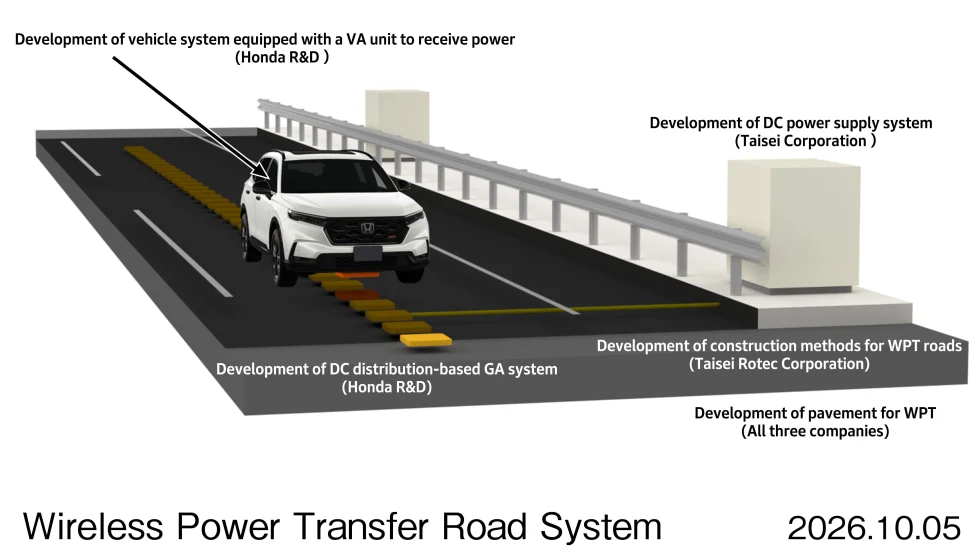
Charging In Motion
Honda has been researching wireless in-motion charging for electric vehicles since 2025, and new technology developments have put it a step closer to a final product.
Read More →
Twin Cities Stores Sell
Minnesota-based Walser Automotive Group made what it called the most significant acquisition in its history with a three-rooftop deal in Minneapolis.
Read More →
U.S. Auto Sales Still Below Prepandemic Levels
Mobility Global industry observers don’t expect the market to return to the higher volumes that became routine before Covid but to stay well below its potential.
Read More →
The Powertrain Shift
Electric-vehicle owners are backpedaling, according to new data, with product availability driving many to shift back to gas-powered engines.
Read More →
Achromatic Autos
The shades that dominate the U.S. car market don’t call attention to themselves, though grayscale may have plateaued after a 30-year upswing, research shows.
Read More →
Used-Vehicle Affordability Worsens
Listing prices in August defied seasonal trends, rising above $27,000 for the second time this year.
Read More →