


2021 Industry Trends: Economic and Political Impacts
Our team of executives from the F&I provider and administrator segment offered their predictions on the current state of the economy and where it may be headed; how the new Biden administration will move forward; and what role evolving rules and regulations may play, impacting the industry from OEMs to dealers to providers.
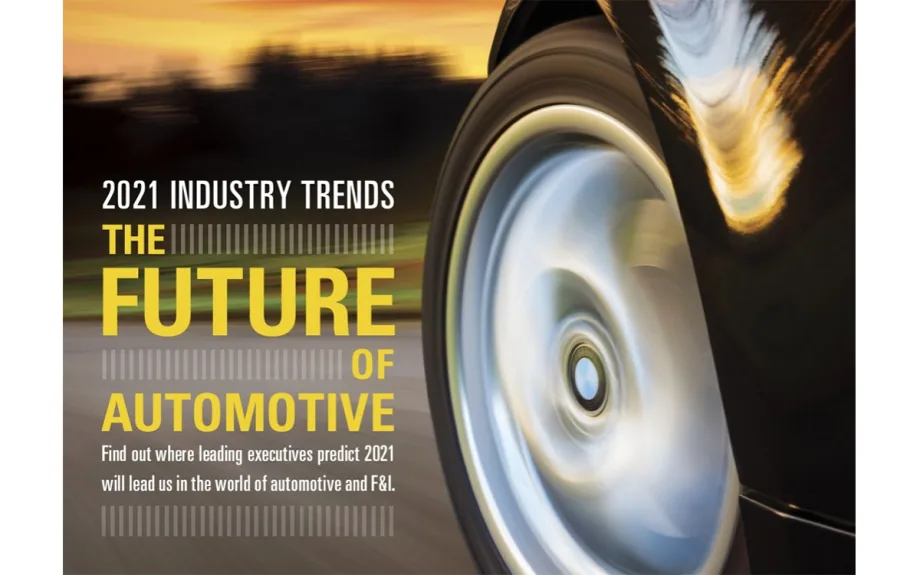
Our team of executives from the F&I provider and administrator segment took a stab at just that and offered their predictions on the current state of the economy and where it may be headed; how the new Biden administration will move forward; and what role evolving rules and regulations may play, impacting the industry from OEMs to dealers to providers.
The Economic Impact
“Predicting the future of the economy and the industry is always an educated guess at best. Who could have predicted last year,” said Steven Apicella, CEO of Strategic DX. “However, there are always the controllable elements that can strongly position F&I providers and administrators for success, regardless of any economic reality.”
Digital Air Strike’s co-founder and CEO Alexi Venneri thinks that with everything going on with stimulus payments, people are more optimistic now that there’s a widespread vaccine rollout, and he believes we’re going to bounce back in a very strong way.
“I think there’s a lot of pent-up demand for people to do things outside of the house, and that certainly includes taking road trips by car. More jobs will be created, and people are going to have more money to do things like buy a new car,” said Venneri. “Sometimes when these things happen, we could see a cultural mindset shift to, ‘I’ve got to live more while I can,’ and oftentimes that translates into consumer spending increasing, so I think it’s going to be very good for the industry.”
Venneri predicts supply chain issues will be figured out as well, and inventory will be coming back, with the possibility of some manufacturers potentially overproducing. Adding that, “ultimately, the course will correct any slowness we have right now, and it will improve once inventory is back online. I also think that consumers of all ages have learned to do a lot more research and transactions online, which can expedite the purchase cycle and process.”
“The economy will improve this year as businesses continue to open and the virus fades,” said Terrence J. O’Loughlin, J.D., M.B.A., director of compliance for The Reynolds and Reynolds Company. “In addition, federal spending will infuse the country with large sums of money and vehicle sales will approach 17 million units.”
However, O’Loughlin cautions there will be an increase in interest rates that might temper some customer vehicle consumption and inflation may be triggered by the addition of this added money to the economy by the Biden-Harris administration.
“With the prices of new vehicles increasing, the demand for used vehicles will grow,” he added.
“We are enjoying a time that defies trends,” stated Ron Greer, vice president of PEN Services at Provider Exchange Network. “With all of the issues facing the economy, there is cash to be spent and a pent-up demand.”
Greer expects that when we can re-open, it looks to be a very good year for aftermarket sales. Even with the pending car shortage, it only provides F&I more focus on value adds to the consumer.
When asked, ARMD Resource Group’s general counsel, Robert Wilson Esq., based his answer on the assumption that the vaccination rollout will continue to positively impact the consumer sentiment and there are not supply chain disruptions. “I would expect the automotive industry to regain traction that has been adversely impacted by COVID.”
Mark Nagelvoort, president and CEO of PCMI Corp. believes automotive sales will be picking up all of 2021, especially with expanded inventory of vehicles, adding that this will be dependent upon the resolution of the chip shortage.
“I see the economy in general taking off midsummer and continuing for some time,” said Jeff Jacobs, CEO and founder of the ZERO Plan by Universal Lenders. “With stimulus investments, direct to consumer checks, pent up demand, vaccines, and the need to get out of the house, the only limitation will be inventory. We all remember ‘Buy a Car, Get a Check.’ Today it’s ‘Get a Check, Buy a Car.’”
CalTex’s President and CEO Rande Hawkinson expects the economy will be strong in 2021 overall and within the automotive industry. “With new car sales forecasted to be 15.5 to 16 million – which is 7.6% to 10.3% growth over 2020 – dealers are optimistic for the new year because the opportunity to make money is front and center.”
“Economic activity is very high, and the economy has been more resilient to COVID than expected,” said Lee Bowron and John Kerper, partners at Kerper and Bowrom. “Hard to judge exactly where we are headed, there could be some slowdowns related to the end of immediate stimulus measures or inflation if too many dollars are chasing goods and services.”
While auto sales are trying to rebound, they are constrained by parts shortages, but Kerper and Bowron expect we should see higher growth in Q4 as the shortages ease.
GSFS Group’s Kashif Faridi expects this year to be big. “The year is off to a really strong start for the automotive industry – from the perspective of vehicle sales and sales of F&I products,” the company’s vice president of sales said.
“We see a strong 2021 for both providers and dealers, as long as OEM inventory levels can meet demand,” said Stan Starnes with Nobilis Group. The company’s COO added that a lack of inventory while new car demand remains high will also have a ripple effect on the market for pre-owned vehicles.
Cindy Allen, StoneEagle’s CEO, thinks we’re going to have healthy economic recovery and growth in 2021, with all indicators reporting over 6%. From an automotive industry perspective, she predicts we’re only going to be limited by the vehicles that we have available to sell.
“In the near term, there’s going to be a sharp shift towards used vehicles, especially for the remainder of the year,” said Allen. “Towards the end, we may have a little bit of an uptick in new, but, for the rest of the year, that’s my thought on that.”
Allen stated that if March is an indicator from our data, we could potentially have a better year from an industry perspective than 2017, 2018, and 2019.
“Right now, though, I think the limitation is going to be the chip availability and our ability to get inventory into the hands of dealers to sell to customers. The supply side of the economic equation is going to be the real driver of performance – the demand side is there. The other key in that, from the shift over to used cars, is you’re going to see the Manheim average – which I feel like has been peaking for years – continue to go up. Meaning that people will be paying retail at auction to buy cars and then selling them at astronomical prices,” she said.
The Effect of a New Administration
O’Loughlin with The Reynolds and Reynolds Company predicts both the short-term and long-term effects of the Biden-Harris administration will not be good for the automotive industry, let alone other industries. Backing up the claim, he cited the presidential administration’s appointed agency leaders, who seek to increase regulation with the overarching concern for combating allegations of man-made climate change.
“Several of these appointees wish to change how commerce is conducted and have made ominous references to changes in the automotive marketplace,” added O’Loughlin. “Moreover, Congress may enact severe laws such as eliminating the exception for franchise dealers in the Dodd-Frank Act and establishing maximum interest rates for various consumer transactions.”
ARMD Resource Group’s Wilson expects the new Biden administration will transition the regulatory environment to a more assertive posture in the short term, while long term is harder to predict due to the shifting political tides.
“However, I would not be surprised to see a focus on EV and EV infrastructure along with a focus on emission regulation for internal combustion engines,” he added.
Tim Akard with CalTex sees the Biden administration having many objectives that will affect the industry, both positively and negatively.
“Their focus on infrastructure and environmental objectives will create both tailwinds and some headwinds for the automotive industry,” said the company’s chief revenue officer. “The tailwinds will include increased sales of clean energy vehicles, OEM tax breaks for producing electric vehicles and government investment for developing new vehicle technologies, and reduced trade friction with the UK and Japan. Headwinds we will experience are increased taxes for vehicles out of spec for emissions and greater scrutiny on auto financing policies and adherence.”
Akard thinks short-term effects will undoubtedly include stricter vehicle emissions guidelines, while long-term effects will include a strong push for mass transit programs (emerging after the pandemic settles) and a focus on developing EV charging stations throughout the U.S.
“Biden’s policies have drastically and rapidly increased the price of gasoline,” stated James Ganther, Esq., president of Mosaic Compliance Services. “This impacts the kind of cars consumers can afford to buy and drive and will have a negative impact on the automotive industry.”
“Regardless of your party affiliation, I think we’ve all seen that too many businesses are reliant on manufacturing components coming from other countries. That’s everything from toilet paper to chips in your vehicle,” said Digital Air Strike’s Venneri. “The automobile industry is going to find new ways to hopefully produce more of those components within North America and the concept of embracing technology, whether leveraging it to see new developments with vaccine production or using it to help more consumers buy cars online, embracing it as a whole is very positive.”
Venneri would like to see the administration invest more in technology with more bi-partisan conversations directed at finding more ways to continue to stimulate the economy.
In the short term, Kerper and Bowron’s Bowron and Kerper expect the reversal of President Trump’s fuel and emission standards may have some impact; while longer term, the Biden administration will attempt to move towards widescale EV adoption faster.
Starnes with Nobilis Group believes it is still too early to predict but that the Biden Administration’s ability and desire to rapidly get the United States back to pre-COVID levels will have a major impact on the automotive sector. “Economic stimulus packages and job growth will likely help get consumers back into the market, but over the long term, corporate tax increases could also have an adverse impact on the industry. A reinvigorated CFPB focused on consumer protections could also play a role in shaping the automotive finance space.”
“I think that this administration is already signaling enhancements and effort of regulation and scrutinization of our industry,” said StoneEagle’s Allen, citing research from NADA that is very much focused on bolstering the perception of auto dealers at the government level. “Because if we go back to four and a half years ago, the level of impact of things like the CFPB is significantly higher. I think there is a real potential for an increase of funding for programs that increase regulation, specifically on the lending side of the equation, which has potential to spill over into the F&I product side of the equation — including things like the tax benefits of reinsurance.”
Allen continued, moving beyond the scope of new laws and regulations, adding that the other component to factor in is the increase in the enforcement of existing regulations.
“Towards the end of the Obama administration, there were many examples of dealers getting prosecuted by the CFBP and FTC for compliance violations, dealers literally getting shut down. On top of that, seeing massive lenders getting multi-million-dollar fines for discriminatory lending practices,” he said.
Allen thinks what that means for our side of the P&A world is really helping dealers, agents, and everybody in the marketplace, understand how to be compliant, and how to run a dealership that is in total compliance with what the regulations are.
The Evolution of Rules & Regulations
Mosaic Compliance Services’ Ganther sees the return of a more aggressive “regulation by enforcement” approach by the Biden administration. “This is not high-level guess; the current administration has been advertising the fact,” he continued. “A recent headline in American Banker reads ‘CFPB Goes on Hiring Spree as It Looks to Ramp Up Enforcement;’ you don’t have to be Nostradamus to see this coming.”
Ganther added that fortunately there is some lag time between announcing an intention and implementing it. All those auditors and inspectors need to be hired, trained, and then get up to speed, so he doesn’t expect to see a lot of enforcement headlines in 2021, at least not before the fourth quarter.
“But 2022, given this kind of advance warning, there is no reason not to get your compliance house in order,” he added.
Robert Wilson views Biden’s appointment of Rohit Chopra as a signal of return to a more ambitious style of consumer-focused enforcement. While Chopra was a commissioner at the FTC, he championed tougher consumer privacy protections and enforcement penalties and, more importantly, was critical about fair lending in the automotive arena.
“I expect further regulations in the disparate impact area. Military lending and in particular, issues connected to GAP, can also be expected to be on the agenda,” said Wilson. “Compliance will obviously be front and center, given the changes outlined above.”
He recommends having a complete CMS, rather than just a training module, and expects data security and vendor management will also be paramount for businesses to protect their assets.
Big regulation is back according to Terrence O’Loughlin, who cited some differences between past administrations. In Obama’s last year as president in 2016, there were 97,110 pages published in the Federal Register, a barometer of federal regulatory activity. In Trump’s first year, only 61,950 pages were printed, a whopping 36% reduction in regulation. In Trump’s last year, 2020, 76,947 pages were published, the highest number during his years as president, but still substantially lower than Obama’s by 21%. He expects the Biden-Harris administration will return, and exceed, the Obama model.
“Presently, the weight of regulation hangs heavy on the car business. It could grow worse by a considerable margin if any of the governmental draconian steps, indicated above, materialize such as the elimination of arbitration as a remedy,” added O’Loughlin. “Dealers should be members of their federal and state dealer associations to combat these potential governmental actions. Dealer associations can be powerful lobbying forces.”
PCMI’s Nagelvoort is expecting increased regulation on both the sale of F&I products, as well as the processing of claims in a timely fashion.
“The CFPB is turning attention back on the auto industry,” said Provider Exchange Network’s Greer. “It will again focus on lenders and if the Insurance providers and dealers do not get ahead and manage compliance on its own, it is only a matter of time before the CFPB is back to the demonization of F&I.”
CalTex’s Akard predicts the industry is going to see a return to Obama-era emissions regulations, if not stricter.
“We will likely see the Consumer Financial Protection Bureau play a greater role in regulating auto financing, meaning that dealers will need to make sure they are adhering to Federal and State guidelines for consumer financing or face strict penalties,” he added.
“With the insertion of F&I Sentinel into the lender approval process for product compliance, we believe there will be some fallout for administrators and providers who have to absorb the resulting time and fiscal costs of cycling through the process,” said Starnes with Nobilis Group. Adding that, ultimately, both the dealer and consumer are affected.
More Industry

The Powertrain Shift
Electric-vehicle owners are backpedaling, according to new data, with product availability driving many to shift back to gas-powered engines.
Read More →
Achromatic Autos
The shades that dominate the U.S. car market don’t call attention to themselves, though grayscale may have plateaued after a 30-year upswing, research shows.
Read More →
Used-Vehicle Affordability Worsens
Listing prices in August defied seasonal trends, rising above $27,000 for the second time this year.
Read More →
First-Half Dealership Deals Up
Buy-sell activity shows that acquirers are looking for value and scale as many retailers seek to leave an increasingly competitive and complex market, Kerrigan Advisors reports.
Read More →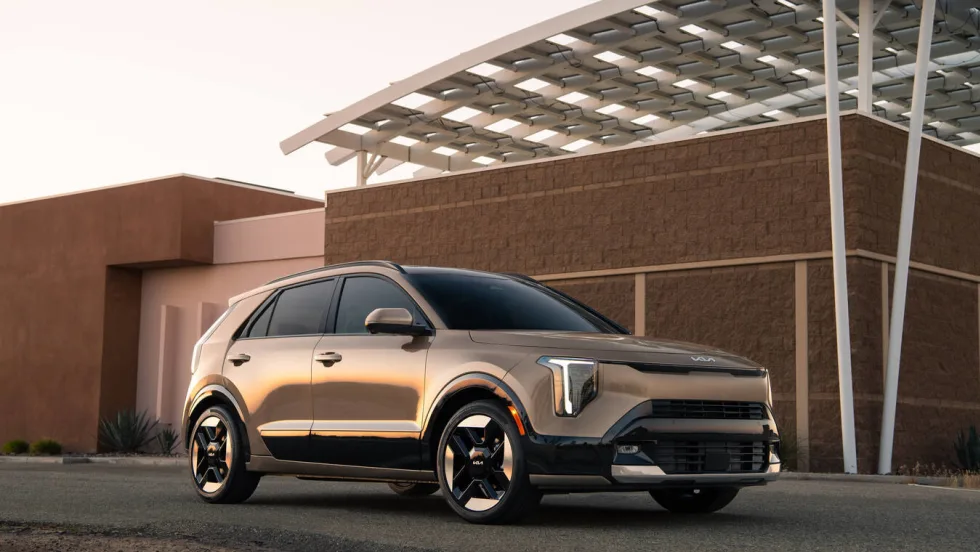
Kia Closes Out Summer With a Bang
Its U.S. subsidiary broke multiple records in August, in part due to a surge of demand for hybrids models.
Read More →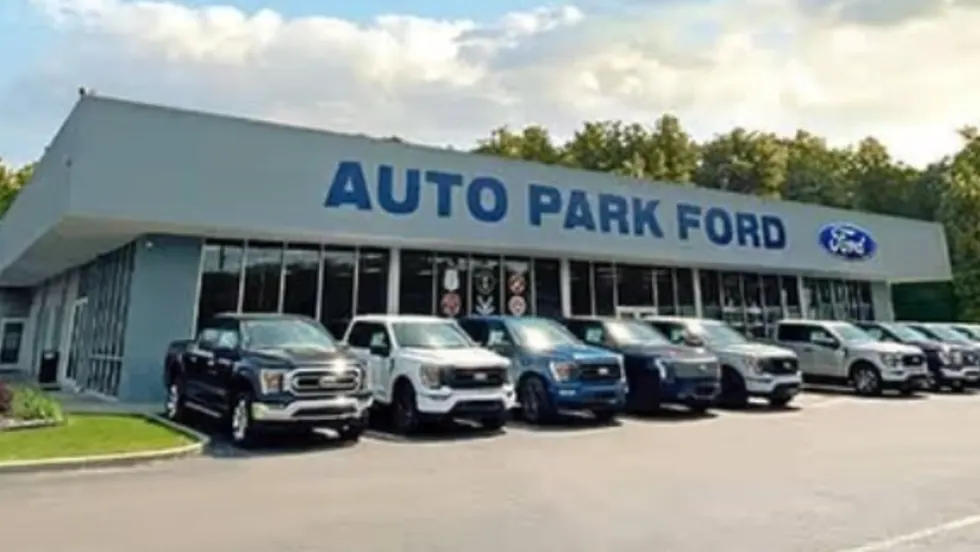
Indiana Dealership Changes Hands
A 30-year-old Ford dealership in Indiana has a new owner and will soon be undergoing renovations to meet manufacturer requirements.
Read More →
Texas Dealership No Longer in the Family
The Ford store, a longtime cornerstone of the Houston market, is now part of one of the fastest-growing U.S. auto groups.
Read More →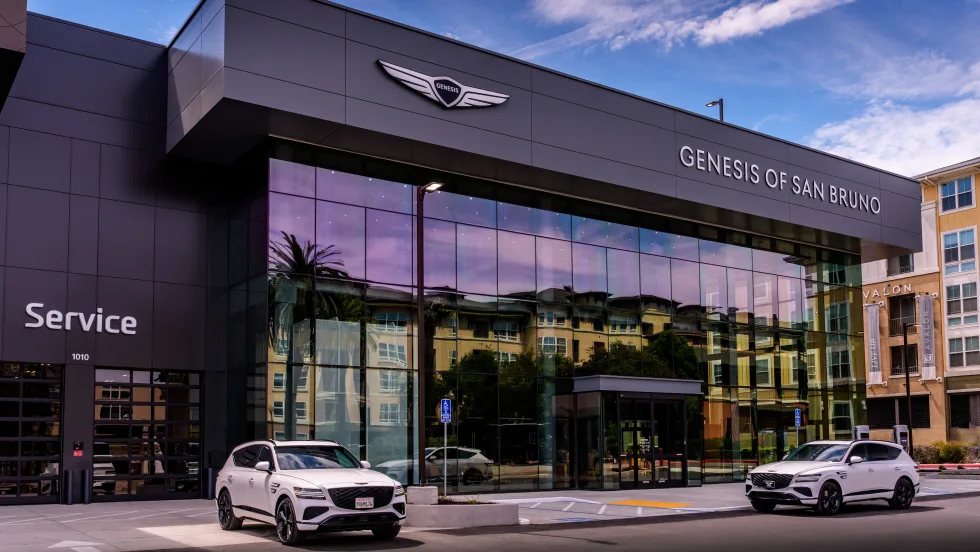
Genesis Grows California Presence
The Cardinale Automotive Group opened its third Genesis rooftop in the Golden State, Genesis of San Bruno, a stand-alone dealership serving the San Francisco Bay Area.
Read More →
August Auto Sales a Mixed Bag
An early forecast shows strong business despite consumer hurdles, and hybrids are a big piece of their affordability coping strategy.
Read More →
EV Market Humming Along
July sales show steady growth as the segment stabilizes from last year’s artificial surge following pullback of federal support.
Read More →