


Embrace Behavior, Discard Models: How COVID-19 Changes What Data Your Dealership Needs
It's your time to embrace behavioral data, discard outdated models, and change your data paradigm. Anything less limits a dealership's ability to both survive this crisis and then navigate the recovery on the other side.
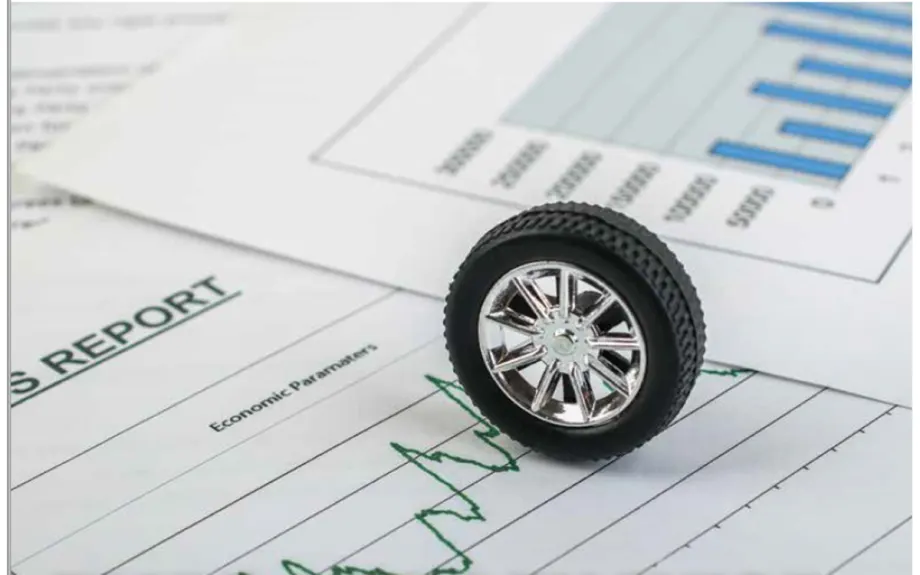
It's your time to embrace behavioral data, discard outdated models, and change your data paradigm. Anything less limits a dealership's ability to both survive this crisis and then navigate the recovery on the other side.
IMAGE: LIONVISION via GettyImages.com
It's been my experience that the average dealer makes marketing and outreach decisions based on 90-day-old registration data. Think about it. How many of your tools rely on typical, standard 90-day trends and projections? In a world shaped by COVID-19, that must change. Dealers should be shifting their data paradigm to what is real-time, behavior-based, and COVID-relevant. Anything less limits a dealership's ability to both survive this crisis and then navigate the recovery on the other side.
Times of crisis compel us to assess where our business needs to evolve.
Flashback with me to earlier this year. OEMs were on the cusp of reporting record January and February sales numbers. The stock market was going strong, days away from the initial warning signs of what was to come. The number of COVID-19 cases in the U.S. could be counted on one hand. More than 30 million more Americans were employed. And the word social distancing wasn't even in our vocabulary.
This crisis has disrupted every pattern of American life, thereby disrupting the most commonly used and trusted data models. So, what's a dealership to do? One response is to stick to what is known, but we all know that times of crisis require us to think differently.
As our company navigates through this crisis, I read a Harvard Business Review article that reinforces the value of making decisions based on today’s reality and not yesterday’s expectations. This is critical for dealers in times like these when information is changing by the day, the hour, even the minute. You must be able to make decisions based on data inputs less than a few days old. Months are officially ineffective.
Let's look at aspects of your business where you may be relying on long ranges of information flow. And then, take the next step to vet your data through these required standards: Real-time, behavior-based and COVID-relevant.
Leads
Many dealers rely on their CRM to forecast sales and revenue. Most often, I work with dealers who assess equal value and apply a similar approach to all leads submitted within the past 60 days. While the data point is behavior-based, it is grounded in a purchase-intent action taken by the potential buyer. Its value is limited by its age and potential irrelevancy to the current reality.
Potential buyers submitting leads 60, 30 or even 10 days ago are not at the same stage of the purchase funnel today. Consider the 30 million Americans who filed for unemployment during COVID-19. Any purchase intent that person may have had two months ago is likely irrelevant to his or her current situation.
Question to ask: Are you assessing your sales and revenue projections based on the number of leads in the pipeline? Then, you must adjust your parameters to leads submitted in the past week or two and right-size your forecast.
Service
Service marketing targeting is typically based on expected mileage computations. By projecting the likely mileage between service visits, or how much time has passed since a vehicle was purchased, dealers often rely on long-range trends to create conversations that drive service revenue. In a COVID-reality, these models are unreliable.
Take me as an example. I haven't even filled my gas tank in a month. Typically, I would be on my ninth tank by now. The pandemic has completely disrupted my service needs, and based on the longevity of the recovery curve, my behavior won’t be back to normal any time soon. Our best effort to get real-time, behavior-based data is through telematics or mobile location data. However, neither of those technologies are prevalent in today’s dealership marketing solutions.
Application to consider: Now is the time to analyze your service targeting strategy and have your vendors walk you through their logic of how they pick customers to target. Look into telematics, aftermarket or GPS targeted solutions that will target the right customers at the right time, regardless of what life events change.
Customer Marketing
For decades, dealers have relied on marketing tools and vendors using equity data to engage previous customers. We're talking about offline data modeling based on how long a person has owned a car and their likelihood to be back in market. Not only is this data not behavior-based, it is stale and infers no context relevant to today's crisis.
I was talking to a colleague yesterday with a six-year-old vehicle in a prime equity position. Every few months, she receives marketing to trade-in her vehicle, yet she never considered a new vehicle until the OEM put forth recent incentives in response to COVID-19. For two weeks, she's been online researching different models, but has heard nothing from the dealership. Why? Because the data the dealership needs to tell them this customer is back in the market is not part of their long-range offline data models. They need to be informing their marketing spend and sales team calls with real-time behavior-based, online shopping data.
Question to ask: Are you making decisions on who to spend your marketing dollars on and who your salespeople will call next based entirely on stale data within your database? If so, it's time to partner with vendors who can overlay shopping behavior from every automotive website and connect that activity to your CRM and DMS databases.
Conquest Marketing
In times of crisis, ad budgets are usually scaled back and the first cut made is customer acquisition. That's often due to great expense and waste. It's hard to avoid when the data being used rarely meets any of the qualifications required by COVID-19. Typically, these mass media ventures and zip-code level marketing initiatives are based solely on demographic data, which has nothing to do with shopping activity and is certainly more than 90 days old.
Before the pandemic, it was estimated that this year, 1.7MB of data will be created every second for every person on the planet.During stay-at-home orders, 97% of Americans spent a month ramping up internet usage. Even with increased internet usage, the Active Shopper Network reports the number of online car shoppers, primarily focused on the amount entering the market each day. These numbers continue to fluctuate, sometimes in a volatile way. Technology makes it possible to monitor shopping behavior across every automotive website, connect it to an individual and track if they started, stopped or continued shopping that same day. This is the behavior-based, real-time data needed to make meaningful marketing investments for your business.
Application to consider: Are you investing or cutting marketing dollars based on the number of impressions served to random data points? In times like these, it's about the frequency of your messages to people currently shopping, not about the expansiveness of your reach to a high quantity of data points in a modeled set.
Conclusion
You can no longer live on 30, 60, or 90-day projections for your business. Whatever has become the norm for you to base your business decisions on, you must accelerate to keep up with the pace of change. The need to make these changes is not new. The economy and consumer expectations have been begging dealers to harness real-time, behavior-based data. COVID-19 makes this imperative, not only to navigate the crisis, but to remain relevant on the other side of the crisis.
There will be a new normal, whether it’s three, six, or 12 months from now. But times of crisis compel us to assess where our business needs to evolve. It's your time to embrace behavioral data, discard outdated models, and change your data paradigm.
Greg Geodakyan is Client Command’s chief product officer.
Read: Does Your Brand Positioning Ring True with Your Customers?
Originally posted on F&I and Showroom
More Industry

Achromatic Autos
The shades that dominate the U.S. car market don’t call attention to themselves, though grayscale may have plateaued after a 30-year upswing, research shows.
Read More →
Used-Vehicle Affordability Worsens
Listing prices in August defied seasonal trends, rising above $27,000 for the second time this year.
Read More →
First-Half Dealership Deals Up
Buy-sell activity shows that acquirers are looking for value and scale as many retailers seek to leave an increasingly competitive and complex market, Kerrigan Advisors reports.
Read More →
Kia Closes Out Summer With a Bang
Its U.S. subsidiary broke multiple records in August, in part due to a surge of demand for hybrids models.
Read More →
Indiana Dealership Changes Hands
A 30-year-old Ford dealership in Indiana has a new owner and will soon be undergoing renovations to meet manufacturer requirements.
Read More →
Texas Dealership No Longer in the Family
The Ford store, a longtime cornerstone of the Houston market, is now part of one of the fastest-growing U.S. auto groups.
Read More →
Genesis Grows California Presence
The Cardinale Automotive Group opened its third Genesis rooftop in the Golden State, Genesis of San Bruno, a stand-alone dealership serving the San Francisco Bay Area.
Read More →
August Auto Sales a Mixed Bag
An early forecast shows strong business despite consumer hurdles, and hybrids are a big piece of their affordability coping strategy.
Read More →
EV Market Humming Along
July sales show steady growth as the segment stabilizes from last year’s artificial surge following pullback of federal support.
Read More →
Auto Loan Delinquency Rates Stabilize
Auto loans are a main driver of nonmortgage consumer debt, but delinquency rates stabilized in the second quarter across all credit risk tiers.
Read More →