


F&I's Future Is Now
Experts say that side of the business must adapt to a process forever changed by the Covid era.

The F&I department has always been a dealership’s most valuable, but recent pressures have diminished its impact, so best practices are key now.
IMAGE: Pixabay/Pexels
Pandemic-era market pressures shifted the car-buying process in many ways, and at least some of those changes may be permanent, say experts, who’ve observed that the finance-and-insurance side of the business must adapt to t he shifts in order to succeed on the other side.
Since supply-chain scarcities shrank vehicle inventories, thereby driving up sale prices and forcing buyers to wait for their cars, sometimes for months, the buying process has stretched into a weeks-long period no one could have foreseen before Covid.
During that wait, buyers sometimes hear nothing about F&I offerings – until their cars arrive. And it’s that last-minute surprise that can hurt F&I managers’ chance of selling their products, say experts, who advise that that part of the process should be reversed to start even before buyers appear at dealerships.
“There’s got to be early involvement,” said Gerry Gould of Gould & Associates, a Tampa-based provider of coaching and training on the F&I process from start to finish, “rather than sitting in their office like the Wizard of Oz.”
EARLIER REACHOUT
Once the shopper reaches out to the dealership, the F&I manager should contact them to explain that part of the process and review their options.
F&I trainer Ron Reahard, president of Tennessee-based training company Reahard & Associates, said he’s actually advised dealerships for many years to get their F&I managers in make contact with customers and prospective customers as early as possible. Now, that’s even more imperative. Otherwise, if that staffer waits until an online shopper shows up at the store to pick up their newly delivered car, potential sales vaporize.
The pandemic exacerbated that scenario, resulting in the finance department getting involved with the customer later and later, Reahard said, because many more customers were doing most or all of their research, ordering and credit applications online.
“In many cases, the finance manager doesn’t even see the customer until they’re there to pick up the car,” he said. “That’s a recipe for poor profits and poor customer satisfaction.”
In those situations, he said a salesperson helps the customer fill out a credit application and transfers it to the sales manager, who works between the customer and a lender. The customer buys the car, and not until then is the deal moved to the finance manager in order to sell products.
“That’s an inefficient and ineffective way to handle it,” Reahard said. “The customer sees the finance manager as someone there to sell them more stuff.”
Instead, the finance manager should start getting to know the customer as soon as he or she fills out a credit application, he said. One way he advises to guarantee early contact is for dealerships to require that customer deposits be submitted through the finance manager.
“Then the finance manager can say, ‘In the meantime, here are some options you can look at on our website. We can talk when you come in or whenever you like.’”
Gould agrees. “At a minimum, the buyer needs to get a phone call from F&I explaining the process when the buyer is shopping around and researching” without getting into pricing. Then they should follow up by sharing articles on issues like the high cost of replacing key fobs.
He advises that F&I managers a little later in the process arrange a video meeting with the customer because conveying enthusiasm is much easier that way than on a phone call. Then, the process becomes as it’s always been once the buyer arrives at the dealership, he said.
“Finance managers feel they’re best in front of the customer, and they are,” Gould said.
Some dealers are embracing the altered F&I picture and engaging with buyers when they show up at the dealerships, Gould and Reahard agreed, but others are sticking with old habits, and that could hurt them.
Whatever else happens in the industry, a more hands-on approach to discussing F&I with buyers won’t go back to the way it was before, Gould said.
“I’ve been in this business my whole adult life. This is the one time where I don’t see it going back to the way it was,” he said. “I think people expect more now. The reason is they’re paying full price for these vehicles.”
COMPETITIVE EDGE
With the changes in expectations comes the need for dealerships to stand out from competitors, the experts said.
Buyers have now been conditioned to expect ordering from a pipeline and waiting on remote deliveries. And though car prices are dropping as inventories improve, customers still will expect more.
“Once the customer gets the feeling they matter to you, the results go through the roof,” Gould said. “Some dealers are telling me dealers are dropping prices. I feel you have to create a competitive advantage if you want to win the customer over in today’s environment, giving them six months of key replacement or tire-and-wheel.
“There’s more relationship-building today than ever before. The more involved they are with the customer, the more the customer will be in tune to doing business with them.”
Reahard also attested to the need for F&I managers to build relationships with customers because it’s the only way to establish credibility and therefore have the authority to recommend products.
Otherwise, it would be “like a stock broker who right away whips out a stock they recommend instead of asking you questions, like your goals, when you plan to retire. You’d be immediately suspicious. It’s no different in the finance office. The more you know about that customer across the desk, the more product recommendations you can make.”
MOST IMPORTANT DEPARTMENT?
Reahard, who’s worked in the industry since 1975, the vast majority of that time on the F&I side, said that department has always been a dealership’s most valuable but that recent pressures have diminished its impact, all the more reason to double down on best practices.
In the third quarter, sales dropped, he thinks partly because dealers are trying to move some used-vehicle inventory they paid a premium for when overall vehicles were short, partly because of rising interest rates translating to more cash buyers. Another reason, though, he said, is that finance managers aren’t engaging with customers early enough.
The F&I department adds the most value to a dealership, he said, because of its low overhead, and that hasn’t changed, despite all of the revolutionary shifts in the industry over the past three years. But its penetration has fallen due to the recent trailing pandemic market pressures.
And most F&I sales have always been a challenge “because we’re selling intangible products,” Reahard acknowledged. “In the finance office, they don’t want anything we’ve got; they just want to finish the paperwork and go home.”
So Reahard and Gould keep hitting the early-as-possible approach to customer engagement as the key to meeting that challenge and all the others the pandemic introduced.
Even when economic conditions ultimately stabilize, Gould reminds F&I managers to orient themselves to a forever-changed landscape.
“If you don’t step up to the plate and realize the difference between F&I three years ago and today and continue with the old trends, you’re going to lose,” he said. “I just think people have woken up. The car-buying process has changed dramatically, and they expect to have that sense of, ‘I care’ instead of, all they care about is selling you a car.”
Hannah Mitchell is executive editor of F&I and Showroom.
Originally posted on F&I and Showroom
More Industry

First-Half Dealership Deals Up
Buy-sell activity shows that acquirers are looking for value and scale as many retailers seek to leave an increasingly competitive and complex market, Kerrigan Advisors reports.
Read More →
Kia Closes Out Summer With a Bang
Its U.S. subsidiary broke multiple records in August, in part due to a surge of demand for hybrids models.
Read More →
Indiana Dealership Changes Hands
A 30-year-old Ford dealership in Indiana has a new owner and will soon be undergoing renovations to meet manufacturer requirements.
Read More →
Texas Dealership No Longer in the Family
The Ford store, a longtime cornerstone of the Houston market, is now part of one of the fastest-growing U.S. auto groups.
Read More →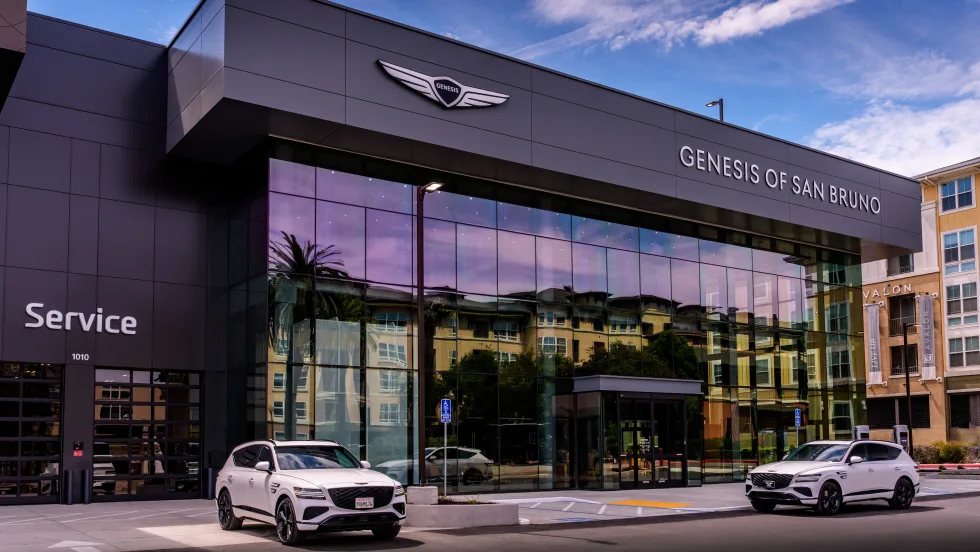
Genesis Grows California Presence
The Cardinale Automotive Group opened its third Genesis rooftop in the Golden State, Genesis of San Bruno, a stand-alone dealership serving the San Francisco Bay Area.
Read More →
August Auto Sales a Mixed Bag
An early forecast shows strong business despite consumer hurdles, and hybrids are a big piece of their affordability coping strategy.
Read More →
EV Market Humming Along
July sales show steady growth as the segment stabilizes from last year’s artificial surge following pullback of federal support.
Read More →
Auto Loan Delinquency Rates Stabilize
Auto loans are a main driver of nonmortgage consumer debt, but delinquency rates stabilized in the second quarter across all credit risk tiers.
Read More →
EV Sales Recover in Q2
The EV sales roller coaster continues as numbers show improvement, but industry experts predict a year-over-year third-quarter decline and fourth-quarter jump.
Read More →
The Cheapest Hybrids to Fuel
The powertrain is increasing in popularity, in no small part due to its fuel economy. A new report lists the most efficient hybrids on the market.
Read More →