


Relying on Technology Partners to Reach Dealer Goals


Relying on Technology Partners to Reach Dealer Goals
In an environment where compliance and sales put an equal amount of pressure on the dealer, a dealer's technology partner may be able to simplify the process and achieve dealer goals.
In this down market, with tight credit criteria and lenders being hesitant with advances, product penetrations have taken a hit. Dealers are looking for ways to offset those losses, and perhaps they should be looking to their technology partners for help. Aiding with compliance, sales and paperwork, technology providers may be the key to helping dealers maximize each opportunity and protect the dealership at the same time.
Jim Maxim, president of MaximTrak, says his company wants to make the transaction in F&I a seamless process for rating, disclosing, printing, and remitting. “Imagine having the ability to integrate with DMS (Dealer Management System) to generate a custom F&I menu, run the customer’s credit, generate an OFAC check and Red Flags check, verify the customer’s identification and send the deal to a lender credit portal, all in 30 seconds. This technology exists today and has an immediate impact: more time to build value and sell, less time entering data in five or six different programs.”
Jeoff Dafforn, chief technology officer for VisionMenu, adds, “We’ve found that independent agents or account reps are in the best position to ensure that a process is followed by the dealers personnel. When they buy-in to the electronic process, as consultants for the dealer, they are the check and balance the dealer needs. This also adds value to their proposition to the dealer.”
Paperless F&I: e-Contracting
A paperless vehicle transaction is where our business is headed, but we’re not there yet. Some dealers are still printing finance contracts, electronically printing the service contract, then printing DMV forms and a tire and wheel contract. The process has not become completely digitized because the different parties—lenders, product providers and state and local governments—have not agreed on a standard electronic protocol.
The innovators in a paperless F&I office are the lenders and menu companies, and we’re starting to see some product providers move towards e-contracting. Lagging are the state and local authorities; one reason is that each state has its own rules. It is unlikely that there is a “one-size-fits-all” electronic DMV form that all 50 states will adopt, but the industry can remain hopeful.
Many companies, however, are working toward making the process completely electronic on their end and the menu is a good place to start. Eventually, the process is bound to become completely digitized. For example, people are gearing up for touch screens with products like iPhones. In the future, the F&I process will become more interactive. Although F&I managers will never go away, they need to embrace consumers and create a more dynamic, open and credible environment.
VisionMenu’s Dafforn says, “Electronic contracting only gets better when the DMS providers advance this cause with the help of more uniformity with vendors’ web services.”
While digitizing the workflow saves time, it can also ensure compliance. A properly designed menu with full disclosure, signed by the customer, is a crucial safeguard in protecting the dealership. And because different states have different standards, the menu should provide the ability to customize disclosure statements to fit specific requirements.
“A dealer wouldn’t let the F&I department hand write a retail installment contract, so why would they ever let it hand write a menu that some think becomes a defacto part of the installment agreement?,” Dafforn says.
Built-in accountability or tracking functionality is another feature to look for when considering any F&I compliance technology. A “dashboard” can help a dealer identify strengths and weaknesses in business, keep track of monthly and annual profit levels and highlight behaviors that could negatively affect the dealer.
"There's no hiding from the numbers," Maxim explains. "Business intelligence with real facts and figures drives better business."
One thing these figures might show is that VSCs are still the flagship F&I product for most dealerships. VSCs and any dealer-reinsured maintenance programs get focus because they bring people back to the selling dealer and capture the service aspect of the business.
Dealers are trying to capture business in creative ways, like offering perks with the purchase of a vehicle, and if these perks can bring the customer back to the dealership for service, there is a 75 percent chance that customer will buy another car at that dealership.
One way dealers can increase the sale of VSCs with the help of a technology partner is through menu selling. It is structured, yet non-confrontational to customers. In addition to providing a low-pressure environment and giving the customer choices, integration with VSC lenders allows the client to rate with the lenders in real time, showing the customer all options that are available with the vehicle being purchased. This provides a credibility factor in the F&I process
Technology can bring focus and give people the tools to analyze business in an intelligent way.
One of the strategies Maxim suggests for F&I managers to analyze business intelligently on the finance side of things is to consolidate bank partnerships. If lenders get a lot of business from a dealer, they will occasionally look at less favorable deals and advance automatically.
“A lot of captive finance arms have been helping the loyal dealerships for years,” Maxim says.
“Custom reporting can help dealers evaluate who is getting their paper, as well as how much they are making when they finance through each finance source,” VisionMenu’s Dafforn says. “It gives them the ability to leverage their position with the lender by being informed about who they are making money for.”
And even though F&I managers should be looking at creative ways to get deals financed, lenders are beginning to loosen up a bit.
“There are signs of life out there,” Maxim says. “A lot of things are starting to pop back. The standards in automotive financing are definitely loosening from where they were in 2008 and 2009.”
A paperless vehicle transaction is where our business is headed, but we’re not there yet. Some dealers are still printing finance contracts, electronically printing the service contract, then printing DMV forms and a tire and wheel contract. The process has not become completely digitized because the different parties—lenders, product providers and state and local governments—have not agreed on a standard electronic protocol.
The innovators in a paperless F&I office are the lenders and menu companies, and we’re starting to see some product providers move towards e-contracting. Lagging are the state and local authorities; one reason is that each state has its own rules. It is unlikely that there is a “one-size-fits-all” electronic DMV form that all 50 states will adopt, but the industry can remain hopeful.
Many companies, however, are working toward making the process completely electronic on their end and the menu is a good place to start. Eventually, the process is bound to become completely digitized. For example, people are gearing up for touch screens with products like iPhones. In the future, the F&I process will become more interactive. Although F&I managers will never go away, they need to embrace consumers and create a more dynamic, open and credible environment.
VisionMenu’s Dafforn says, “Electronic contracting only gets better when the DMS providers advance this cause with the help of more uniformity with vendors’ web services.”
Compliance and Accountability
While digitizing the workflow saves time, it can also ensure compliance. A properly designed menu with full disclosure, signed by the customer, is a crucial safeguard in protecting the dealership. And because different states have different standards, the menu should provide the ability to customize disclosure statements to fit specific requirements.
A dealer wouldn’t let the F&I department hand write a retail installment contract, so why would they ever let it hand write a menu that some think becomes a defacto part of the installment agreement?,” Dafforn says.
Built-in accountability or tracking functionality is another feature to look for when considering any F&I compliance technology. A “dashboard” can help a dealer identify strengths and weaknesses in business, keep track of monthly and annual profit levels and highlight behaviors that could negatively affect the dealer.
"There's no hiding from the numbers," Maxim explains. "Business intelligence with real facts and figures drives better business."
One thing these figures might show is that VSCs are still the flagship F&I product for most dealerships. VSCs and any dealer-reinsured maintenance programs get focus because they bring people back to the selling dealer and capture the service aspect of the business.
Dealers are trying to capture business in creative ways, like offering perks with the purchase of a vehicle, and if these perks can bring the customer back to the dealership for service, there is a 75 percent chance that customer will buy another car at that dealership.
One way dealers can increase the sale of VSCs with the help of a technology partner is through menu selling. It is structured, yet non-confrontational to customers. In addition to providing a low-pressure environment and giving the customer choices, integration with VSC lenders allows the client to rate with the lenders in real time, showing the customer all options that are available with the vehicle being purchased. This provides a credibility factor in the F&I process.
Technology and Lender Relationships
Technology can bring focus and give people the tools to analyze business in an intelligent way.
One of the strategies Maxim suggests for F&I managers to analyze business intelligently on the finance side of things is to consolidate bank partnerships. If lenders get a lot of business from a dealer, they will occasionally look at less favorable deals and advance automatically.
“A lot of captive finance arms have been helping the loyal dealerships for years,” Maxim says.
"Custom reporting can help dealers evaluate who is getting their paper, as well as how much they are making when they finance through each finance source,” VisionMenu’s Dafforn says. “It gives them the ability to leverage their position with the lender by being informed about who they are making money for.”
And even though F&I managers should be looking at creative ways to get deals financed, lenders are beginning to loosen up a bit.
“There are signs of life out there,” Maxim says. “A lot of things are starting to pop back. The standards in automotive financing are definitely loosening from where they were in 2008 and 2009.”
More Product & Technology

Integrating AI Into Your Admin System
It’s important for finance-and insurance administrators to build the technology into their existing systems instead of bolting it on.
Read More →
Public EV Charging Improves
The infrastructure buildout in the U.S. is providing more availability and safety at a better cost, according to the latest EV experience study by JD Power.
Read More →
AI in the Dealership
A Cox Automotive poll shows most dealers use it, but only some have found the smartest ways to adapt the surging technological sensation.
Read More →
AAA Honors Service and Repair Facilities
Three automotive dealerships made AAA's Service Providers of Excellence and Best in Repair list this year.
Read More →
EFG Launches Product Admin Platform
The company says the offering is designed to empower administrators, service contract providers, and product marketers to expand automotive and power-sports capabilities.
Read More →
Optimized Charging Could Reduce Costs
According to an Alliance for Automotive Innovation analysis, optimized EV charging could cut costs for drivers and improve grid infrastructure - potential adoption incentives.
Read More →
From Inspection to Impact
Data, video and artificial intelligence are driving service performance today, when inspection performance is closely tied to key business outcomes.
Read More →
Car Karaoke Gets Official Platform
The in-vehicle karaoke and sing-along platform by Samsung arm is meant to add traveling enjoyment safely in technology that automakers can tailor to their specific needs.
Read More →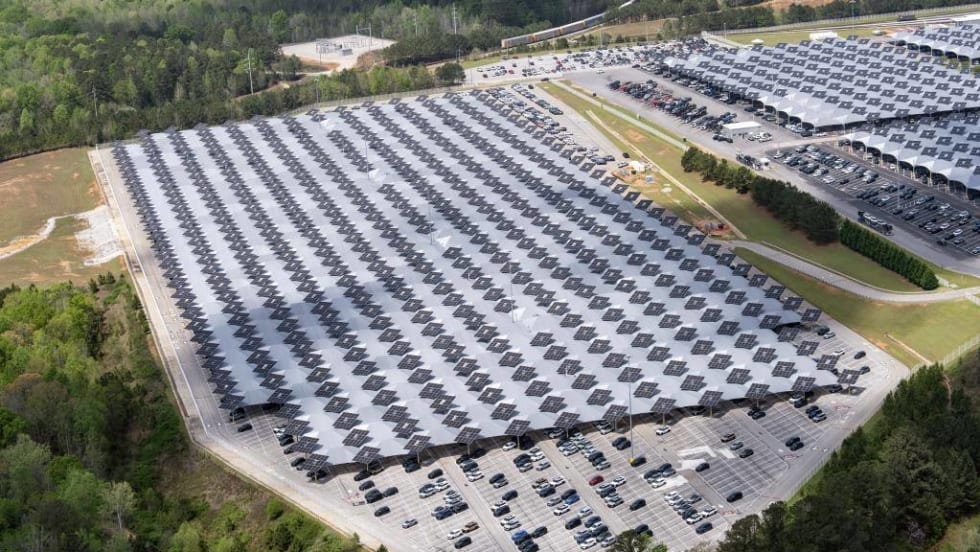
Kia Embraces Clean Energy
A Kia Georgia partnership combines weather protection and renewable energy in a new solar canopy system at Kia’s West Point facility.
Read More →
Honda-Sony Venture Dismantled
For nearly four years, the companies had worked toward the launch of the electric-vehicle brand’s first two models, but the shifting EV market scuttled the plans.
Read More →