
Product & Technology
Build Versus Buy in the Age of AI
The total cost of ownership for an internal claims and contract platform build exceeds the risk-adjusted economics of partnering with a specialized provider.

 MENU
 SEARCH
The total cost of ownership for an internal claims and contract platform build exceeds the risk-adjusted economics of partnering with a specialized provider.

If code is cheap, does AI change the economics of build-versus-buy?
Pexels/Markus Spiske
Artificial intelligence-assisted development tools, such as Claude, Copilot and Cursor, have significantly lowered the barrier to writing software.
Engineers and increasingly nonengineers can generate functional code quickly and at lower cost, and “vibe coding” has made it possible to prototype and assemble applications with minimal traditional engineering effort.
For executives who run or depend on claims and contract platforms in finance-and-insurance, this raises a direct question: If code is cheap, does AI change the economics of build-versus-buy? Should an OEM, administrator or insurer that has long relied on a specialized platform now consider building its own?
The answer is that AI reduces the cost of generating code, but code is the smallest and least durable part of what an organization acquires when it adopts a system of record.
AI is most disruptive when three conditions hold: the software is not a regulated, multiparty system of record; its complexity is bounded; and its integration depth is shallow. Claims and contract life-cycle management meets none of them.
Once the full burden of compliance, integrations, infrastructure, product evolution and risk accountability is counted, an internal build carries a higher total cost of ownership and greater exposure than partnering with a specialized provider that carries those costs once and spreads them across an industry.
The value of a claims and contract platform does not reside in its code. It resides in the governed, compliant and scalable operation of a system of record, supported by embedded domain expertise, deep integrations, governed data, and continuous operational accountability. These are products of operating experience and cross-customer learning, and they are precisely what an isolated, AI-assisted build cannot generate.
To see why a system of record is structurally hard to replicate, it helps to look first at where AI does change the economics. Mass-customization platforms illustrate this shift.
By sharing production, payment and order orchestration infrastructure, these platforms allow brands to offer customized solutions without building those capabilities themselves. Today, AI-generated storefronts, embedded payments, and low-code commerce tools materially reduce the upfront cost of those capabilities. For a manufacturer with limited product variation, predictable workflows, and minimal regulatory exposure, AI compresses time to market and creates real optionality.
The same dynamic applies to quality-assurance automation, user-interface development, and workflow customization, where outputs are discrete and risk is contained, and to early-stage product development, where a startup can prototype with AI-generated code to validate product-market fit before investing in scaled architecture.
Where speed outweighs resilience, AI lowers launch friction and compresses margins in highly customized services.
The pattern is consistent. AI is most disruptive when the software is not a regulated, multiparty system of record, where complexity is bounded, and where integration depth is shallow. Each of those is a test. The question for any F&I organization weighing a build is whether its claims and contract platform passes them.
Claims and contract life-cycle management in F&I operates in a fundamentally different category from the environments where AI is most disruptive. Its complexity spans infrastructure, embedded domain expertise, economic ownership and risk accountability, dimensions that extend well beyond code generation.
The first test is whether the software is a regulated, multiparty system of record. Claims and contract platforms are financial and operational infrastructure. They coordinate transactions across OEMs, dealers, administrators, insurers and end customers; adjudicate financial obligations; enforce contractual terms; reconcile reimbursements; and maintain audit-grade records.
Errors directly affect revenue recognition, regulatory compliance and customer trust.
This is also why agentic AI raises the value of the platform rather than lowering it. Agents can act reliably only against a deterministic, governed core. The organizations best positioned to deploy AI in F&I are those whose system of record is trusted enough for an agent to act on, which makes the core more valuable, not less, as AI capabilities expand.
The second test is whether complexity is bounded. It is not. A mature claims and contract platform encodes complex exception handling, financial reconciliation safeguards, contractual nuance and regulatory variation across markets.
These patterns are learned through years of real-world execution and continuous refinement, not specified in advance. The build-versus-buy decision is therefore not solely technical. It is a product-strategy decision.
Organizations building internally design software around their current workflows. AI may accelerate that development, but it does not redesign processes for scale, anticipate regulatory shifts, or incorporate patterns from other markets.
Industry-level product development works differently. It identifies recurring patterns across many participants, abstracts workflows, and distributes improvements across an entire customer base so that innovation compounds rather than staying isolated.
That embedded expertise and cross-customer learning function as structural intellectual property, rooted in operational experience rather than code generation.
Governed data becomes more valuable in an AI-driven environment. Claims platforms generate rich datasets across adjudication outcomes, contract performance, reimbursement flows, and operational metrics.
Aggregated responsibly, within the permissions and privacy protections each participant has agreed to, this data enables benchmarking, anomaly detection, optimization, and predictive insight. An internal build is limited to one organization’s own data.
The same logic applies to integrations, the third test. An industry platform connects to enterprise resource planning systems, dealer networks, financial processes, and reporting structures across many participants; each integration is built once and maintained for everyone, while an internal build must construct and maintain every connection for a single organization.
AI lowers the cost of that work for whomever does it, and a platform provider amortizes it across its entire base. The advantage compounds with every participant and integration added.
The relevant question is not whether AI can generate code but whether full life-cycle ownership of a production-grade claims platform can be economically justified. Operating one requires sustained investment in regulatory monitoring, enterprise-grade security, data governance, audit-grade traceability, integration maintenance across ERP, customer relationship management system, and dealer ecosystems, round-the-clock support, resilient infrastructure and continuous product evolution.
These obligations are recurring and compounding. AI may compress early engineering effort, but most of the lifetime cost of enterprise software is incurred after first release, in maintenance, integration upkeep, compliance change, and support. AI is compressing the smallest line item.
When all costs are counted, including capital allocation, compliance ownership, integration maintenance, risk exposure and executive oversight, the total cost of ownership for an internal build exceeds the risk-adjusted economics of partnering with a specialized provider.
The reason is structural: Every one of those recurring costs is incurred once by the provider and shared across its customers, while an internal build incurs all of them alone. As AI lowers the provider’s own cost to carry them, that gap widens.
Risk follows the same logic. An organization that builds internally assumes responsibility for uptime, security, compliance failures, regulatory updates, and resilience.
Partnering reduces the burden of operating that critical infrastructure, while the organization retains responsibility for its own regulatory and business obligations. AI does not eliminate this risk; it changes who is best positioned to carry it.
AI changes who can write software. It does not change what it takes to operate a regulated, multiparty system of record, and it does not change the economics of carrying that burden alone.
Financial infrastructure, embedded domain expertise, governed data, integration depth, and operational accountability are not commoditized by AI-assisted code generation. They are strengthened by it, because the organizations that already operate at industry scale are the ones best placed to apply AI across that scale.
For executives in F&I, the question AI raises is not whether their teams can write the code but whether they want to own everything that comes after it. The organizations that answer that question will be the ones that capture AI’s benefit where it matters: in the cost, speed and accuracy of every claim they pay.
Loading data...
Product & Technology
The total cost of ownership for an internal claims and contract platform build exceeds the risk-adjusted economics of partnering with a specialized provider.









Product & Technology
Product providers can follow the lead of industry cohorts in the practice of leveraging their brands through private labeling, pumping new energy into their platforms to stand out from competitors.
Product & Technology
It’s important for finance-and insurance administrators to build the technology into their existing systems instead of bolting it on.
Compliance
Recent state insurance department regulator actions signal that it’s expanding regulatory risk for the VSC industry, whose players should prepare themselves for compliance.
Product & Technology
Data, video and artificial intelligence are driving service performance today, when inspection performance is closely tied to key business outcomes.
Awards
Buffeted by trial after trial as a young man, David Wright knew he’d found his life path when he stumbled into auto retail after all other doors slammed shut. The 2026 Time Dealer of the Year shares the lessons he learned along the way.
Industry
Understanding the risks and benefits of retail accounting and Super CFCs can help you better present options to your dealer partners.
Actuary
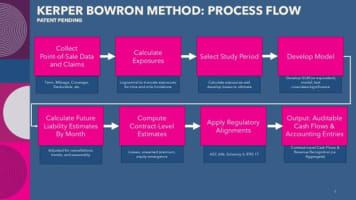
The Kerper Bowron Method is a patent-pending approach that builds on established actuarial principles but applies them at the individual contract level.
Industry
Providers and administrators should clearly and credibly communicate their experiences since their numbers will draw more scrutiny this year.
Compliance
In Trump’s first year, just 60,917 pages were printed in the Federal Register, the official journal of the federal government, down 42%.
Industry
As America turns 250, explore how the automotive industry shaped jobs, culture, innovation, and mobility from Detroit assembly lines to today’s EV era.