


Traditional Paper Contract Processing: It is Time to Re-Evaluate the True Cost


Traditional Paper Contract Processing: It is Time to Re-Evaluate the True Cost
F&I product providers and administrators should consider the tangible and intangible expenses when making the decision to shift from paper to digital contracting.
It is no secret that the automotive landscape has become more competitive and more regulated than ever, and the old adage “only the strong survive” has never rung truer.
We see it daily in every aspect of the sales cycle: cut costs, increase operational efficiencies, make the customer happy. Be profitable. Fortunately, today’s electronic processing, or e-contracting, of automotive F&I product sales is steadily evolving and now offers significantly better integrated options compared to five years ago. There are many solutions that support a full electronic process to rate, prepare and register contracts from within the dealership. Technology, or even change itself, is not the real barrier; it is the acceptance of workable solutions across a diverse supply chain.
All entities, including F&I product providers and administrators, lenders, dealers and ultimately, the customer, stake a claim in a successful transaction. Key to that success, however, is embracing tools and technology that streamline the overall flow.
Recently, there has been a slow but fundamental shift away from the traditional manual contracting process to a digital or electronic approach. Many F&I product providers have developed their own contracting portals, and while some are very well designed, they have only incrementally improved the dealership workflow. However, dealers are less willing to completely adopt e-contracting because they are not convinced the benefits outweigh the impact of a major shift in their process.
But how does a provider or administrator justify the new investment, especially when legacy processes must be maintained through the transition? Many providers have evaluated the cost to implement e-contracting, but few have analyzed the real cost of continuing with their current, manual process. There is no industry formula, but the information is available for those willing to look.
Those who have migrated to and embraced e-contracting, especially F&I administrators, quickly realize that the cost, inefficiency and errors of traditional contracts no longer need to be a “given” part of the process. And through this technology, the relationship with dealers and the consumer is more efficient. Providers can reach more customers and sell more products, and secure, electronic transactions make it easier for all involved.
Every industry recognizes the Internet has enabled a major shift in business processes. Traditional expenses that do not help grow the organization or retain customers should be scrutinized. Ask yourself, “If I was starting fresh today, how would I approach it differently?”
While the shift to e-contracting gains momentum for those who understand its benefits, transitioning typically requires an investment that must make sense financially. How can you measure the true “expense” of traditional contracting, and how can we objectively evaluate the business case?
In understanding manual contracting vs. e-contracting, we first need to define the cost elements associated with traditional, paper-based, manual F&I contracts.
First are direct costs. These are measurable expenses associated with a paper-based process, typically tracked on a P&L. Direct costs include the cost to purchase or print paper contracts. This is affected by inventory levels, emergency contract changes or scheduled changes. Direct costs also include shipping paper contracts to agents and dealers, which depending on the number of changes, might include multiple shipments.
Next to consider are leveraged costs. These are measurable but are typically leveraged. Administrative work to manage forms such as formatting, storage, and library maintenance are examples, as is the data entry work to record contracts. Leveraged costs also can include filing and storage of paper documents using valuable floor space and cabinets, and the time to manually file and retrieve paper documents if needed. Write offs of dealer rating errors are another leveraged cost to consider.
The potentially largest piece of the traditional contracting cost is opportunity cost. These costs are rarely measured and difficult to quantify in many circumstances. Examples include missed sales opportunities because the proper tools are not available or accessible at the point of sale; cost of reporting delays like the registration of the sale and its remittance; the risk associated with a distributed forms process where obsolete, non-compliant forms might still be in use; the CSI cost of claims on unregistered contracts or registered contracts that were voided or canceled; and finally, dealer satisfaction, reflecting how easy and reliable dealers perceive it to do business with their agents and administrators.
When an administrator evaluates an e-contracting strategy, he or she needs to factor all of these costs into the decision. Specifically, administrators need to evaluate what percentage of their administrative labor cost is spent on the entire cycle of a paper forms process, as well as look at their charge-backs and write-offs for each quarter and apply a percentage to those “avoidable” issues. They also should analyze their dealer cancellations to find the root cause, as a certain percentage is likely connected to preventable errors in the process.
A number of companies have been working in this space for years to advance the use of modern tools. Spencer Lyman, Vice President of Systems Development at CNA National Warranty Corporation, a leading national provider of vehicle service contracts and associated products, cites the accuracy and consistency e-contracting provides as a primary motivator in embracing the technology. As a result of ongoing investments in infrastructure to support the technology, CNA National is seeing a positive impact and experiencing additional benefits.
“One of the things we found striking is the effect on early cancellations of service contracts. Dealerships that are able to fully implement e-contracting find the percentage of early cancellations drops to almost zero,” said Lyman. “It makes a significant difference because the business is done correctly the first time rather than needing endorsements down the road.”
As stated earlier, though, the overall auto contracting process is dependent upon a carefully timed series of events and contributors. The successful completion of each step relies on the previous link in the chain. In order to reap the cost and operational benefits, it’s not only administrators who must adopt digital contracting, but dealers, lenders and other F&I sources as well.
Since the advent of e-commerce in the Internet era, many companies have launched technology solutions but few have reported widespread adoption by their dealers. Unfortunately, early attempts at e-contracting did not have the desired acceptance in the dealer and agent community.
With more than 16 years of experience in the industry, Steve Veldkamp, Training Director at Great Lakes Companies, has seen business processes change over time as dealers gradually become more open-minded about implementing e-contracting solutions. However, there is still work to be done. In his experience, the early-attempt push back by dealers in particular stemmed from a lack of understanding about the benefits. In working with dealers, however, Veldkamp touts the benefits of the solutions and encourages adoption because of how it can improve business.
“In my experience, dealers have been slow to adopt because it does require learning a new process and approach to business,” he explained. “There are more facets involved in e-rating, e-submission and e-contracting than in traditional processing and each deal is treated individually. Ultimately, the accuracy, speed and time savings can make the dealer more profitable, but they have to make that initial investment in embracing the technology.”
Veldkamp continued, “The potential for errors is so much greater in the traditional processing world and the time to fix manual errors is significant. Time is valuable and I’d estimate that for my dealers that still use manual processing, I spend hours each month cleaning up bad deals.”
The ultimate cost is the loss of dealer confidence. Lag behind, you could lose business. Adopt the wrong technology, you could lose business. Keep it “easy” and that partnership gets stronger.
For many administrators on the cusp of understanding the complex considerations of traditional versus e-contracting, it can be a seemingly difficult path. However, once the true costs of traditional contracting are understood, e-contracting emerges as a key strategic business direction and can deliver tangible benefits. Lyman said, “It’s very seldom to have anyone go back to paper contracts and rate books once they get a taste of e-rating and e-contracting. Once the understanding is there, the buy-in is very high.”
About Provider Exchange Network
The Provider Exchange Network (PEN), a division of Open Dealer Exchange, is a managed digital pipeline between the provider and the dealership. During the F&I process, PEN allows any dealer system or menu to request rates and forms directly from the provider. This supports a potentially paperless contracting process for the provider including instant and accurate electronic ratings, electronic contract origination, forms preparation, digital signatures, electronic deal jackets, digital remittance and forms archival. This solution allows the provider to stay focused on their core business by increasing dealer exposure, contracting efficiency and reducing administration and risk.
More Industry

Charger Network Growth Slows
Despite a projected increase in public EV chargers in 2026, charging infrastructure remains a top concern for consumers as the gap between the most and least EV-friendly places remains substantial.
Read More →
Lenders, Consumers Take on More Auto Loan Risk
September records loosened credit access the most in over a decade as buyers took advantage of the conditions to afford trading, though loan applications fell.
Read More →
Next-Gen Hybrids in Sight
Dealerships can expect to see revamped hybrids from Honda next year as the company rolls out a new system and model lineup.
Read More →
Gem State Stores Change Hands
A larger auto group founded in the industry’s early years sold two franchises to a neighbor group that's on a growth spurt.
Read More →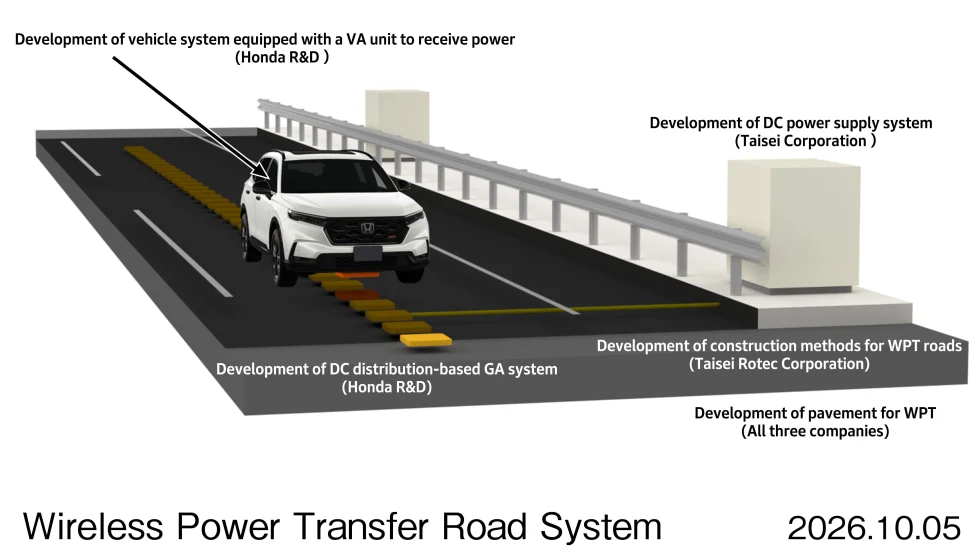
Charging In Motion
Honda has been researching wireless in-motion charging for electric vehicles since 2025, and new technology developments have put it a step closer to a final product.
Read More →
Twin Cities Stores Sell
Minnesota-based Walser Automotive Group made what it called the most significant acquisition in its history with a three-rooftop deal in Minneapolis.
Read More →
U.S. Auto Sales Still Below Prepandemic Levels
Mobility Global industry observers don’t expect the market to return to the higher volumes that became routine before Covid but to stay well below its potential.
Read More →
The Powertrain Shift
Electric-vehicle owners are backpedaling, according to new data, with product availability driving many to shift back to gas-powered engines.
Read More →
Achromatic Autos
The shades that dominate the U.S. car market don’t call attention to themselves, though grayscale may have plateaued after a 30-year upswing, research shows.
Read More →
Used-Vehicle Affordability Worsens
Listing prices in August defied seasonal trends, rising above $27,000 for the second time this year.
Read More →