


Bloomberg: FCA Banking Unordered Vehicles, Pressuring Dealers
A Bloomberg report accuses Fiat Chrysler of creating a ‘sales bank’ of up to 40,000 new vehicles, reviving an old practice that could stoke tension among dealers and investors.

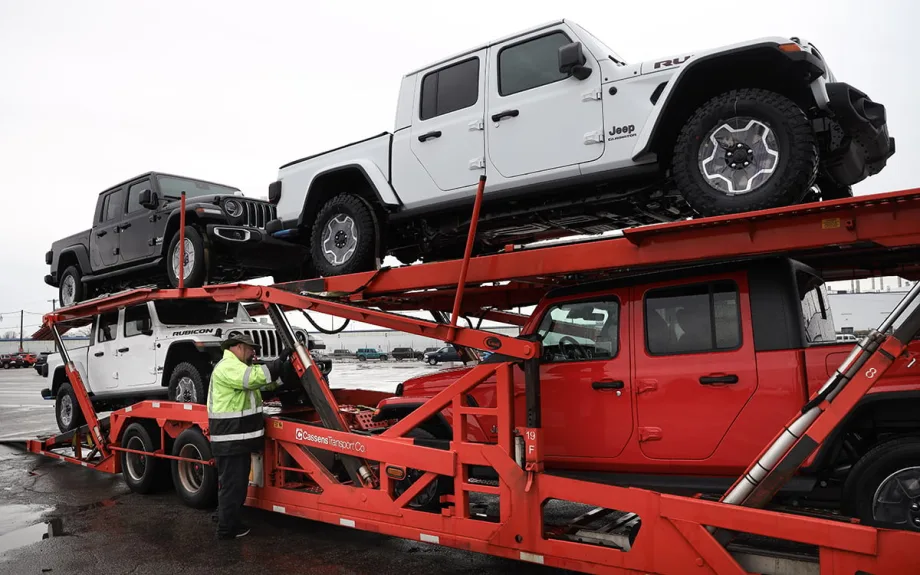
Bloomberg reports an overstock of 5,000 Fiat Chrysler vehicles at the end of the third quarter was the balance of a “sales bank” that held as many as 40,000 units earlier this year.
Photo courtesy Fiat Chrysler Automobiles
(Bobit) — Fiat Chrysler Automobiles has resurrected the practice of “sales banking,” at one point amassing a total of 40,000 unordered cars and trucks and putting undue pressure on U.S. dealers to stock and sell them, according to a Bloomberg report.
The existence of a sales bank would likely unnerve investors and analysts. FCA recently announced a merger agreement with France’s PSA Group, home of the Peugeot, Citroën, andOpel marques, among others. Bloomberg’s Gabrielle Coppola notes Chrysler is known to have overproduced in the late 1970s and at the outset of the Great Recession, when the company was seeking merger partners and would accept federal bailout funds to remain in business.
Read: FCA, PSA Reach Tentative Merger Deal
“While the company is nowhere near that sort of trouble — it just reported record quarterly profit — the surging supply of unassigned vehicles coincided with a period when the company was pursuing mergers,” Coppola writes.
“We’re producing pre-specificationed vehicles against predicted demand so the right vehicles are available when dealers need them.”
FCA’s global chief communications officer, Niel Golightly, claimed the overstock, which had dwindled to 5,000 units by the end of the third quarter, was the result of new and more accurate analytics-based modeling.
“We’re producing pre-specificationed vehicles against predicted demand so the right vehicles are available when dealers need them,” Golightly told Bloomberg.
Coppola notes that Lee Iacocca, the recently departed former CEO of Chrysler who led the company through its 1979 bailout and 1980s revival, was known to despise the practice, which he described in his autobiography as “nothing more than an excuse to keep the plants running when we didn’t have dealer orders for the cars.”
Originally posted on Auto Dealer Today
More Industry

Charger Network Growth Slows
Despite a projected increase in public EV chargers in 2026, charging infrastructure remains a top concern for consumers as the gap between the most and least EV-friendly places remains substantial.
Read More →
Lenders, Consumers Take on More Auto Loan Risk
September records loosened credit access the most in over a decade as buyers took advantage of the conditions to afford trading, though loan applications fell.
Read More →
Next-Gen Hybrids in Sight
Dealerships can expect to see revamped hybrids from Honda next year as the company rolls out a new system and model lineup.
Read More →
Gem State Stores Change Hands
A larger auto group founded in the industry’s early years sold two franchises to a neighbor group that's on a growth spurt.
Read More →
Charging In Motion
Honda has been researching wireless in-motion charging for electric vehicles since 2025, and new technology developments have put it a step closer to a final product.
Read More →
Twin Cities Stores Sell
Minnesota-based Walser Automotive Group made what it called the most significant acquisition in its history with a three-rooftop deal in Minneapolis.
Read More →
U.S. Auto Sales Still Below Prepandemic Levels
Mobility Global industry observers don’t expect the market to return to the higher volumes that became routine before Covid but to stay well below its potential.
Read More →
The Powertrain Shift
Electric-vehicle owners are backpedaling, according to new data, with product availability driving many to shift back to gas-powered engines.
Read More →
Achromatic Autos
The shades that dominate the U.S. car market don’t call attention to themselves, though grayscale may have plateaued after a 30-year upswing, research shows.
Read More →
Used-Vehicle Affordability Worsens
Listing prices in August defied seasonal trends, rising above $27,000 for the second time this year.
Read More →