


Detroit, Japan Factories Suffer in Short September Sales Report
U.S. sales of new cars and light trucks fell 12% year-over-year in September, suppressed in part by a Labor Day weekend allotted to August. Few were spared the sting, with all six of America’s and Japan’s biggest factories reporting double-digit declines.

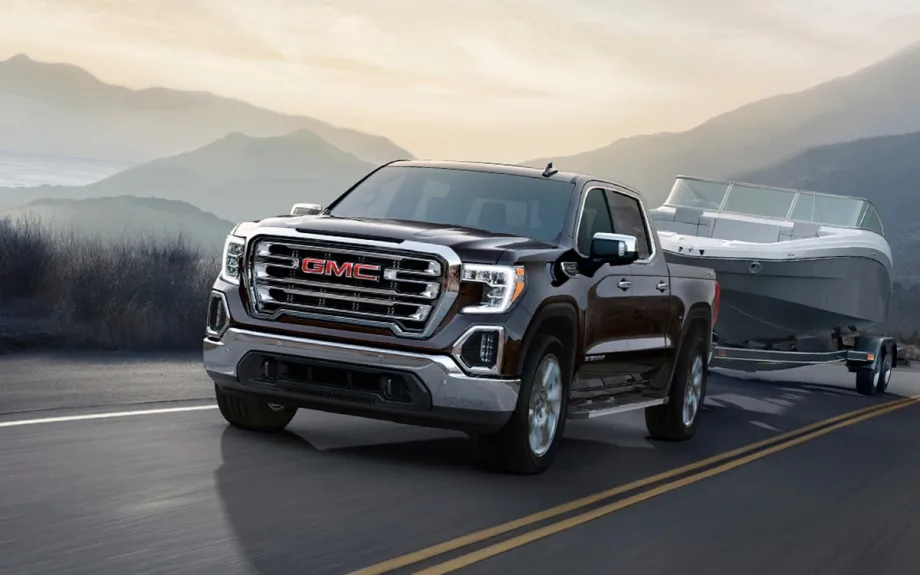
General Motors reported an 11% increase in sales of its GMC brand, including the Sierra pickup. Labor unrest could derail production of the Sierra and its Chevrolet Silverado stablemate.
Photo courtesy General Motors Co.
(Bobit) — Each of the three biggest American and Japanese automakers saw new light-vehicle sales decline by at least 10% in September, according to the latest figures from Automotive News. Remarkably, those losses weren’t enough to push the seasonally adjusted annualized selling rate below the critical 17 million-unit mark: The year-end total is now expected to reach 17.12 million units.
September marked a return to normalcy for manufacturers. Several set new monthly records in August, which annexed Labor Day weekend for reporting purposes. This was not the case in 2018, helping to account for a 12% year-over-year decline industrywide in the new report.
Also of note, Ford, General Motors, and Fiat Chrysler shared their stats for the first time since July. Ford and Fiat Chrysler have joined GM on a quarterly reporting schedule.
Read: SAAR Fails to Crack 17M Despite Record August Sales
Ford’s sales fell by 12% year-over-year in September and by 4.9% in the third quarter. GM and Fiat Chrysler’s sales improved by 6.3% and 0.1% on a quarterly basis. Both declined by 10% in September.
Each of the major Asian factories registered losses in September as well, including Subaru (-9.4%), which had racked up incremental gains over the course of 93 straight months.
Subaru was joined by Nissan (-18%), Toyota (-17%), and Honda (-15%); Toyota and Honda saw light truck sales fall by 17% and 14%, respectively. Sales also declined for the Kia (-13%), Mazda (-11%), and Hyundai (-8.8%) brands.
Abbreviated calendar aside, Land Rover (7.5%), Volvo (7%), BMW (6%), Mercedes-Benz (4.5%), Porsche (2.2%), and Mitsubishi (0.2%) all reported higher year-over-year sales.
“This new trend may be revealing a moderating, stable market, or it may also be the calm before the storm.”
“The third quarter appears to be finishing at a fairly stable pace — four months in a row of near 17.0 million SAAR after a volatile previous six months,” said Cox Automotive Senior Economist Charlie Chesbrough. “This new trend may be revealing a moderating, stable market, or it may also be the calm before the storm. Retail sales have been declining since 2017, and that trend will continue to weigh on the market as the economy moves through a more turbulent period.”
Kelley Blue Book analysts found transaction prices to be slightly higher than in the year-ago period and the prior month, averaging $37,590 in September. Earlier in the week, J.D. Power reported factory incentive spending reached record levels last month: up a full 6% year-over-year to $4,159 per vehicle.
Intense competition among Detroit 3 pickups are driving results in multiple categories, including declines for Asian competitors, sticker prices, and incentive spending. Cox Automotive calculated fleet sales improved by 9.1% in September while retail sales fell 4.7% and lease originations declined by 2%.
“The real story for the auto industry will be told in the coming weeks as Chevy and GMC dealers run low on pickup trucks to sell.”
GM reported an 11% increase in deliveries for the GMC brand in September, building momentum that could be undone by labor unrest, noted Michelle Krebs, executive analyst at Autotrader.
“The real story for the auto industry will be told in the coming weeks as Chevy and GMC dealers run low on pickup trucks to sell, with the UAW strike against General Motors leading the company to idle the plant in Mexico that makes the Silverado and Sierra,” Krebs wrote in a release.
Patrick Manzi, senior economist for the National Automobile Dealers Association, noted that light trucks accounted for more than 70% of all deliveries so far in 2019, a new record, and those sales will likely help manufacturers maintain a $37,000-plus average transaction price through the end of the year.
“The two interest rate cuts by the Fed will help some consumers with lower payments. We have seen credit standards tightening in recent months with a larger share of auto loans being made to more creditworthy customers,” Manzi wrote Tuesday. “We expect that this will continue throughout the year as well.
“Dealers are likely to see benefits in the form of lower inventory floorplanning costs. The low interest rate environment of a few years ago turned inventory floorplanning into a profit center for several years before rising interest rates shifted inventory financing back to a traditional expense,” Manzi added.
Originally posted on Auto Dealer Today
More Industry

Charger Network Growth Slows
Despite a projected increase in public EV chargers in 2026, charging infrastructure remains a top concern for consumers as the gap between the most and least EV-friendly places remains substantial.
Read More →
Lenders, Consumers Take on More Auto Loan Risk
September records loosened credit access the most in over a decade as buyers took advantage of the conditions to afford trading, though loan applications fell.
Read More →
Next-Gen Hybrids in Sight
Dealerships can expect to see revamped hybrids from Honda next year as the company rolls out a new system and model lineup.
Read More →
Gem State Stores Change Hands
A larger auto group founded in the industry’s early years sold two franchises to a neighbor group that's on a growth spurt.
Read More →
Charging In Motion
Honda has been researching wireless in-motion charging for electric vehicles since 2025, and new technology developments have put it a step closer to a final product.
Read More →
Twin Cities Stores Sell
Minnesota-based Walser Automotive Group made what it called the most significant acquisition in its history with a three-rooftop deal in Minneapolis.
Read More →
U.S. Auto Sales Still Below Prepandemic Levels
Mobility Global industry observers don’t expect the market to return to the higher volumes that became routine before Covid but to stay well below its potential.
Read More →
The Powertrain Shift
Electric-vehicle owners are backpedaling, according to new data, with product availability driving many to shift back to gas-powered engines.
Read More →
Achromatic Autos
The shades that dominate the U.S. car market don’t call attention to themselves, though grayscale may have plateaued after a 30-year upswing, research shows.
Read More →
Used-Vehicle Affordability Worsens
Listing prices in August defied seasonal trends, rising above $27,000 for the second time this year.
Read More →