


EVs Bring Most Satisfaction to Date
Study finds that adopters are true believers and that their satisfaction with the vehicles is growing, including for public charger experience, despite pullback of federal incentives.

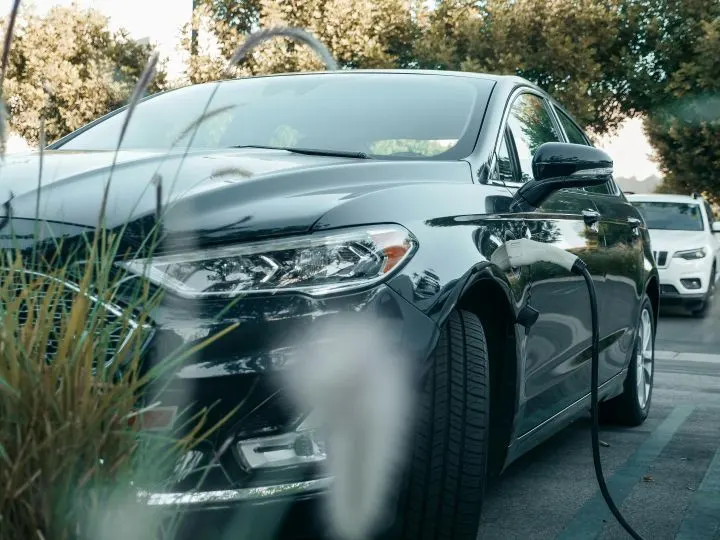
Satisfaction with the availability of public EV chargers increased last year and is the most improved metric in the study.
Pexels/Kindel Media
Electric vehicles may have taken a hit in the U.S. with the end of the federal tax credit for purchases and leases, but those who already have one are more satisfied with electric than ever.
The dominant experience was captured in J.D. Power’s annual EV ownership experience study, which found 96% of battery-electric vehicle owners would consider another BEV for their next trade, the highest satisfaction level in the study’s six years.
“Improvements in battery technology, charging infrastructure and overall vehicle performance have driven customer satisfaction to its highest level ever,” said Brent Gruber, director of J.D. Power’s EV practice, pointing out that even consumers who didn’t benefit from the tax credit expressed satisfaction.
The company and EV driver application maker and research firm PlugShare conducted the survey of more than 5,700 owners of 2025 and 2026 BEVs and plug-in hybrid EVs, or PHEVs. BEVs are purely electric and have no gas engine, while PHEVs have a gas engine and a battery charged through a plug.
BEVs brought more consumer satisfaction than PHEVs, according to the study results. The former scored 114 points higher in the premium segment and 117 points higher in the mass-market segment, respectively, than their PHEV counterparts.
J.D. Power attributes the difference to lower maintenance needs of BEVs due to their absence of gas engines. At the same time, BEV consumers reported fewer problems in their vehicles this year, reflecting growing maturity in the segment also seen in marked public charger satisfaction improvement.
Still, satisfaction rose for both power trains and for premium and mass-market consumers. The premium average BEV satisfaction score rose from 756 to 786, while the average mass-market BEV score rose from 725 to 727.
Meanwhile, the average premium PHEV satisfaction score was up from 741 to 756, and the mass-market score jumped from 632 to 658.
Among models, EV maker Tesla topped both overall and premium-segment BEV satisfaction with its Model 3, followed in second place by Model Y and the BMW i4 in third.
Ford bested the mass-market BEV segment with its Mustang Mach-E. In second is the Hyundai Ioniq 6, followed by the Kia EV9. No PHEV was eligible for an award.
Originally posted on F&I and Showroom
More Industry

Charger Network Growth Slows
Despite a projected increase in public EV chargers in 2026, charging infrastructure remains a top concern for consumers as the gap between the most and least EV-friendly places remains substantial.
Read More →
Lenders, Consumers Take on More Auto Loan Risk
September records loosened credit access the most in over a decade as buyers took advantage of the conditions to afford trading, though loan applications fell.
Read More →
Next-Gen Hybrids in Sight
Dealerships can expect to see revamped hybrids from Honda next year as the company rolls out a new system and model lineup.
Read More →
Gem State Stores Change Hands
A larger auto group founded in the industry’s early years sold two franchises to a neighbor group that's on a growth spurt.
Read More →
Charging In Motion
Honda has been researching wireless in-motion charging for electric vehicles since 2025, and new technology developments have put it a step closer to a final product.
Read More →
Twin Cities Stores Sell
Minnesota-based Walser Automotive Group made what it called the most significant acquisition in its history with a three-rooftop deal in Minneapolis.
Read More →
U.S. Auto Sales Still Below Prepandemic Levels
Mobility Global industry observers don’t expect the market to return to the higher volumes that became routine before Covid but to stay well below its potential.
Read More →
The Powertrain Shift
Electric-vehicle owners are backpedaling, according to new data, with product availability driving many to shift back to gas-powered engines.
Read More →
Achromatic Autos
The shades that dominate the U.S. car market don’t call attention to themselves, though grayscale may have plateaued after a 30-year upswing, research shows.
Read More →
Used-Vehicle Affordability Worsens
Listing prices in August defied seasonal trends, rising above $27,000 for the second time this year.
Read More →