


Ghosn’s Nissan Unleashed to Become Japan’s Most Profitable Automaker

Carlos Ghosn, poised to make Nissan Motor Co. into Japan’s most profitable automaker for the first time since at least 1992, is returning to the type of bold pronouncement he was known for a decade ago.
“Nissan is unleashed,” Ghosn, 57, told reporters yesterday at company headquarters in Yokohama. “This is the first time we are launching a plan with no handicap. We are fully on the offensive.”
The chief executive officer, anticipating higher global production, had Nissan stocking electrical components before the March 11 earthquake and tsunami. That positioned it to recover faster than Toyota Motor Corp. or Honda Motor Co. In North America, Japan’s second-biggest carmaker lost a week of output while the other two have yet to resume full production.
Nissan now targets operating income of 460 billion yen ($5.7 billion) in the year ending March 2012, while Toyota expects 300 billion yen and Honda estimates 200 billion yen. That would be the first time Nissan beat its two biggest competitors, according to Bloomberg data dating to 1992.
Ghosn this week announced a six-year mid-term plan aiming for 8 percent global market share and 8 percent operating margin. His enthusiasm recalls the days shortly after he was brought from biggest shareholder Renault SA to lead Nissan. In May 2000, just after Nissan’s biggest annual loss, Ghosn told Bloomberg News he would lead a return to profit by March 2001: “I am not optimistic. I am confident.” He met his goal.
The CEO has earned the right to brag, said Jesse Toprak, vice president of industry trends at TrueCar.com in Santa Monica, California. “A little arrogance is good if it can be substantiated, and right now Nissan has confidence in the future,” Toprak said. “The math favors them this year.”
Nissan still faces challenges. While Ghosn is more bullish about Nissan’s outlook for the current fiscal year than Toyota and Honda, his operating income goal is still below the 537 billion yen posted in the year ended March 2011. Also, Toyota now expects full production of most models to resume by September, two months earlier than it first estimated, and is readying a new Camry sedan and Prius wagon late in the year to aid sagging U.S. sales.
Nissan estimates its global vehicle sales will rise 10 percent in the 12 months started April 1, compared with a 6 percent decline forecast by Honda and 0.9 percent drop at Toyota. Nissan’s U.S. sales in May fell 9.1 percent, compared with a 33 percent plunge at Toyota.
“Nissan has completely different momentum on sales,” said Koji Endo, an auto analyst at Advanced Research Japan in Tokyo.
Nissan had secured a greater supply of semiconductors before the quake than its Japanese rivals, preparing to increase production in anticipation of growing global demand, according to analysts at IHS Automotive and Advanced Research Japan.
Damage to chipmaker Renesas Electronics Corp.’s plant in Ibaraki prefecture was a major cause of output disruptions for automakers in Japan.
“We were envisioning a very steep ramp-up in production in 2011,” Ghosn said. “We found ourselves with a larger inventory than some of our competitors.”
Honda was particularly hard-hit by the semiconductor shortage because it had ordered a new type of chip for its updated Civic, which went on sale in the U.S. in late April.
“There was a timing issue with our order,” Honda Chief Financial Officer Fumihiko Ike said yesterday.
Investors have noticed. Nissan has gained 1.1 percent in Tokyo trading since March 10, the day before the quake, compared with a 12 percent drop for Toyota and an 11 percent decline for Honda as of yesterday’s close. Japan’s benchmark Nikkei 225 Stock Average has lost 7.5 percent in the same period.
In the three months ending June 30, Nissan’s global sales will exceed the year-earlier level, Corporate Vice President Joji Tagawa said June 23. The company started hiring 200 temporary workers this month to help ramp up output. Toyota and Honda will begin adding workers in mid-July.
Investors should be mindful that Nissan’s method of accounting in China inflates the company’s operating profit, Endo said.
In China, Nissan’s profit from its 50-50 joint venture with Dongfeng Motor Group Co. is reflected in operating income through a method known as “proportional consolidation,” in contrast to the equity method, which reflects the venture’s profit at the net income level.
Toyota and Honda use the equity method under U.S. Generally Accepted Accounting Principles, unlike Nissan, which reports under Japanese accounting rules.
Nissan’s six-year mid-term plan announced earlier this week included a target to more than triple sales of Infiniti luxury models to 500,000 vehicles, or about 10 percent of the global luxury-car market. Nissan plans to add Infiniti production in the U.S. or China, Ghosn said in an interview.
The company will benefit from cooperation with Daimler AG, which plans to share its platform with Infiniti, said Masatoshi Nishimoto, an analyst at IHS Automotive.
Nissan is also introducing compact cars based on its “V- Platform” in markets including India, China, Brazil, Thailand and Mexico. “That is the most important platform for emerging markets for us,” Ghosn told reporters yesterday.
With these compact cars and growth in luxury models, “Nissan has very well-balanced growth ahead,” Nishimoto said.
Nissan is also benefiting from a higher percentage of overseas production, which softened the impact of output disruptions in Japan, said Edwin Merner, president of Atlantis Investment Co. in Tokyo.
The carmaker began producing the March compact in Thailand last year, helping limit its drop in Japan sales to 16 percent in May, compared with a 57 percent plunge at Toyota and a 35 percent decline at Honda.
Nissan’s profit forecast beats its rivals even with the most conservative forecast on materials prices among the top carmakers, thanks to a strong production growth plan, said Kurt Sanger, an auto analyst at Deutsche Securities Inc. in Tokyo.
“Nissan will meet those estimates; they may even beat them,” Atlantis’s Merner said. “A lot depends on the yen and the world economy.”
The yen advanced 15 percent against the U.S. dollar last year and reached a postwar record of 76.25 on March 17, eroding Japanese carmakers’ repatriated earnings from overseas sales. Nissan is basing this year’s profit forecast on an exchange rate of 80 yen to the dollar and 115 yen to the euro.
More Industry

Charger Network Growth Slows
Despite a projected increase in public EV chargers in 2026, charging infrastructure remains a top concern for consumers as the gap between the most and least EV-friendly places remains substantial.
Read More →
Lenders, Consumers Take on More Auto Loan Risk
September records loosened credit access the most in over a decade as buyers took advantage of the conditions to afford trading, though loan applications fell.
Read More →
Next-Gen Hybrids in Sight
Dealerships can expect to see revamped hybrids from Honda next year as the company rolls out a new system and model lineup.
Read More →
Gem State Stores Change Hands
A larger auto group founded in the industry’s early years sold two franchises to a neighbor group that's on a growth spurt.
Read More →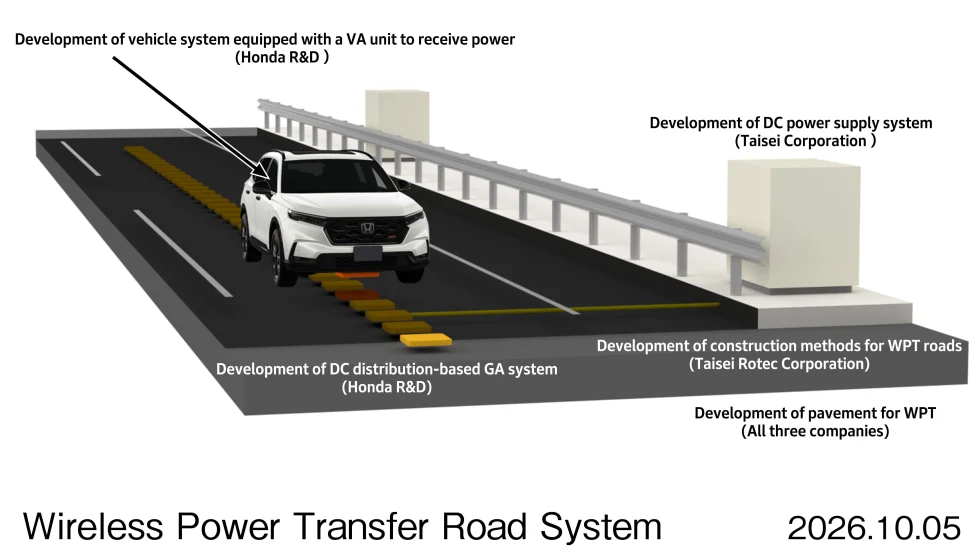
Charging In Motion
Honda has been researching wireless in-motion charging for electric vehicles since 2025, and new technology developments have put it a step closer to a final product.
Read More →
Twin Cities Stores Sell
Minnesota-based Walser Automotive Group made what it called the most significant acquisition in its history with a three-rooftop deal in Minneapolis.
Read More →
U.S. Auto Sales Still Below Prepandemic Levels
Mobility Global industry observers don’t expect the market to return to the higher volumes that became routine before Covid but to stay well below its potential.
Read More →
The Powertrain Shift
Electric-vehicle owners are backpedaling, according to new data, with product availability driving many to shift back to gas-powered engines.
Read More →
Achromatic Autos
The shades that dominate the U.S. car market don’t call attention to themselves, though grayscale may have plateaued after a 30-year upswing, research shows.
Read More →
Used-Vehicle Affordability Worsens
Listing prices in August defied seasonal trends, rising above $27,000 for the second time this year.
Read More →