


GM Offers Interest-Free Financing As Sales Pace Accelerates

General Motors Co. is offering buyers interest-free financing on some 2011 models after the company increased discounts and incentives to lead all major automakers’ U.S. sales gains last month.
The loans became available yesterday for 72 months on the Chevrolet Impala sedan, as well as for 60 months on the Malibu sedan, HHR wagon, Traverse sport-utility vehicle, and Silverado, Colorado and Avalanche pickups, according to AIS Rebates in Ann Arbor, Michigan. The 60-month deal also applies to the Buick Enclave and GMC Acadia SUVs and Sierra pickups, reported Bloomberg.
GM raised discounts 12 percent from a year earlier to an estimated $3,732 per vehicle last month, the most among major automakers and 45 percent more than the average, according to researcher Autodata Corp. The company’s spending on incentives will “moderate” this month, Don Johnson, GM’s vice president for U.S. sales, said earlier this week.
“GM’s rhetoric has been saying one thing - discipline, discipline, discipline - and then their actions have been going completely in another direction,” Jeremy Anwyl, chief executive officer of Santa Monica, California-based Edmunds.com, said in a telephone interview.
GM doesn’t comment on specific incentive programs, Tom Henderson, a spokesman, said today in a telephone interview. GM still has the highest average transaction prices among mainstream automakers according to J.D. Power & Associates and GM data, he said, without giving specifics.
GM fell 7 cents to $32.88 at 4:15 p.m. in New York Stock Exchange composite trading. The Detroit-based company’s shares have dropped 0.4 percent from their $33 initial offering price in November.
Reduced-rate financing also is being offered on other models, such as 2.9 percent, 60-month loans on the Chevy Cruze compact and 3.9 percent, 60-month loans on the Cadillac SRX, according to AIS.
The automaker’s discounts may force rival Ford Motor Co. to increase its sales incentives, Anwyl said. GM’s U.S. sales in February climbed 46 percent, giving it a 20.8 percent share of the market last month, topping Ford’s 15.7 percent and Toyota Motor Corp.’s 14.3 percent, according to in Woodcliff Lake, New Jersey-based Autodata.
Ford Chief Executive Officer Alan Mulally has emphasized profitability over market share, with Ford boosting prices in February by $700 to $800 a vehicle from January, George Pipas, the automaker’s sales analyst, told reporters on Feb. 28.
“Up until three months ago, Ford was the one everybody was talking about,” Anwyl said. “The question is, ‘How long are they going to want to be the disciplined car company and allow GM to pick up their share?’”
Ford reduced average incentive spending 9.7 percent to $2,542 last month. The Dearborn, Michigan-based company’s 10 percent increase in February sales trailed GM and Toyota, which had a 42 percent gain after it raised spending 11 percent to $2,003. Chrysler Group LLC’s average discounts fell 14 percent to $3,052, while sales climbed 13 percent.
Chrysler, the U.S. automaker operated by Fiat SpA, said its March incentives include offering financing as low as zero percent on some vehicles, including the Ram 1500, according to its website.
GM needs steeper incentives to clear out older models such as the Impala and Malibu, said Maryann Keller, principal of a self-titled consulting firm in Stamford, Connecticut. The automaker also can afford discounted lease deals because vehicles’ resale values are now at high levels, she said.
“You use incentives on stuff that’s old,” Keller said in an interview yesterday. “Leasing can be done today very affordably because interest rates are low and residual values on the cars are high.”
GM’s sales gains were “far stronger than the magnitude of the incentive spend,” Itay Michaeli, an analyst at Citigroup Inc. in New York, wrote today in a research note.
“This may remain a subject of debate until GM demonstrates solid share on lower incentives,” Michaeli said. “The industry did not appear to plunge into a price war in February as some feared.”
The discounts by GM and Toyota City, Japan-based Toyota may be artificially inflating the U.S. auto market, said Ernst Lieb, chief executive officer of Daimler AG’s Mercedes-Benz USA.
Light-vehicle sales in February ran at a seasonally adjusted 13.4 million annual rate, according to Autodata. The pace topped the 12.5 million average estimate of 10 analysts surveyed by Bloomberg and exceeded 13 million for the first time since the U.S. government’s “cash for clunkers” program in August 2009.
“I wonder if you’d see such a strong market, month after month” without the incentives from GM and Toyota, Lieb said in an interview yesterday. “Things are still extremely unpredictable. Look at fuel prices and the uncertainty and unrest in the Middle East.”
Auto incentive spending throughout the U.S. industry in February fell 4.6 percent to $2,578 per vehicle, according to Autodata. GM plans to reduce incentives to get back in line with the industry average, Johnson said yesterday on a conference call with reporters and analysts.
The reluctance on the part of the entire industry to raise incentives has probably constrained the market prior to last month, Edmunds’ Anwyl said. Incentives helped propel the U.S. to its all-time fastest auto sales pace in 2001 when GM introduced its no-interest campaign dubbed “Keep America Rolling,” after the September 11 terrorist attacks.
“If GM plans to make good on its promise to keep incentives in line with the industry average over the course of the year, it will have to post below-average incentives at some point,” Chris Ceraso, a New York-based analyst with Credit Suisse Group AG, wrote in a research report today. “This may get difficult, as its key competitors are showing a willingness to increase incentive levels in order to stay competitive.”
More Industry
Charger Network Growth Slows
Despite a projected increase in public EV chargers in 2026, charging infrastructure remains a top concern for consumers as the gap between the most and least EV-friendly places remains substantial.
Read More →
Lenders, Consumers Take on More Auto Loan Risk
September records loosened credit access the most in over a decade as buyers took advantage of the conditions to afford trading, though loan applications fell.
Read More →
Next-Gen Hybrids in Sight
Dealerships can expect to see revamped hybrids from Honda next year as the company rolls out a new system and model lineup.
Read More →
Gem State Stores Change Hands
A larger auto group founded in the industry’s early years sold two franchises to a neighbor group that's on a growth spurt.
Read More →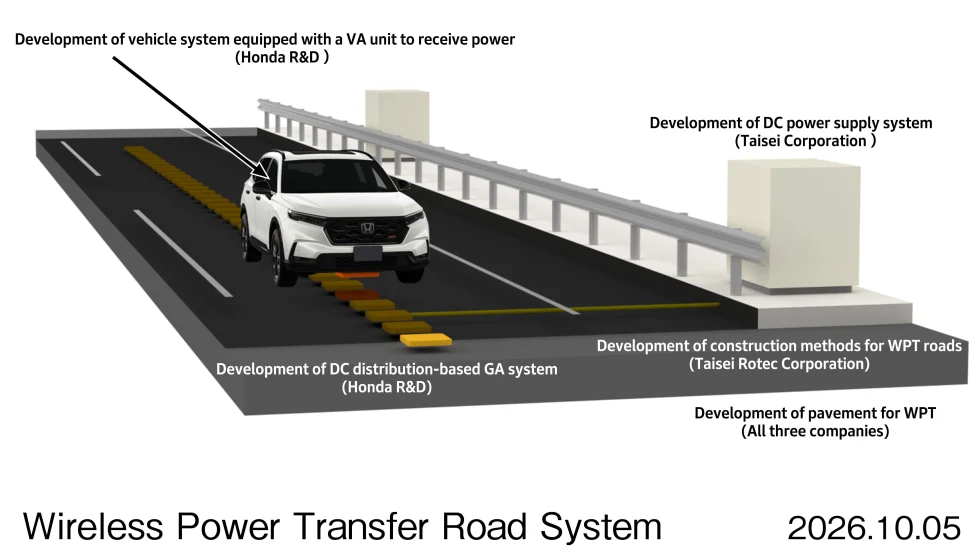
Charging In Motion
Honda has been researching wireless in-motion charging for electric vehicles since 2025, and new technology developments have put it a step closer to a final product.
Read More →
Twin Cities Stores Sell
Minnesota-based Walser Automotive Group made what it called the most significant acquisition in its history with a three-rooftop deal in Minneapolis.
Read More →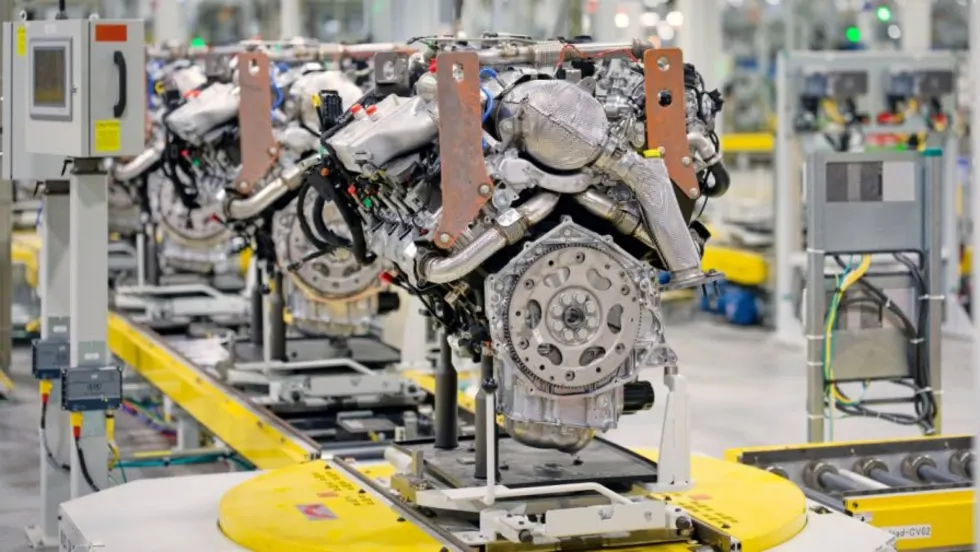
U.S. Auto Sales Still Below Prepandemic Levels
Mobility Global industry observers don’t expect the market to return to the higher volumes that became routine before Covid but to stay well below its potential.
Read More →
The Powertrain Shift
Electric-vehicle owners are backpedaling, according to new data, with product availability driving many to shift back to gas-powered engines.
Read More →
Achromatic Autos
The shades that dominate the U.S. car market don’t call attention to themselves, though grayscale may have plateaued after a 30-year upswing, research shows.
Read More →
Used-Vehicle Affordability Worsens
Listing prices in August defied seasonal trends, rising above $27,000 for the second time this year.
Read More →