


Hyundai, Kia Debut EV Tech
They say feature increases range and speed by minimizing turbulence.

The automakers acknowledge that competition among automakers on driving range between charges is 'fierce.'
IMAGE: Hyundai
South Korean automakers Hyundai and Kia introduced a feature they say will make electric vehicles go further and faster.
The former consideration is a major one among consumers who own or are considering buying an EV, as many worry they'll run out of power on the road and therefore stick with gas-powered models.
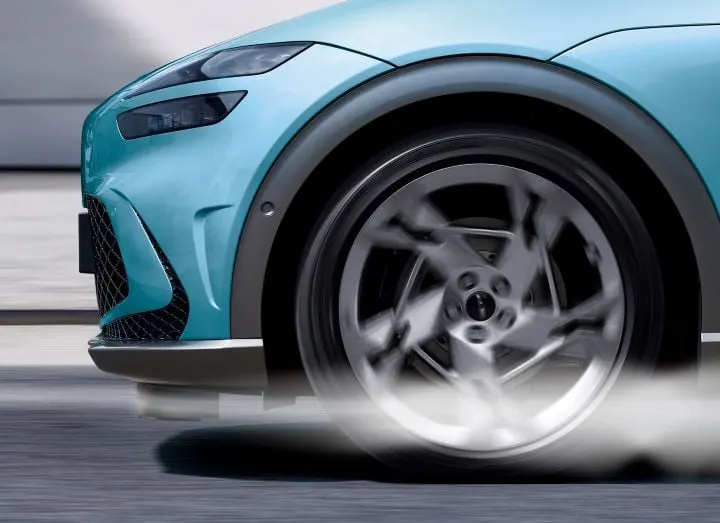
EVs already accelerate faster than gas-powered vehicles, but the two automakers say their “active air skirt” technology would also speed them up even more while giving them more range by minimizing aerodynamic resistance at high speeds.
The technology, AAS for short, is designed to be installed between the front bumper and front wheels. It restrains air flow through the lower bumper, effectively controlling turbulence around the wheels “by operating variably according to the vehicle speed” at high speeds, the companies say in a press release announcing the innovation.
AAS is out of sight except at speeds over 50 mph, when the “aerodynamic resistance becomes greater than the air resistance,” they say.
The companies acknowledge that competition among automakers on driving range between charges is “fierce.” The U.S. Department of Justice opened an investigation of U.S. EV market leader Tesla last year over its models’ estimated ranges.
Hyundai is the parent company of Kia. The two have applied for patents for the technology in their home country and in the U.S., and said they plan to consider mass production after testing.
Originally posted on Auto Dealer Today
More Industry

Charger Network Growth Slows
Despite a projected increase in public EV chargers in 2026, charging infrastructure remains a top concern for consumers as the gap between the most and least EV-friendly places remains substantial.
Read More →
Lenders, Consumers Take on More Auto Loan Risk
September records loosened credit access the most in over a decade as buyers took advantage of the conditions to afford trading, though loan applications fell.
Read More →
Next-Gen Hybrids in Sight
Dealerships can expect to see revamped hybrids from Honda next year as the company rolls out a new system and model lineup.
Read More →
Gem State Stores Change Hands
A larger auto group founded in the industry’s early years sold two franchises to a neighbor group that's on a growth spurt.
Read More →
Charging In Motion
Honda has been researching wireless in-motion charging for electric vehicles since 2025, and new technology developments have put it a step closer to a final product.
Read More →
Twin Cities Stores Sell
Minnesota-based Walser Automotive Group made what it called the most significant acquisition in its history with a three-rooftop deal in Minneapolis.
Read More →
U.S. Auto Sales Still Below Prepandemic Levels
Mobility Global industry observers don’t expect the market to return to the higher volumes that became routine before Covid but to stay well below its potential.
Read More →
The Powertrain Shift
Electric-vehicle owners are backpedaling, according to new data, with product availability driving many to shift back to gas-powered engines.
Read More →
Achromatic Autos
The shades that dominate the U.S. car market don’t call attention to themselves, though grayscale may have plateaued after a 30-year upswing, research shows.
Read More →
Used-Vehicle Affordability Worsens
Listing prices in August defied seasonal trends, rising above $27,000 for the second time this year.
Read More →