


IHS Automotive Forecasts Nearly 54 million Self-Driving Cars on Global Highways by 2035

Southfield, Mich. - Self-driving cars (SDC) that include driver control are expected to hit highways around the globe before 2025, and self-driving “only” cars are anticipated around 2030, according to an emerging technologies study on Autonomous Cars from IHS Automotive, driven by Polk.
In the study, “Emerging Technologies: Autonomous Cars—Not If, But When,” IHS Automotive forecasts total worldwide sales of self-driving cars will grow from nearly 230,000 in 2025 to 11.8 million in 2035 – 7 million SDCs with both driver control and autonomous control, and 4.8 million that have only autonomous control. In all, there should be nearly 54 million self-driving cars in use globally by 2035.
The study anticipates that nearly all of the vehicles in use are likely to be self-driving cars or self-driving commercial vehicles sometime after 2050.
The price premium for the SDC electronics technology will add between $7,000 and $10,000 to a car’s sticker price in 2025, a figure that will drop to around $5,000 in 2030 and about $3,000 in 2035 when no driver controls are available.
“There are several benefits from self-driving cars to society, drivers and pedestrians,” said Egil Juliussen, principal analyst for infotainment and autonomous driver assisted systems at IHS Automotive. Juliussen co-authored the study with IHS Automotive senior ADAS analyst Jeremy Carlson.
“Accident rates will plunge to near zero for SDCs, although other cars will crash into SDCs, but as the market share of SDCs on the highway grows, overall accident rates will decline steadily,” Juliussen said. “Traffic congestion and air pollution per car should also decline because SDCs can be programmed to be more efficient in their driving patterns.”
The study also notes some potential barriers to SDC deployment and two major technology risks: software reliability and cyber security. The barriers include implementation of a legal framework for self-driving cars and establishment of government rules and regulations.
Several automakers have said publicly they will have autonomous cars by 2020, or earlier. Autonomous car technology is already affecting driver assist systems such as adaptive cruise control, lane keep assist and collision mitigating brake systems. Additionally, the IHS study says the first group of autonomous cars will have so-called Level 3 capability – limited self-driving that enables the driver to cede full control of all safety-critical functions under certain traffic and environmental conditions, and includes auto pilot for highway travel and parking. Coming later in the decade will be SDCs with Level 4 capability – self-driving but with human controls.
North America is forecasted to account for 29 percent of worldwide sales of self-driving cars with human controls (level 4) and self-driving only cars (level 5) in 2035, or nearly 3.5 million vehicles. China will capture the second largest share at 24 percent, or more than 2.8 million units, while Western Europe will account for 20 percent of the total, 2.4 million vehicles.
More Industry
Charger Network Growth Slows
Despite a projected increase in public EV chargers in 2026, charging infrastructure remains a top concern for consumers as the gap between the most and least EV-friendly places remains substantial.
Read More →
Lenders, Consumers Take on More Auto Loan Risk
September records loosened credit access the most in over a decade as buyers took advantage of the conditions to afford trading, though loan applications fell.
Read More →
Next-Gen Hybrids in Sight
Dealerships can expect to see revamped hybrids from Honda next year as the company rolls out a new system and model lineup.
Read More →
Gem State Stores Change Hands
A larger auto group founded in the industry’s early years sold two franchises to a neighbor group that's on a growth spurt.
Read More →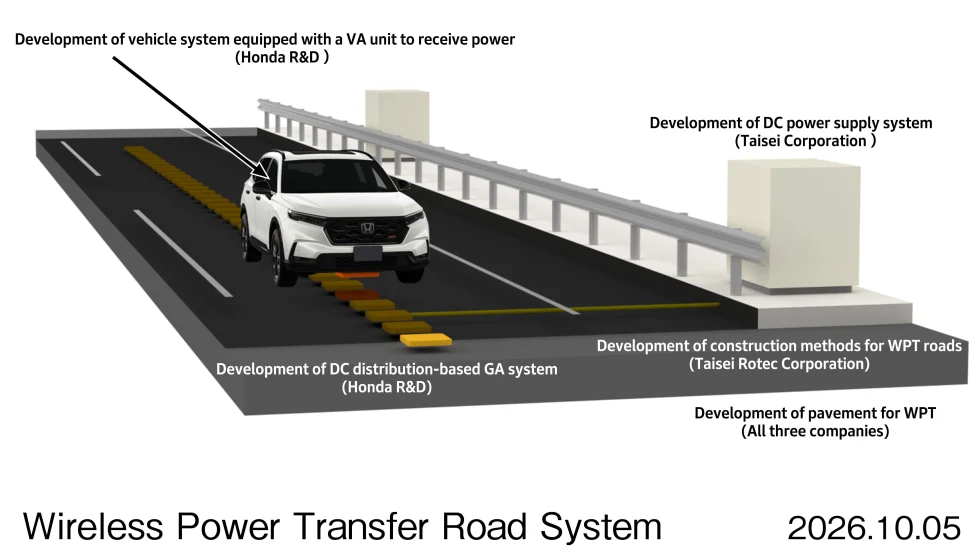
Charging In Motion
Honda has been researching wireless in-motion charging for electric vehicles since 2025, and new technology developments have put it a step closer to a final product.
Read More →
Twin Cities Stores Sell
Minnesota-based Walser Automotive Group made what it called the most significant acquisition in its history with a three-rooftop deal in Minneapolis.
Read More →
U.S. Auto Sales Still Below Prepandemic Levels
Mobility Global industry observers don’t expect the market to return to the higher volumes that became routine before Covid but to stay well below its potential.
Read More →
The Powertrain Shift
Electric-vehicle owners are backpedaling, according to new data, with product availability driving many to shift back to gas-powered engines.
Read More →
Achromatic Autos
The shades that dominate the U.S. car market don’t call attention to themselves, though grayscale may have plateaued after a 30-year upswing, research shows.
Read More →
Used-Vehicle Affordability Worsens
Listing prices in August defied seasonal trends, rising above $27,000 for the second time this year.
Read More →