


Minnesota AG Sues EFG Over Service-Contract Refunds

PAUL, Minn. — Minnesota Attorney General Lori Swanson filed a lawsuit on Sept. 24 against Irving, Texas-based Enterprise Financial Group Inc. (EFG Companies), charging the F&I product provider with violating three consumer-protection laws for the way it handled service-contract cancellations and consumer refunds.
Filed in Hennepin County District Court, the complaint, which seeks unspecified civil penalties and restitution for alleged victims, charged EFG with violating the state’s Service Contract Law, the Consumer Fraud Act and the Uniform Deceptive Trade Practices Act for not delivering on its promise of issuing full refunds to consumers in a timely manner if they canceled their service contract within 30 days.
The lawsuit doesn’t make clear who sold the service contracts in question, although it states that EFG uses third-party companies to sell directly to Minnesota consumers. Two such sellers listed in the complaint were Azusa, Calif.-based Precise Auto Protections Inc., and Garden Grove, Calif.-based Auto Processing Center. Both companies have “F” ratings with the Better Business Bureau (BBB).
“Minnesotans are bombarded with postcard mailers claiming that their auto warranties are about to expire, and people need to know that not all of these companies play fair,” Swanson stated in a press release, referring to direct-to-consumer sales of vehicle service contracts.
According to the complaint, EFG has issued more than 3,700 vehicle service contracts to Minnesotans since 2009. They are marketed under a variety of names, including TechChoice Used Deluxe Coverage, Classic Used Vehicle Service Contract, Dent Zone Auto Body Guard PDR Contract, Motorist Assistant Plan, and Vurge High Gear Coverage.
Swanson, who is running for reelection this November, charged that the cancellation instructions given to consumers by sellers of EFG contracts were either confusing or differed from the instructions in the contracts. In one instance, according to the lawsuit, a 78-year-old grandmother talked to a dozen different people and was hung up on twice when she attempted to get a refund.
The complaint also charged EFG with delaying refunds, then failing to issue the 10% penalty per month for refunds not issued within 45 days, as required by law. In some cases, according to the lawsuit, consumers did not get full or even partial refunds.
The attorney general did not return calls seeking comment, but she did tell the Star Tribune that the lawsuit is part of a broader investigation into “extended auto warranty practices.” That’s the impression John Pappanastos, CEO of EFG, got when he was contacted by Swanson’s office this past December. He spoke to F&I and Showroom about the lawsuit Monday morning, the first interview he’s given since the lawsuit was filed.
“Up until the lawsuit, they never said what the nature of the investigation was,” Pappanastos said. “They just told us it was a broad-reaching investigation and that they were looking at multiple providers.”
Pappanastos said EFG provided a substantial amount of information to the attorney general after the company was contacted in December, but he said EFG stopped short of handing over customer information when the attorney general could not guarantee the information would be kept private.
“We would love this industry to be held to a high standard; we would love to have given the AG’s office everything they wanted,” Pappanastos said. “They just couldn’t give us assurances they would protect it.”
The attorney general also denied EFG’s request for the names of the affected consumers — 10 of whom were listed in the complaint by only their initials. Having that information, Pappanastos said, would alllow EFG to identify the source of the complaints. The executive noted that the last communication EFG had with the Minnesota Attorney General before she filed her lawsuit was in June. “And somehow, the press was privy to the lawsuit before us,” he said.
Customers who cancel their EFG contract within 30 days of purchase are instructed to contact the seller for a refund. Typically, that refund consists of the purchaser’s down payment, which is collected solely by the seller. EFG, Pappanastos noted, does not transmit funds on contracts until after the first 30 days, which means it would not have an enforceable contract in its system until after that period. If that’s the case with the consumers involved in the complaint, Pappanastos said EFG would have no active record of the sold contracts.
“That’s my bet,” Pappanastos said, noting that EFG’s total complaint rate from all contracts sold in Minnesota is less than 1%. “But we just don’t know who the distributors are, so we don’t know who hasn’t been taken care of, whether the contracts were ever funded …”
Based on the lawsuit, and the press release and consumer bulletin Swanson’s office issued in September, the investigation appears to center on telemarketing companies. Even an article published on Sept. 24 in the Star Tribune, which called EFG’s contracts “woefully limited” because they require consumers to maintain their vehicle and because they don’t pay for normal wear and tear, quoted Swanson as saying, “These [telemarketing] companies really seem to be on the uptick.”
Pappanastos, however, doesn’t believe the issues the attorney general uncovered are all related to direct-to-consumer sales, a distribution channel EFG began using in April 2008. He did reveal that EFG cut ties with Precise Auto Protection earlier this year for issues unrelated to Swanson’s complaint. He added that EFG has had no issue with the other company listed in the complaint, Auto Processing Center.
“If they can tell us what happened, we could find out if we had a bad partner or a breakdown in process,” the executive said. “But they still refuse to provide us with any info. I think we’ll be exonerated once we’re able to gather that info through discovery.
“Look, we have zero tolerance for the type of behavior alleged in the complaint,” Pappanastos added. “We have an ‘A+’ rating with the Better Business Bureau. We’re a family-owned, privately held business. There’s no impetus to compromise our integrity.”
More Industry
Charger Network Growth Slows
Despite a projected increase in public EV chargers in 2026, charging infrastructure remains a top concern for consumers as the gap between the most and least EV-friendly places remains substantial.
Read More →
Lenders, Consumers Take on More Auto Loan Risk
September records loosened credit access the most in over a decade as buyers took advantage of the conditions to afford trading, though loan applications fell.
Read More →
Next-Gen Hybrids in Sight
Dealerships can expect to see revamped hybrids from Honda next year as the company rolls out a new system and model lineup.
Read More →
Gem State Stores Change Hands
A larger auto group founded in the industry’s early years sold two franchises to a neighbor group that's on a growth spurt.
Read More →
Charging In Motion
Honda has been researching wireless in-motion charging for electric vehicles since 2025, and new technology developments have put it a step closer to a final product.
Read More →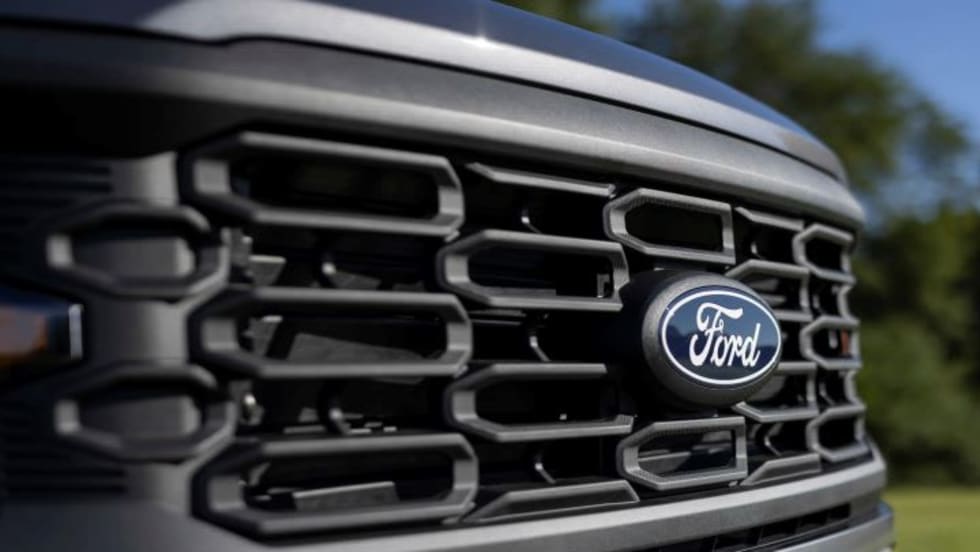
Twin Cities Stores Sell
Minnesota-based Walser Automotive Group made what it called the most significant acquisition in its history with a three-rooftop deal in Minneapolis.
Read More →
U.S. Auto Sales Still Below Prepandemic Levels
Mobility Global industry observers don’t expect the market to return to the higher volumes that became routine before Covid but to stay well below its potential.
Read More →
The Powertrain Shift
Electric-vehicle owners are backpedaling, according to new data, with product availability driving many to shift back to gas-powered engines.
Read More →
Achromatic Autos
The shades that dominate the U.S. car market don’t call attention to themselves, though grayscale may have plateaued after a 30-year upswing, research shows.
Read More →
Used-Vehicle Affordability Worsens
Listing prices in August defied seasonal trends, rising above $27,000 for the second time this year.
Read More →