


NADA Report: Impact of New Vehicle Cash Incentives on Used Car Prices

McLean, Va. - A new vehicle cash incentive of $1,000 reduces the price of a one-year-old used vehicle by nearly $600, according to the NADA Used Car Guide in its latest report, NADA Used Vehicle Price Report: Incentive Analysis and Impact. Comparatively, $1,000 spent on finance and lease incentives reduces the price of a one-year-old used vehicle by $165 and $89, respectively.
If market conditions, such as the economy, time of year, level of supply, etc. and manufacturer suggested retail prices remain constant, an incentive of $1,000 on a model with no previous discounts would result in the price of a one-year-old version of the same model to fall by $563, NADA reports. For a three-year-old version and a nine-year-old version of the same model, the price would drop by $381 and $133, respectively.
"This pass-through effect means cash incentives continue to exert a sizable negative influence on prices far removed from more recent model years," said Jonathan Banks, executive automotive analyst, NADA Used Car Guide. Not all incentives resonate equally with customers, so they don't have an equal impact on used prices, either, Banks added.
"By comparison, in many cases it's more difficult for a consumer to translate the savings from finance or lease incentives, and as a result, the power to sway consumer demand – and negatively affect used prices – isn't as great on these incentive types," Banks said.
Currently, average spending for all incentive types is $2,574 per unit, down 12% from 2004's peak and 2% below 2007's pre-recession average of $2,631. While total incentive spending currently remains below pre-recession levels, it has ticked up by 3% compared to last year.
"Looking ahead, NADA expects that slower new sales growth and fiercer competition will see incentives rise modestly in the coming years," said Banks. "But we don't foresee an imminent return to destructive levels of the past."
As NADA's analysis has shown, value preservation of used vehicles is as much a function of the type of incentives used as is the total amount spent. Today, manufacturers have a much better understanding of how some incentive strategies can depress used vehicle prices as they continue to balance profitability with market share goals, Banks said.
"Plus, the industry as a whole is building what is arguably the best product ever, which minimizes the need for a dramatic shift in incentive spending," he added.
Considering these points, manufacturers will likely protect price advances by continuing to focus their discount strategies around finance and lease subvention rather than customer or dealer cash, NADA predicts.
"While we expect to see incentive spending increase moderately in 2014, a prudent discount mix and a commensurate rise in MSRPs will keep new vehicle transaction prices from falling, and this, in turn, will mitigate downward pressure on used vehicle prices," Banks said.
NADA uses a statistical model to estimate the price of used vehicles as a function of all key characteristics and the sales strategies used. Using this model, NADA is able to explore the effect of the different types of incentive spending on used vehicle prices.
More Industry
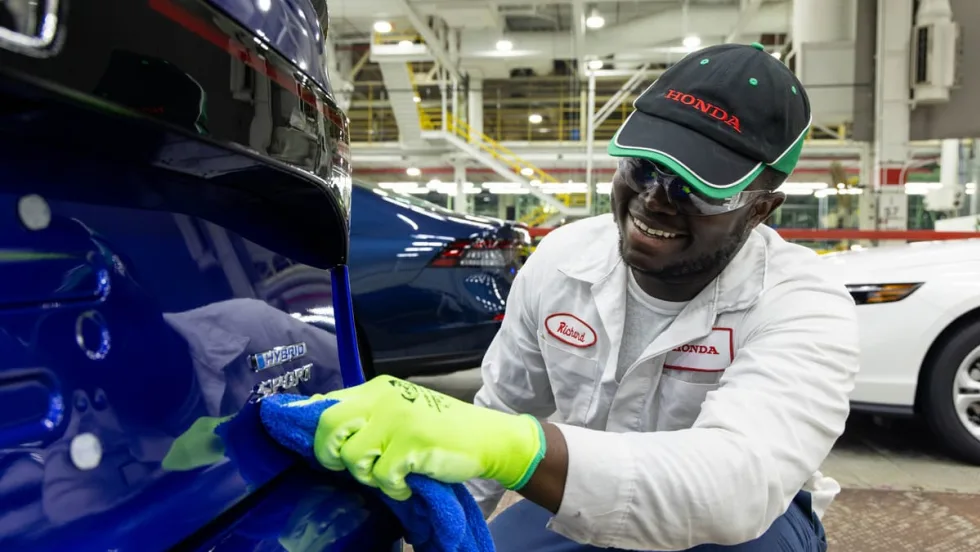
Honda Embraces Hybrid Fever
The automaker plans a new Ohio factory, along with investments in existing U.S. and Canadian plants, to significantly boost hybrid production here.
Read More →
Dealerships Must Show Up Where It Matters
How car buyers find your dealership has fundamentally changed. New evidence reveals the importance of your presence on social media, Google search, and large language models.
Read More →
CPO Sales Could Take Off in the Right Conditions
A recent Cox Automotive consumer survey reveals the size of an undertapped market for the vehicle segment given affordability pressures.
Read More →
Global Consumer Trends Diverge
Price remains a top consideration for U.S. car buyers, and they are the most brand-loyal consumers to established automakers, according to a new survey.
Read More →
Badger State Dealership Gets New Owner
The longtime southern Wisconsin store moved from one area auto group to another, keeping the business in Dairyland.
Read More →
The Cycle of Negative Equity
Third-quarter data shows consumers still rolling over debt and stretching loan terms, raising their risk of remaining underwater.
Read More →
Charger Network Growth Slows
Despite a projected increase in public EV chargers in 2026, charging infrastructure remains a top concern for consumers as the gap between the most and least EV-friendly places remains substantial.
Read More →
Lenders, Consumers Take on More Auto Loan Risk
September records loosened credit access the most in over a decade as buyers took advantage of the conditions to afford trading, though loan applications fell.
Read More →
Next-Gen Hybrids in Sight
Dealerships can expect to see revamped hybrids from Honda next year as the company rolls out a new system and model lineup.
Read More →
Gem State Stores Change Hands
A larger auto group founded in the industry’s early years sold two franchises to a neighbor group that's on a growth spurt.
Read More →