
Product & Technology
Integrating AI Into Your Admin System
It’s important for finance-and insurance administrators to build the technology into their existing systems instead of bolting it on.

 MENU
MENU SEARCH
Recent state insurance department regulator actions signal that it’s expanding regulatory risk for the VSC industry, whose players should prepare themselves for compliance.

Recent enforcement matters reflect a considerably broader ambition.
Pexels/Kampus Production
The California Department of Insurance is rewriting the rules of engagement for vehicle service contract providers, and the industry is only beginning to reckon with the consequences.
Through a series of enforcement proceedings and negotiated settlement agreements, the California Department of Insurance has signaled a meaningfully more aggressive regulatory posture toward vehicle service contract obligors, administrators and affiliated entities.
Conduct once characterized as a technical licensing or form-filing deficiency is increasingly being recast as an unfair business practice, unauthorized insurance activity, improper claims handling, or conduct that may lead to license restrictions and other operational remedies.
It is clear that California now expects VSC providers and administrators to maintain robust compliance systems governing sales practices, claims administration, administrator oversight, contractual liability insurance, and consumer disclosures.
Where the CDI finds those standards unmet, it has demonstrated a growing willingness to pursue substantial monetary penalties, operational restrictions, and ongoing compliance supervision.
CDI oversight of the VSC sector historically focused on licensing and form-filing compliance. Recent enforcement matters reflect a considerably broader ambition.
In one significant proceeding, the CDI alleged that thousands of VSCs had been sold to California consumers through out-of-state dealers lacking California Department of Motor Vehicles licensure, in violation of insurance laws. More importantly, the department advanced the theory that because the contracts allegedly failed to satisfy California's statutory VSC framework, the products constituted automobile insurance under the relevant code, causing the provider to operate as an unlicensed insurer.
The remedies sought were sweeping: license revocation, a cease-and-desist order, an industry ban, civil penalties of up to $5,000 per contract, and additional penalties tied to the alleged unauthorized insurance activity.
The broader significance of this position should not be underestimated. The CDI's position was that alleged defects in the sales and distribution process, standing alone, were sufficient to push VSC products outside California's statutory framework and into the category of regulated insurance, with far-reaching implications for how providers structure their distribution channels.
The CDI's recent record also reflects intensified scrutiny of claims administration, a development that deserves particular attention from VSC obligors and administrators.
In one proceeding, the CDI alleged that a provider improperly denied an engine claim without satisfying its burden to establish that an exclusion applied. In doing so, the CDI criticized the provider's effort to redirect the consumer to the selling dealer rather than handling the claim in its capacity as obligor.
More broadly, the CDI has challenged denials grounded in unsupported assumptions about pre-existing conditions, taking the position that dealerships and manufacturers are frequently best situated to identify such conditions at the time of sale.
Settlement agreements now routinely impose specific claims-handling obligations, including requirements for prompt investigation and payment determinations.
The CDI has also incorporated California's unfair claims settlement practices framework into the VSC context. As such, providers should anticipate that a CDI investigation may involve granular review of denial letters, internal claims notes, repair facility communications, call recordings, and complaint files. A single consumer complaint can expand rapidly into a broad regulatory inquiry.
Third-party administrator relationships have likewise emerged as a meaningful enforcement priority. Recent proceedings illustrate the CDI's willingness to pursue aiding-and-abetting theories against providers that rely on administrators allegedly lacking appropriate California licensure.
Administrators performing regulated VSC activities in California are generally expected to hold California property and casualty broker-agent licenses, and a provider's reliance on an unlicensed administrator is unlikely to excuse or lessen regulatory scrutiny.
Recent settlement agreements reflect this emphasis, requiring that each VSC identify a single administrator responsible for all contract benefits, that the administrator maintain appropriate California licensure, and that administrator contact information appear within the VSC form itself. These provisions represent enforceable operational requirements, not merely compliance goals.

Pixabay/Startup Stock Photos
Perhaps the most consequential development in recent CDI enforcement activity is not the size of penalties assessed, but the structure of settlements themselves.
Modern CDI settlements increasingly resemble ongoing regulatory supervision agreements. Recent examples have featured:
Some agreements additionally govern arbitration provisions, waiting periods, aggregate coverage limits, inspection timelines, and record-keeping practices.
Settlements now commonly require companies to maintain detailed records of California VSC sales, consumer contact information, denied or partially paid claims, unique contract form numbers, and electronically searchable claims data, and may authorize the CDI to recover attorney fees, investigative expenses, and future monitoring costs.
For companies accustomed to treating enforcement matters as discrete events with finite timelines, this shift represents a material change in long-term regulatory exposure.
As CDI enforcement grows more sophisticated and operationally focused, early involvement of experienced California insurance regulatory counsel has become essential.
Many investigations begin with a consumer complaint or informal document request that appears routine. Those inquiries can expand quickly into broader investigations and subpoenas involving licensing, claims administration, administrator oversight, and unauthorized insurance allegations.
The window for shaping an investigation's trajectory is often shortest at its earliest stages. And as recent settlements demonstrate, negotiated resolutions frequently extend well beyond monetary penalties, imposing restricted licenses, reporting obligations, prior approval conditions, and operational restrictions that can affect a company's business model for years.
Recent CDI proceedings offer concrete guidance for the industry. Providers and administrators should critically evaluate their dealer and distribution relationships, online and telephone sales practices, administrator licensing and oversight protocols, claims handling, contractual liability insurance structures, California-specific form requirements, consumer complaint procedures, and record-retention systems.
Most fundamentally, providers should recognize that the CDI increasingly expects VSC compliance to function as a comprehensive operational framework, not merely a licensing exercise. California's enforcement environment is rapidly evolving. Licensing issues, claims practices, administrator oversight, and consumer disclosures are no longer evaluated in isolation.
The CDI has demonstrated a willingness to examine the entire operational architecture of a VSC program and pursue meaningful enforcement action when it identifies compliance deficiencies.
For VSC providers and administrators operating in California, proactive compliance reviews, strong internal controls and early involvement of experienced regulatory counsel are increasingly a baseline requirement for operating in the state's market.
Mark B. Robinson is a co-founding partner of Los Angeles-based law firm Michelman Robinson who focuses on the insurance industry and regulatory issues, and Elizabeth Gates is a partner in the firm’s San Francisco office who advises insurance department-regulated entities.
EDITOR’S NOTE: This article was authored and edited according to Providers & Administrators editorial standards and style. Opinions expressed may not reflect that of the publication.
Loading data...
Product & Technology
It’s important for finance-and insurance administrators to build the technology into their existing systems instead of bolting it on.

Compliance
Recent state insurance department regulator actions signal that it’s expanding regulatory risk for the VSC industry, whose players should prepare themselves for compliance.

Product & Technology
Data, video and artificial intelligence are driving service performance today, when inspection performance is closely tied to key business outcomes.

Awards
Buffeted by trial after trial as a young man, David Wright knew he’d found his life path when he stumbled into auto retail after all other doors slammed shut. The 2026 Time Dealer of the Year shares the lessons he learned along the way.

Industry
Understanding the risks and benefits of retail accounting and Super CFCs can help you better present options to your dealer partners.
Actuary
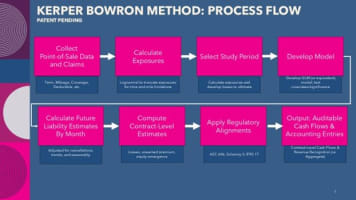
The Kerper Bowron Method is a patent-pending approach that builds on established actuarial principles but applies them at the individual contract level.

Industry
Providers and administrators should clearly and credibly communicate their experiences since their numbers will draw more scrutiny this year.

Compliance
In Trump’s first year, just 60,917 pages were printed in the Federal Register, the official journal of the federal government, down 42%.

Industry
As America turns 250, explore how the automotive industry shaped jobs, culture, innovation, and mobility from Detroit assembly lines to today’s EV era.