


Sales Down 2.3% in April, SAAR Falls Below 17 Million
The annual forecast for U.S. light-vehicle sales fell to 16.41 million as volume fell 2.3% year-over-year in an April that was expected to bring the year’s first gain following an underwhelming first quarter.

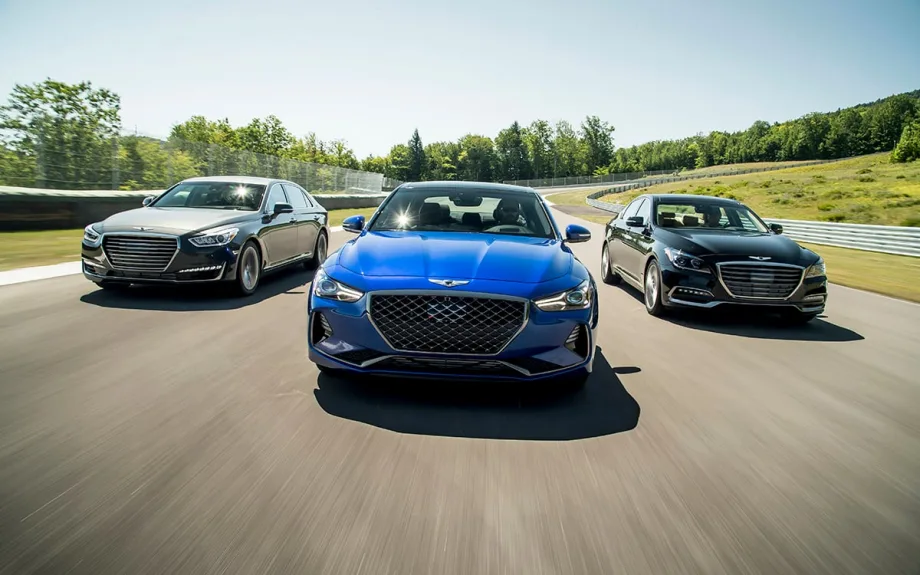
Sales of the Genesis brand improved by an industry-best 56% in April, helping to offset a weak month and start to 2019 for the U.S. auto retail industry.
Photo courtesy Hyundai Motor Co.
(Bobit) — U.S. new-vehicle dealers sold 1,328,649 cars and light trucks in April, a 2.3% year-over-year decline and a full 3% loss to start the year compared with the first four months of 2018, according to manufacturer reports and estimates compiled by Automotive News.
Forecasters who predicted the year’s first big gain were roundly disappointed. The slow start to 2019 knocked the seasonally adjusted annualized selling rate down to 16.4 million. That’s the lowest SAAR since February 2014 and a weak start to the traditionally reliable spring sales season.
Experts blamed escalating average transaction prices — a 2019 high of $36,718 in April, according to Edmunds — as well as the usual suspects of higher interest rates and rapidly declining interest in cars. Sales of sedans, coupes, and hatchbacks were down 7.9% year-over-year; light truck sales increased by 0.3%.
“Robust employment conditions and a strong stock market didn’t seem to be enough to lift sales last month,” said Charlie Chesbrough, senior economist at Cox Automotive. “Market forecasters have been expecting the market to slow as higher vehicle prices and higher borrowing costs squeeze many potential buyers. And indeed, the sales lion that surprised many in March became a much weaker lamb in April, as revealed in today’s numbers.
“Prior to April, retail sales had been in decline while fleet showed gains. Fleet activity, however, appears to have slowed in April, bucking the trend we saw in the first quarter,” Chesbrough added; fleet sales totaled 325,000 units for the month, 2.6% more than in April 2018.
Among the nation’s largest-volume producers, Fiat Chrysler (-6.1%), Ford (-4.7%), Toyota (-4.4%), and General Motors (-2.6%) fell hardest. FCA felt the burn of tapering Jeep sales (-7.6%) and losses in its Chrysler (-37%), Fiat (-34%), and Dodge (-24%) divisions; however, Ram sales improved by a full 25%. Mini (-30%), Audi (-21%), and Mazda and Mercedes-Benz (both -15%) also suffered notable declines.
The runaway winner in year-over-year sales was Genesis, which enjoyed a 56% gain in April, followed by Land Rover (11%), Nissan (9%), Subaru (7.7%), and Jaguar (6.3%).
Honda, Nissan, and Subaru led increased incentive spending for the month, averaging 17.5% more than a year ago, but ALG and J.D. Power both reported reduced incentives industrywide.
To read the full Automotive News report, click here.
Originally posted on Auto Dealer Today
More Industry

Charger Network Growth Slows
Despite a projected increase in public EV chargers in 2026, charging infrastructure remains a top concern for consumers as the gap between the most and least EV-friendly places remains substantial.
Read More →
Lenders, Consumers Take on More Auto Loan Risk
September records loosened credit access the most in over a decade as buyers took advantage of the conditions to afford trading, though loan applications fell.
Read More →
Next-Gen Hybrids in Sight
Dealerships can expect to see revamped hybrids from Honda next year as the company rolls out a new system and model lineup.
Read More →
Gem State Stores Change Hands
A larger auto group founded in the industry’s early years sold two franchises to a neighbor group that's on a growth spurt.
Read More →
Charging In Motion
Honda has been researching wireless in-motion charging for electric vehicles since 2025, and new technology developments have put it a step closer to a final product.
Read More →
Twin Cities Stores Sell
Minnesota-based Walser Automotive Group made what it called the most significant acquisition in its history with a three-rooftop deal in Minneapolis.
Read More →
U.S. Auto Sales Still Below Prepandemic Levels
Mobility Global industry observers don’t expect the market to return to the higher volumes that became routine before Covid but to stay well below its potential.
Read More →
The Powertrain Shift
Electric-vehicle owners are backpedaling, according to new data, with product availability driving many to shift back to gas-powered engines.
Read More →
Achromatic Autos
The shades that dominate the U.S. car market don’t call attention to themselves, though grayscale may have plateaued after a 30-year upswing, research shows.
Read More →
Used-Vehicle Affordability Worsens
Listing prices in August defied seasonal trends, rising above $27,000 for the second time this year.
Read More →