


VW’s 5-Year U.S. Spend Up
German automaker touts increased investment here since 2019.

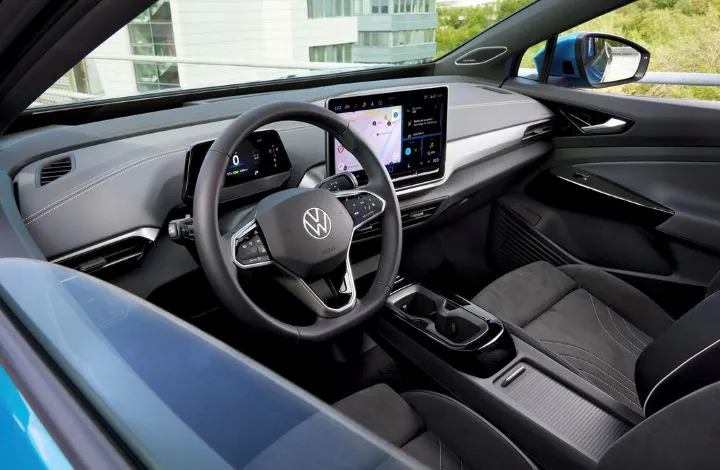
VW makes the ID.4 and other vehicles at its Tennessee factory, where it's boosted employment since 2019.
Volkswagen
As countries negotiate trade deals with the Trump administration, Volkswagen’s American arm says it’s substantially increased investment in the U.S. in the past five years.
Citing a Deloitte study it commissioned, Volkswagen Group of America says it’s boosted its U.S.-based manufacturing jobs by 30% during the period ended last year, and research-and-development jobs by 16%.
Between corporate VW and its U.S. dealerships, the German automaker says it directly and indirectly supports nearly 164,500 jobs, including 48,000 direct jobs, and about $44 billion in goods and services.
“This study underscores our deep investment and long-term commitment in the American market,” said group President and CEO Kjell Gruner in a press release. “In the past five years, we’ve grown our manufacturing footprint and advanced our R&D capabilities to drive meaningful economic impact in the communities where our valued team members live and work.”
VW and the other two big German automakers, BMW and Mercedes, together made 7% of their 2024 sales in the U.S. The European Union as a whole, though, is the biggest importer of U.S. goods in general.
In the past five years, VW says it boosted investment here by over 30,000 direct and indirect jobs and more than $10 billion in economic impact. That includes a more than 30% increase in U.S. manufacturing jobs to nearly 4,000, the boost concentrated at its Chattanooga, Tenn. plant, where it makes the ID.4, Atlas and Atlas Cross Sport.
In addition to profit-focused spending, VW says it donated more than $7.5 million during the period to U.S. nonprofit groups, particularly in education, youth development and environmental causes.
Originally posted on Auto Dealer Today
More Industry

Charger Network Growth Slows
Despite a projected increase in public EV chargers in 2026, charging infrastructure remains a top concern for consumers as the gap between the most and least EV-friendly places remains substantial.
Read More →
Lenders, Consumers Take on More Auto Loan Risk
September records loosened credit access the most in over a decade as buyers took advantage of the conditions to afford trading, though loan applications fell.
Read More →
Next-Gen Hybrids in Sight
Dealerships can expect to see revamped hybrids from Honda next year as the company rolls out a new system and model lineup.
Read More →
Gem State Stores Change Hands
A larger auto group founded in the industry’s early years sold two franchises to a neighbor group that's on a growth spurt.
Read More →
Charging In Motion
Honda has been researching wireless in-motion charging for electric vehicles since 2025, and new technology developments have put it a step closer to a final product.
Read More →
Twin Cities Stores Sell
Minnesota-based Walser Automotive Group made what it called the most significant acquisition in its history with a three-rooftop deal in Minneapolis.
Read More →
U.S. Auto Sales Still Below Prepandemic Levels
Mobility Global industry observers don’t expect the market to return to the higher volumes that became routine before Covid but to stay well below its potential.
Read More →
The Powertrain Shift
Electric-vehicle owners are backpedaling, according to new data, with product availability driving many to shift back to gas-powered engines.
Read More →
Achromatic Autos
The shades that dominate the U.S. car market don’t call attention to themselves, though grayscale may have plateaued after a 30-year upswing, research shows.
Read More →
Used-Vehicle Affordability Worsens
Listing prices in August defied seasonal trends, rising above $27,000 for the second time this year.
Read More →