



Washington —The auto industry is moving quickly to adopt advanced technologies to help drivers avoid front-end crashes by adding systems that automatically brake the vehicles. Automakers are being prompted in part by the Insurance Institute for Highway Safety, which last year unveiled a new rating system for front-crash prevention.
Autobrake Ratings Show Improvement
May 29, 2014
4 min to read
In its latest testing of 24 cars and SUVs released today, IIHS said 21 earned advanced or higher ratings.
Four of those vehicles with advanced options earned perfect scores: the 2014 BMW 5 Series and X5, 2014 Mercedes-Benz E-Class and 2015 Hyundai Genesis.
Four U.S. cars rounded out the eight models getting the highest rating of superior: General Motors Co.’s 2014 Buick Regal, Cadillac CTS, Cadillac XTS and Chevrolet Impala earned the top rating when equipped with the automaker’s forward-collision warning and auto braking system. The 2014 Buick LaCrosse earns the next-highest rating — advanced — when it has the same system. All of these cars also are available with a warning system only, which earns a basic rating.
GM previously got superior ratings for the Cadillac ATS and SRX, which were included in the first round of testing in 2013.
The only other U.S. vehicle to get rated in this round of testing was Chrysler Group’s Dodge Durango, which won an advanced rating.
Besides the eight models earning superiors, 13 were deemed advanced and three got basic ratings. IIHS rates vehicles as superior, advanced or basic for front-crash prevention depending on whether they offer auto braking and, if so, how effective it is in tests at 12 and 25 mph. Some systems merely alert drivers of a possible crash, rather than apply the brakes in an emergency situation.
The insurance industry-funded group said more than 20 percent of 2014 models offer a front-crash prevention system with automatic braking, twice as many as in 2012. Forward-collision warning systems are offered as an option on nearly 40 percent of 2014 models.
Many automakers have improved the systems to meet new tests set by IIHS, because many consumers consult the ratings before buying a new car.
“We are already seeing improvements from automakers since the initial launch of our ratings last September,” said David Zuby, IIHS executive vice president and chief research officer. “BMW and Lexus, for example, have added more braking capability to their systems, which has paid off in higher ratings.”
BMW’s improved system did well in testing. By contrast, its 2013 3 series was rated basic. The earlier model’s system braked for a stopped car ahead only if sensors first detected the car moving before it stopped.
Toyota’s Lexus luxury unit improved its radar-based systems to provide more braking capability, garnering an advanced rating for the GS large car and IS midsize car.
The systems show great promise to save hundreds — if not thousands — of lives by warning inattentive drivers before they hit a car ahead, or alerting them they are about to go off the road — or intervening to prevent crashes. Those types of wrecks account for 60 percent of fatal highway accidents, and the new technology could substantially reduce them.
“We know that this technology is helping drivers avoid crashes,” Zuby said. “The advantage of autobrake is that even in cases where a crash can’t be avoided entirely, the system will reduce speed. Reducing the speed reduces the amount of damage that occurs to both the striking and struck cars, and reduces injuries to people in those cars.”
The National Highway Traffic Safety Administration missed a self-imposed Dec. 31 deadline to decide whether to advance regulations to require the systems in future vehicles. Nearly five months later, the auto safety agency has offered no timetable for making a decision. NHTSA could simply opt to note whether vehicles have systems on window stickers as part of its New Car Assessment Program.
The Alliance of Automobile Manufacturers has praised the technologies, but opposes making them mandatory. It notes that the electronic systems can add $1,000 to $3,500 per vehicle, though costs will decline since most are software-based.
It takes a long time for advanced safety features, which typically debut on luxury cars, to reach all cars on the road. IIHS estimates it takes at least 30 years for a safety feature to spread to 95 percent of vehicles on the road.
More Industry

Automakers Have More Tricks Up Their Sleeves
JD Power analysts see auto retail faring this year’s storms well through various means, though it acknowledges conditions are challenging to accurately predict.
Read More →
Insurance Rates Continue to Fall
Car insurance premiums have continued to decline so far this year, the overall national average settling at $138 per month in March, according to Insurify data.
Read More →
Black Book: Weekly Market Update
Last week's wholesale auction activity was stable, though buyers exercised selectivity as they focused on certain segments.
Read More →
Dealer Debrief: Safety, Supply & Partnership
In this week's Dealer Debrief, host Lauren Lawrence covers a new safety assessment, current inventory issues, and a new payables process for dealerships.
Read More →
Black Book: Weekly Market Update
Both conversions and values were up last week, though business was spotty depending on the segment in question.
Read More →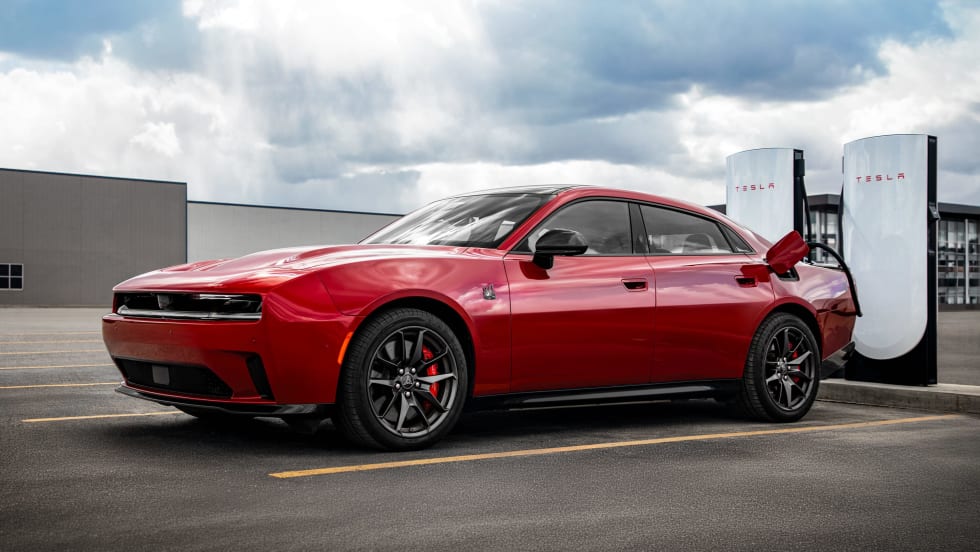
Stellantis Expands Charging Network
Five of its brands now have greater access to battery-electric vehicle charging through Tesla’s Supercharger network across North America.
Read More →
Safety Drives Insurance Rates
Sixteen out of the 20 cheapest vehicles to insure in 2026 are SUVs, according to CarInsurance.com, largely because of their safety features and lower repair costs.
Read More →
New-Vehicle Shoppers Get Some Relief
Overall conditions in February tipped slightly in consumers’ favor as prices stayed high, granting a reprieve of sorts just before the war on Iran commenced and started to reverse the welcome trend.
Read More →
Used Market Gains Speed
New-vehicle sales fell year-over-year for the fifth month in a row in February, making retail deliveries the slowest they’ve been since 2023, according to a CarGurus report.
Read More →
Auto Loan Defaults Measured Amid Inflation
According to LendingTree data, the average monthly auto loan payment was $540 in the fourth quarter, and the average credit score for those with a recorded default was 529.
Read More →