


How Automotive Lenders Can Remain Successful During Economic Downturns
Due to a multitude of factors, including vehicle sales, household debt and unemployment, automotive lenders will be affected differently depending on their market segment and their loan origination process.

Due to a multitude of factors, including vehicle sales, household debt and unemployment, automotive lenders will be affected differently depending on their market segment and their loan origination process.
Image by Thomas B. from Pixabay
For the past two years, automotive predictions on vehicle sales have remained consistent. In 2018, NADA predicted approximately 16.7 million new vehicles would be sold, and another 16.8 million would be sold in 2019. In the wake of recent events that led up to the COVID-19 pandemic, ALG, a subsidiary of TrueCar estimates the new vehicle sales may fall by as much as 60%. Furthermore, Cox Automotive has said that in US states under “stay-at-home” orders, sales fell as much as 80 percent to 90 percent.
Integrating all facets of market segment such as online, mobile and dealer relations gives lenders better opportunity to win borrower applications that turn into booked deals.
According to the latest Quarterly Report of Household Debt and Credit, auto loans have continued to grow over the past ten years, with a significant number of this growth fueled by new originations. However, this is sure to change considering economic uncertainty and decrease in consumer spending during these trying times. Additionally, there’s also growing uncertainty surrounding future unemployment rates as a result of the pandemic.
How Automotive Lenders are Affected
Lenders will be affected differently depending on their market segment and their loan origination process. Considering this recent shift in consumer spending habits, now would be an ideal time for lenders to reevaluate their lending strategy. When the market is down, automotive lenders experience even more competition and uncertainty. To remain competitive themselves, lenders will need to connect with potential buyers across all shopping channels including online, mobile and through the dealerships. Making quick lending decisions on applications can be the difference between a borrower choosing one lender over another.
Engaging Your Audience
Engaging your borrowers at different levels through the various channels that they utilize most should be a top priority. For example, shoppers today spend much of their time utilizing mobile and online channels to shop for vehicles before they even step foot in a dealership. They will research through non- traditional methods, and many will look to secure financing before going to the showroom – a process that will continue as we all practice “social distancing”. However, there will always be shoppers that are more comfortable with purchasing and financing through the dealer, with little online research before.
Today’s loan origination platforms and solutions can support all market channels to access borrowers of all generations. They can also be integrated with dealership software so borrowers can initiate auto loan applications at any time from the convenience of their mobile phones, opening new lending opportunities that may otherwise be missed. What’s more, the built-in AI technology will also help ensure the lender is offering the right terms for each individual customer.
The Online Marketplace
In the wake of COVID-19, lenders should expect that transactions will be moved to the online marketplace. Not only in the near term, but in the future post-pandemic. The transactions will not simply be handled the way they were in years past, where a lender requests information from a customer to complete an application. Instead, the entire process from application to pick up of the vehicle will be handled online. This means there will be a shift in the marketplace from indirect business to direct business. With a crisis as serious as the COVID-19 pandemic, that shift from indirect to direct is going to be accelerated. Lenders utilizing technology to approach the market in a more direct way will have a competitive advantage, and will be ready to take advantage of new consumer behaviors.
Accurate and Quick Processes
We live in an age where online shopping has created an instant gratification culture. The automotive industry isn’t exempt from this. While buyers often want and expect instant transactions, the auto financing process can lag. Modern loan origination solutions can help lenders reduce application decision time and structure complex loans, each reducing time-consuming manual processes.
Auto structuring eliminates long lag times in responding to automotive applications that may not meet credit approval guidelines. Using decision rules and automatic structuring, loan terms can be created matching the lenders credit policies. This eliminates the need for an underwriter if auto-structuring technology can return immediate conditional deal terms. What’s more, decision rules can evaluate an applicant’s attributes that make them approval-worthy of a loan.
Eliminating the Paper Trail
It’s no secret that technology is pushing us away from paper documents. Using digital loan origination eliminates the need for paper documents, which only slow processes down and delay decisions. In a digital application, legal documents such as income statements and driver’s licenses can be scanned in through a mobile device. The information remains secure and can be almost instantly sent to the lender for processing, meaning it can also be immediately reviewed.
Eliminating the paper trail helps lenders to mitigate the growing risk of fraudulent loan applications. Fraudulent applications are directly correlated to default and delinquency. Using a loan origination system, machine learning can better identify those who may be potentially fraudulent. Factors such as identity theft, collateral inflation, income misrepresentations and employment misrepresentations can all be caught more easily. Based on the findings, lenders can determine the next step in the underwriting process. In an economic downturn, lenders need to be confident in every lending decision.
Providing Consumer Relief
Now more than ever, consumers are looking for ways to relieve themselves of payments in the near-term. Strong lending technology partners are offering create ways for lenders to not only retain business but win new business during this time. Some lending technology partners are offering their customers curated programs that allow them to contact existing customers to offer them refinancing on their automotive loans. This is just another example how lenders can take advantage of the direct channel opportunity.
For example, if a consumer is a long term customer with a specific bank, yet their auto loan is with another financier, that bank would be smart to contact that customer regarding the refinance of their loan. If the bank can offer incentives such as no short term payments, the customer is likely to take advantage of the offer, which only further solidifies the customers loyalty to that bank. With interest rates seemingly low, anything the bank refinances now will be a better deal than what the customer financed two or three years ago.
Lending technology systems can help lenders to become more digital retail friendly during a time where consumers are looking to take advantage of new channels that are available to them.
Opportunity Still Exists
Today’s automotive lenders with a competitive advantage are using a modern loan origination system. Integrating all facets of market segment such as online, mobile and dealer relations gives lenders better opportunity to win borrower applications that turn into booked deals. Risks are minimized, decisions are made quickly and efficiently, and lenders can maintain a competitive advantage during economic hardships.
Vladimir Kovacevic is the co-founder and Managing Partner of Inovatec, a leading software provider to Canadian financial institutions. Inovatec’s products are designed for origination, processing and management of loans and leases across a broad spectrum of credit quality and asset types.
Originally posted on Auto Dealer Today
More Industry

Charger Network Growth Slows
Despite a projected increase in public EV chargers in 2026, charging infrastructure remains a top concern for consumers as the gap between the most and least EV-friendly places remains substantial.
Read More →
Lenders, Consumers Take on More Auto Loan Risk
September records loosened credit access the most in over a decade as buyers took advantage of the conditions to afford trading, though loan applications fell.
Read More →
Next-Gen Hybrids in Sight
Dealerships can expect to see revamped hybrids from Honda next year as the company rolls out a new system and model lineup.
Read More →
Gem State Stores Change Hands
A larger auto group founded in the industry’s early years sold two franchises to a neighbor group that's on a growth spurt.
Read More →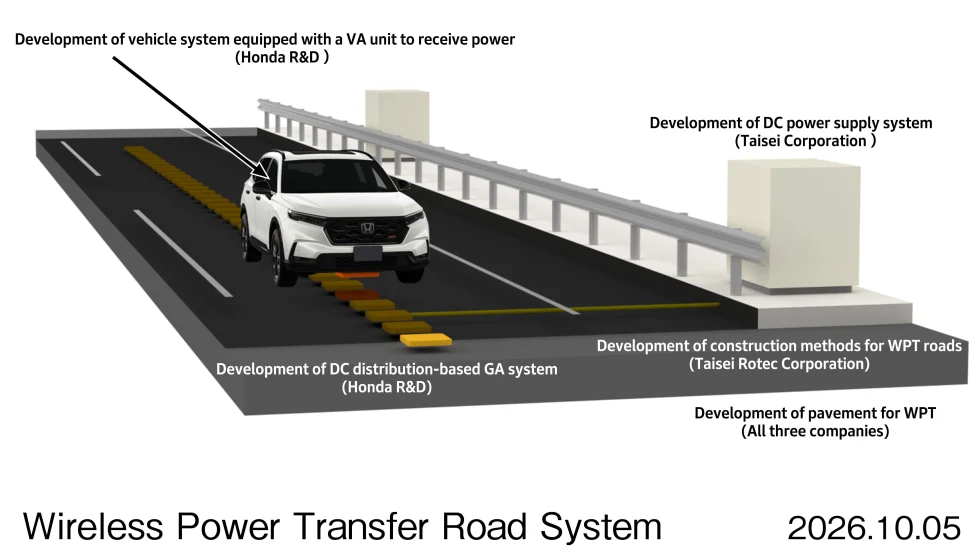
Charging In Motion
Honda has been researching wireless in-motion charging for electric vehicles since 2025, and new technology developments have put it a step closer to a final product.
Read More →
Twin Cities Stores Sell
Minnesota-based Walser Automotive Group made what it called the most significant acquisition in its history with a three-rooftop deal in Minneapolis.
Read More →
U.S. Auto Sales Still Below Prepandemic Levels
Mobility Global industry observers don’t expect the market to return to the higher volumes that became routine before Covid but to stay well below its potential.
Read More →
The Powertrain Shift
Electric-vehicle owners are backpedaling, according to new data, with product availability driving many to shift back to gas-powered engines.
Read More →
Achromatic Autos
The shades that dominate the U.S. car market don’t call attention to themselves, though grayscale may have plateaued after a 30-year upswing, research shows.
Read More →
Used-Vehicle Affordability Worsens
Listing prices in August defied seasonal trends, rising above $27,000 for the second time this year.
Read More →