


Inverse Relationship: Vehicle Technology Versus VSC Costs

Inverse Relationship: Vehicle Technology Versus VSC Costs
Today's vehicles are rapidly increasing in complexity and are loaded with sophisticated technology. Compare a similarly equipped vehicle from as recent as ten years ago with a current model of the same brand, and no one could argue that there is considerably more value (read technological improvements in safety, performance, content, and economy) for what amounts to very little extra cost.
The "deal" just keeps getting better and better for the consumer.
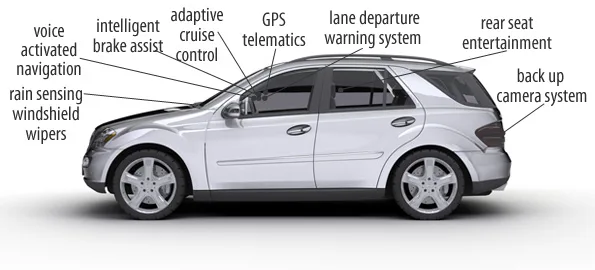
Take that same model today and equip it with the package that has everything: touch screen and/or voice activated navigation and entertainment/communication control system, rear seat entertainment system, speed sensitive rain sensing windshield wipers, heated and/or cooled seats, adaptive cruise control, lane departure warning system, back up camera system, automatic parallel parking system, dynamic vehicle stability control, intelligent brake assist, smart key fob with start/unlock/alarm functionality, GPS telematics, 2,000 watt 16 speaker AM-FM-CD-Bluetooth-USB-iPod-Sirius/XM audio systems...the list goes on and on.
Add lithium battery packs, electric motors, regenerative braking systems, DC/DC converters, voltage control units, charging systems with cables and connectors found on hybrid vehicles, and we are describing a new species, not just the same animal as ten years ago.
We spoke to dealers, F&I managers, general agents, and service contract providers and asked a simple question: over the last five years, have premiums for the top level vehicle service contracts that you sell gone down in price, stayed relatively the same, or gone up? The consensus was that the premiums have stayed relatively the same. Admittedly this was not a scientific survey, but the respondents were universally consistent. Hmmm...this requires further analysis.
If the consumer is happy to "pay to play" and purchases the vehicle described above, while willingly paying extra to do so, why are vehicle service contract premiums that cover "everything" cost about the same as they did before all this extra content, complexity, and technology materialized on our vehicles?
Is the vehicle service contract industry supply chain keeping pace with vehicle technology as it relates to risk, claims handling, and pricing? Let's take a closer look.
Risk
We were intrigued by a recent conversation with a second-generation Ford dealer. His fixed operations business has dramatically changed in the last few years, mostly due to the fact that there is so little warranty work available. His store's entire focus is now on customer pay labor, scheduled maintenance, and his wholesale parts business.
"What happened to all the warranty work, the cars don't break down anymore?" we asked. His reply was that he would be out of business if he relied upon factory warranty work. In spite of all the high-tech content present in even the least expensive model, the likelihood of a breakdown while still under the factory warranty was extremely low.
The dealer went on to say that with a completely new model in the first year of its release, you could expect some problems now and then, but overall, the expectation is that waiting for vehicles still under the manufacturer's warranty to come in "on the hook" is a game for fools. New model problems are sorted out very quickly in subsequent years or do not materialize at all. One could conclude then, that as technology advances, so does reliability.
According to the Ford dealer, reliability does extend beyond the factory warranty, but not to the extent that the customer pay for labor after 36 months is absent. There is plenty of business, he says, when components fail and must be paid for by the customer or a service contract provider.
There is another shoe that might drop, however. Did you notice in the description of tech features above how many times the word "system" was used? "System" sounds complicated. And expensive. In the old days, cruise control consisted of an actuator, solenoid valves, a vacuum hose and tank, switchgear, and a few cables to maintain a set speed. Troubleshooting why the cruise control doesn't cruise was pretty simple and a repair was expected to be inexpensive.
Now try to troubleshoot an "adaptive cruise control" system that doesn't cruise and what do we have? Radar sensors, computer modules, cam bus wiring, sophisticated switchgear, and a tech that performs diagnostics first, and then starts swapping out parts until the trouble codes go away. Then we check to see if the cruise control cruises.
If the manufacturer's warranty has expired and the vehicle belongs to an extended service contact holder, does the underwriter have more exposure on today's computerized whiz-bang systems or yesterday's cranks and pulleys? This brings us to the next step in the supply chain, the claims handling process.
Claims Handling
Staying with the above example, your dealer client identifies a VSC holder's adaptive cruise control system required a one hour diagnosis to determine that the vehicle needs a new radar sensor ($2,000) and cruise control module ($240). The sensor is not in stock (who is going to stock a $2,000 part?) and must be ordered. It will take three days to arrive so a rental car must be provided as stipulated in the contract. Do we send an inspector to the dealership for this repair to validate the tech's diagnosis?
There are no broken bits to take pictures of, the cruise control just doesn't work as advertised. Are inspectors even familiar with the workings of adaptive cruise control systems that utilize a radar sensor to maintain a safe following distance? Is there any kind of ongoing training or certification for inspectors to stay current on the rising tide of steadily advancing technology?
In this example, we are already well past the premium reserved on the policy on just this one repair. When we asked administrators if they have prepared themselves to handle situations like this (specifically on an advanced, modern cruise control system), most reluctantly admitted they were not. Particularly as it pertains to pricing...
Pricing
As stated earlier, VSC premiums have generally not risen relative to the escalating high-tech content found in today's vehicles based on our informal survey question. Further, some administrators admitted that they have not adjusted their premiums to account for what most undoubtedly are higher repair costs.
Although some providers have a "high tech" surcharge that covers components like nav systems and the like, high-tech surcharges are not ubiquitous. Why? If certain consumers are willing to pay a premium for a feature-laden vehicle, it stands to reason that they would pay a premium for a service contract that covered all of their high-tech options.
Consumers are already conditioned to pay surcharges for lower deductibles, turbo and supercharging, diesel engines, and four wheel/all wheel drive. Perhaps we should consider a higher premium for an all-inclusive VSC to reduce our risk, or offer a surcharge option to upgrade to the all-inclusive like some providers are already doing.
Consumers also like choices, so this could be handled at the point of sale. The worst thing that could happen would be for the consumer to not have been offered an option to upgrade, and then be told in the service drive, after spending $2,000 for a service contract, "Sorry, it's not covered."
There is a delicate balance between price, adoption rates, coverage, and profit that each of us, as providers and administrators, must calculate and adjust. Let's hope we have made the adjustment when we have to replace one of those $2,000 radar sensors...
More Industry
Charger Network Growth Slows
Despite a projected increase in public EV chargers in 2026, charging infrastructure remains a top concern for consumers as the gap between the most and least EV-friendly places remains substantial.
Read More →
Lenders, Consumers Take on More Auto Loan Risk
September records loosened credit access the most in over a decade as buyers took advantage of the conditions to afford trading, though loan applications fell.
Read More →
Next-Gen Hybrids in Sight
Dealerships can expect to see revamped hybrids from Honda next year as the company rolls out a new system and model lineup.
Read More →
Gem State Stores Change Hands
A larger auto group founded in the industry’s early years sold two franchises to a neighbor group that's on a growth spurt.
Read More →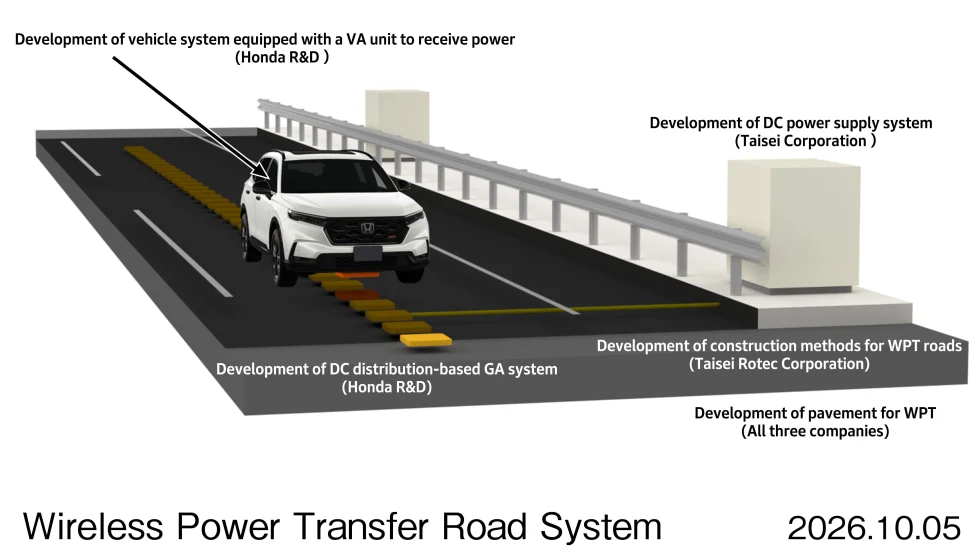
Charging In Motion
Honda has been researching wireless in-motion charging for electric vehicles since 2025, and new technology developments have put it a step closer to a final product.
Read More →
Twin Cities Stores Sell
Minnesota-based Walser Automotive Group made what it called the most significant acquisition in its history with a three-rooftop deal in Minneapolis.
Read More →
U.S. Auto Sales Still Below Prepandemic Levels
Mobility Global industry observers don’t expect the market to return to the higher volumes that became routine before Covid but to stay well below its potential.
Read More →
The Powertrain Shift
Electric-vehicle owners are backpedaling, according to new data, with product availability driving many to shift back to gas-powered engines.
Read More →
Achromatic Autos
The shades that dominate the U.S. car market don’t call attention to themselves, though grayscale may have plateaued after a 30-year upswing, research shows.
Read More →
Used-Vehicle Affordability Worsens
Listing prices in August defied seasonal trends, rising above $27,000 for the second time this year.
Read More →