


The Integrated Industry: Software Fact or Fiction?


The Integrated Industry: Software Fact or Fiction?
It is amazing that in 2010, 50 years into the Information Age, one of the toughest problems we face in our industry is the integration of various mission-critical software applications with the typical dealership management system (DMS). P&A Magazine spoke with industry experts about the current “State of the Industry” as it pertains to integration. Although roadblocks still exist, progress is being made.
No doubt, it is an interesting time for software providers and DMS companies. This relationship continues to evolve as software companies look for efficient, affordable, secure ways to access the data they need.
IAS, an ancillary product provider and third-party software developer, has been able to access the DMS companies' open architecture by using their certification/approval program. Widespread acceptance and utilization of Internet web services has sped up development and allows for simple business-to-business communication.
"The DMS providers we work with have outstanding support and documentation for the interfaces they provide," says Matt Nowicki, director of information technology for IAS. He says the same is true for the various product providers and administrators IAS works with.
However, some software providers are still wary of working directly with a DMS company and continue to use homegrown or third-party “hostile” interfaces to access data on the DMS.
"The problem with this is security," Nowicki says. “Most dealers in America do not truly understand or appreciate the fact that most hostile interfaces expose their data in a very insecure way."
It is now the law that dealers take measures to ensure the confidentiality of customer data and DMS providers share in the responsibility of this effort.
"If DMS providers don’t lock down their systems, they will surely be named in future lawsuits when the inevitable happens: customer data gets stolen en masse from a dealer’s system," Nowicki adds.
The issue of security ultimately leads to questions about who owns a dealer's data. This is an age-old question and the answer is not so straightforward: consider, for example, a customer’s Social Security number or birth date. The dealer certainly holds the data, but that does not mean he can do anything he wants with it.
"In our opinion, the dealer owns the dealer’s data, but we understand that many partners review and use that data," says Patrick DeMarco, president of Ristken Software Services. "The ownership of the data is less important than how various partners use that data to provide better services for the industry."
The sensitivity of some customer and employee information should make dealers think carefully about the kind of interface that is in place and the potential that exists for data to be exposed to third parties.
Standardizing and Streamlining the Process
Bob Corbin, president and CEO of IAS, says data standardization is still a concern today. How one product provider defines "in-service" data can differ from provider to provider and from software application to software application.
To address this issue, IAS supports electronic rating and contracting for many VSC providers using its certified interface.
"IAS private labels products and software for many providers that simply don’t have the resources or desire to invest in what is necessary to accomplish this degree of standardization," Corbin says.
Fortunately, multiple data entry of the same basic customer information into disparate software applications is becoming a thing of the past.
While a streamlined process is already possible, the involvement of multiple vendors is still an issue, says David Trinder, CEO of F&I Administration Solutions. Until all the DMS providers open their systems to third-party vendors, full integration will always be a challenge.
DeMarco says, "The good news is that both the DMS providers and the application providers realize that eliminating double entry is a win-win solution." Ristken has certification agreements with all the major DMS providers, which provides dealers with full integration.
"As we look to the future, I think you will see a consolidation of application providers who can provide dealerships with full integration capabilities," DeMarco adds. "The main objective is that we all align our goals in assisting the dealers with selling and servicing vehicles."
Moving Toward a Paperless Office
To achieve an ideal DMS-integrated environment, the dealer will play a key role in securing his own system and forcing software providers to develop direct agreements with each DMS provider. This need will only become more critical as a growing number of parties try to access sensitive customer data.
Likewise, an ideal product-integrated environment would include the electronic generation and submission of all documents used in the F&I department. Generating electronic contracts has been a priority for a number of years, but there are still challenges to overcome.
"Part of the issue [with generating contracts electronically] is that there is a lot of paper that gets printed in the F&I office other than product warranties including odometer statements, the LAW contract, etc.," IAS's Nowicki explains.
Fortunately, when full integration finally becomes a reality, there will be few losers in the industry. Third-party "data brokers" and those that refuse to switch from a hostile interface will not fare well, but everyone else will benefit.
"DMS providers may feel like the losers at first, but they will be the winners in the end because dealers will no longer be so upset about their approach to integration," Trinder says.
Furthermore, certified vendors would have stable integration, dealers would maintain secure data and the F&I department and other end users could count on a reliable interface.
Achieving these ideals would translate into faster turnaround in F&I with more accurate results. Cancellations would decline, chargebacks would be eliminated and errors would be minimized.
Despite the barriers that must still be overcome, Nowicki is optimistic about the industry's ability to achieve these ideals.
"I expect that by the end of this decade – 2020 – either all or the vast majority of F&I offices will be paperless, at least from a backend processing standpoint," he says.
More Product & Technology

Integrating AI Into Your Admin System
It’s important for finance-and insurance administrators to build the technology into their existing systems instead of bolting it on.
Read More →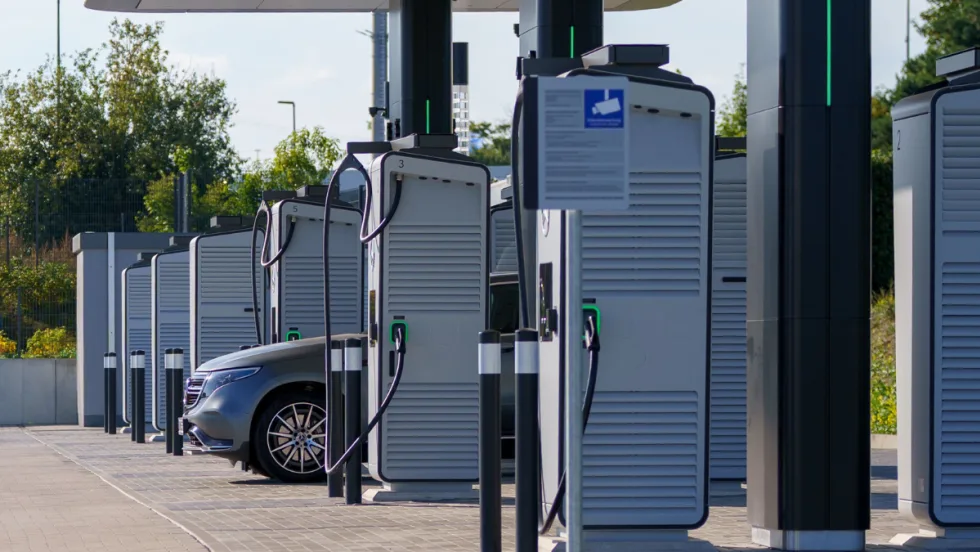
Public EV Charging Improves
The infrastructure buildout in the U.S. is providing more availability and safety at a better cost, according to the latest EV experience study by JD Power.
Read More →
AI in the Dealership
A Cox Automotive poll shows most dealers use it, but only some have found the smartest ways to adapt the surging technological sensation.
Read More →
AAA Honors Service and Repair Facilities
Three automotive dealerships made AAA's Service Providers of Excellence and Best in Repair list this year.
Read More →
EFG Launches Product Admin Platform
The company says the offering is designed to empower administrators, service contract providers, and product marketers to expand automotive and power-sports capabilities.
Read More →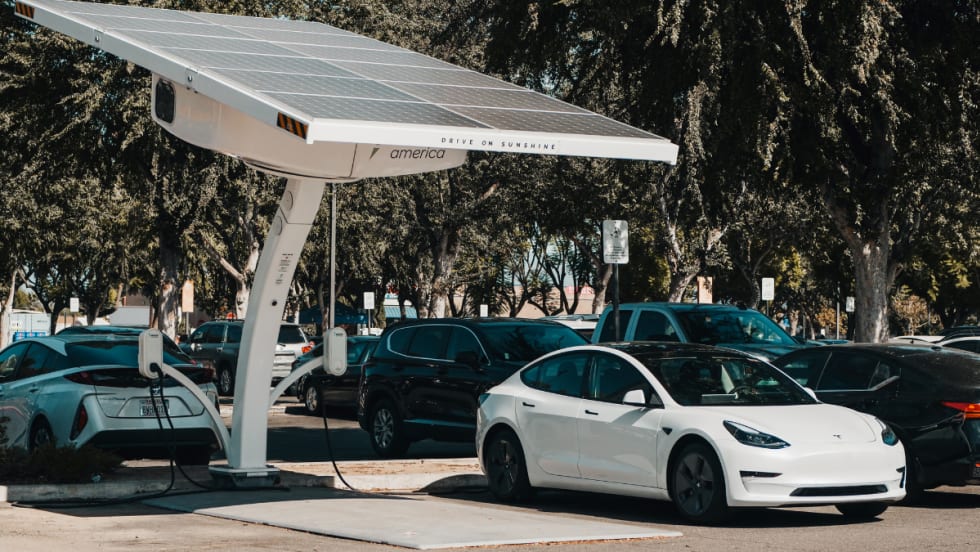
Optimized Charging Could Reduce Costs
According to an Alliance for Automotive Innovation analysis, optimized EV charging could cut costs for drivers and improve grid infrastructure - potential adoption incentives.
Read More →
From Inspection to Impact
Data, video and artificial intelligence are driving service performance today, when inspection performance is closely tied to key business outcomes.
Read More →
Car Karaoke Gets Official Platform
The in-vehicle karaoke and sing-along platform by Samsung arm is meant to add traveling enjoyment safely in technology that automakers can tailor to their specific needs.
Read More →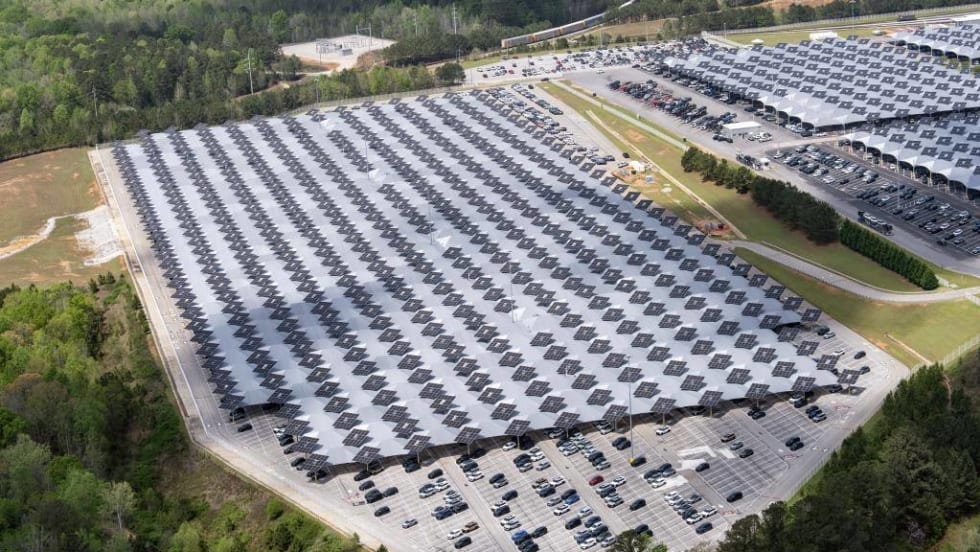
Kia Embraces Clean Energy
A Kia Georgia partnership combines weather protection and renewable energy in a new solar canopy system at Kia’s West Point facility.
Read More →
Honda-Sony Venture Dismantled
For nearly four years, the companies had worked toward the launch of the electric-vehicle brand’s first two models, but the shifting EV market scuttled the plans.
Read More →