


Asbury ‘Comfortable With’ CFPB Limits on Dealer Markup

DULUTH, Ga. — Asbury Automotive executives were confident during a quarterly earnings call Tuesday that the group’s internal cap on dealer markups, as well as its fixed F&I product prices, will keep it out of trouble with regulators like the Consumer Financial Protection Bureau (CFPB).
Craig Monaghan, Asbury’s president and CEO, said he didn’t know if rumors of possible action against Toyota Motor Credit and Nissan Motor Acceptance by the CFPB were true. But the regulator’s $24 million settlement with Honda Finance — and the captive’s resulting compensation policy that limits dealer discretion — didn’t faze the executive.
“… I think what we would say is that if [the actions against Toyota and Nissan’s captives] all go the same direction that Honda and BB&T [Bank] went, that's something that we could be comfortable with,” Monaghan told callers. BB&T Bank switched to a flat-fee dealer compensation model at the beginning of the month.
“… With Honda and BB&T moving to these flat rates, flat fees or rate caps, essentially, if you were to convert that into a dollar basis, that would allow us to generate F&I finance, [profits per vehicle retail] that are pretty much in line with what we already see today,” the CEO noted. “So we think that's something that we can manage through, and really don't expect any bump in the business as we continue to move forward.”
The dealer group realized an uptick in F&I business during the quarter, reporting a 16% increase in revenue compared to the prior-year period. F&I revenue was at $67.6 million during the quarter — up from $58.4 million. F&I profit per vehicle retailed for the quarter was $1,373, up $42 on a year-over-year basis.
David Hult, the dealer group’s COO and executive vice president, attributed much of that increase to product sales. “Our focus is on product sales, and we feel like that's what's driving our growth,” he noted. “And tough, again, to predict the future, but we see opportunity to grow more.
“Rate is not nearly what it used to be as far as the percent of profit per car, and it's down dramatically,” he continued. “So, it's really all on the product side. As far as finance penetration year-over-year, it's pretty flat.”
Asbury also reported increases elsewhere. Total revenue increased 12% to $1.7 billion, while new-vehicle revenues increased 11%. Revenue from used-vehicle sales increased 15%, while parts and service gross profit was up 14%. Total gross profit was up 9%.
But one area that was lagging was Asbury’s standalone used-car outlets, called Q Auto stores. The stores employ a one-price sales model that is driven by product specialists who handle deals from start to finish using an iPad. The stores saw a loss of $0.02 earnings per share in the second quarter.
Monaghan told callers that the dealer group is currently rolling out a “major piece of technology” in Q Auto stores to increase efficiency, but he noted that the group will not take any further steps until Q Auto locations achieve profitability.
“… We think Q Auto has the potential to be a huge business for us,” the executive added. “But we've got to solve the riddle.”
More Industry
Charger Network Growth Slows
Despite a projected increase in public EV chargers in 2026, charging infrastructure remains a top concern for consumers as the gap between the most and least EV-friendly places remains substantial.
Read More →
Lenders, Consumers Take on More Auto Loan Risk
September records loosened credit access the most in over a decade as buyers took advantage of the conditions to afford trading, though loan applications fell.
Read More →
Next-Gen Hybrids in Sight
Dealerships can expect to see revamped hybrids from Honda next year as the company rolls out a new system and model lineup.
Read More →
Gem State Stores Change Hands
A larger auto group founded in the industry’s early years sold two franchises to a neighbor group that's on a growth spurt.
Read More →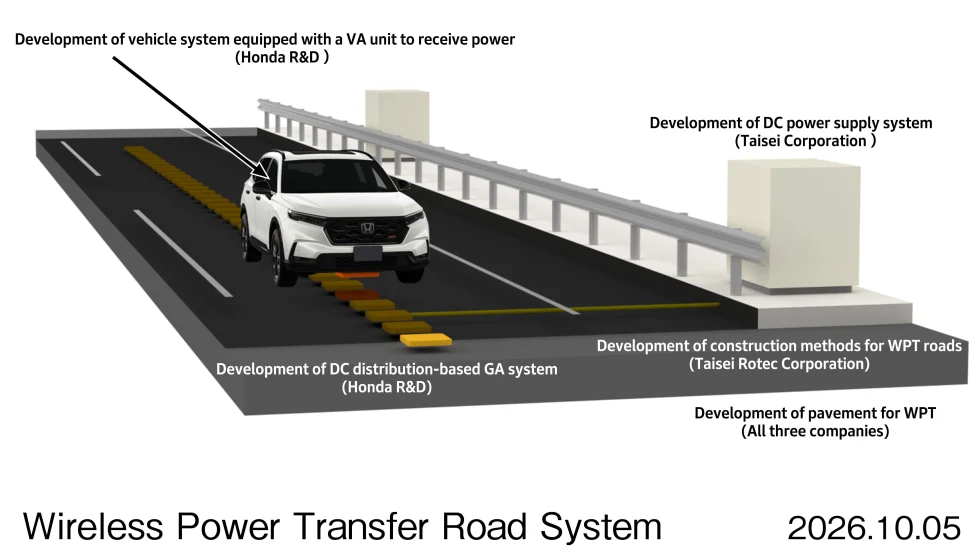
Charging In Motion
Honda has been researching wireless in-motion charging for electric vehicles since 2025, and new technology developments have put it a step closer to a final product.
Read More →
Twin Cities Stores Sell
Minnesota-based Walser Automotive Group made what it called the most significant acquisition in its history with a three-rooftop deal in Minneapolis.
Read More →
U.S. Auto Sales Still Below Prepandemic Levels
Mobility Global industry observers don’t expect the market to return to the higher volumes that became routine before Covid but to stay well below its potential.
Read More →
The Powertrain Shift
Electric-vehicle owners are backpedaling, according to new data, with product availability driving many to shift back to gas-powered engines.
Read More →
Achromatic Autos
The shades that dominate the U.S. car market don’t call attention to themselves, though grayscale may have plateaued after a 30-year upswing, research shows.
Read More →
Used-Vehicle Affordability Worsens
Listing prices in August defied seasonal trends, rising above $27,000 for the second time this year.
Read More →