


BMW Cuts Margin Forecast for 2022
BMW reports 2022 margins will be lower because of the Russia-Ukraine conflict.

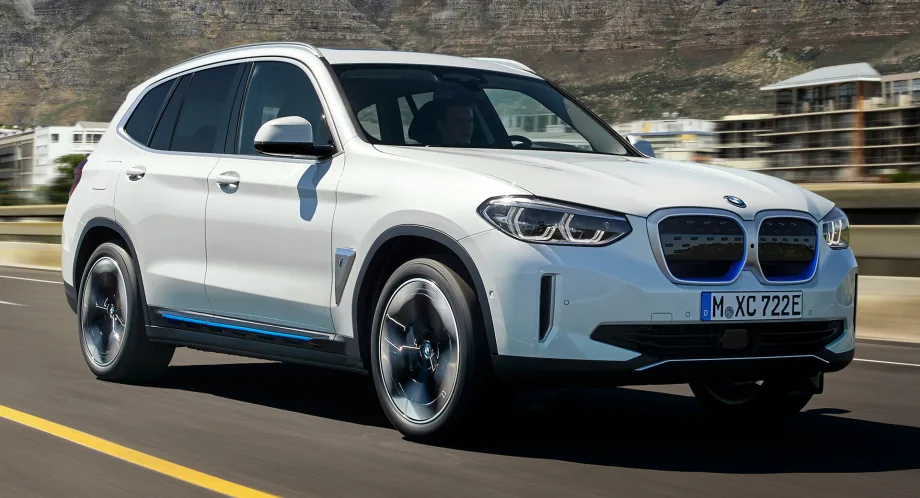
BMW all-electric iX3 SUV
BMW
BMW halted production of its iX electric SUV at BMW's factory in Dingolfing, Germany, because of a shortage of wire harnesses from Ukraine.
The company lowered its profit margins for the automotive segment in 2022 due to the war in Ukraine, which it expects to cause supply disruptions and weigh on the global economy.
BMW now predicts its car segment margin before interest and taxation (EBIT) to be 7% to 9% compared to 10% margins in 2021. Without the war, BMW forecasted a range of 8% to 10%.
While the automaker reports it can source some parts from western Ukraine and had engaged suppliers in other locations worldwide to maintain production, BMW expects further production interruptions in coming weeks.
The automaker forecasted a higher number of vehicles this year, but now expects to hit 2021 levels. BMW sold a record 2.52 million vehicles in 2021 despite semiconductor shortages, and had a 10.3% EBIT margin for 2021, the highest since 2017.
BMW reports the war in Ukraine complicates the ability to give accurate guidance for 2022 and that it could not factor any potential long-term implications into its forecast. CEO Oliver Zipse remained optimistic that the company could overcome the wire harness shortage on Bloomberg Television
He said, “BMW has more than a single supplier in Europe and is able to cope with the situation.”
But the company does not expect to see the semiconductor shortage improving until later in 2022.
BMW reported that 15 fully electric models to be in production this year and highlighted the rollout of the new i7 luxury sedan.
The company is also at work developing new battery technology and could deliver early on its target of having fully battery-powered vehicles making up half its global sales by 2030.
The automaker expects overall earnings, including its finance and motorcycle segments, to increase significantly in 2022, helped by the full consolidation of its Chinese BMW Brilliance joint venture. This BMW Chinese venture assembles BMW-branded models for sale in China and the all-electric iX3 SUV, which the company exports to global markets.
Originally posted on Auto Dealer Today
More Industry

Charger Network Growth Slows
Despite a projected increase in public EV chargers in 2026, charging infrastructure remains a top concern for consumers as the gap between the most and least EV-friendly places remains substantial.
Read More →
Lenders, Consumers Take on More Auto Loan Risk
September records loosened credit access the most in over a decade as buyers took advantage of the conditions to afford trading, though loan applications fell.
Read More →
Next-Gen Hybrids in Sight
Dealerships can expect to see revamped hybrids from Honda next year as the company rolls out a new system and model lineup.
Read More →
Gem State Stores Change Hands
A larger auto group founded in the industry’s early years sold two franchises to a neighbor group that's on a growth spurt.
Read More →
Charging In Motion
Honda has been researching wireless in-motion charging for electric vehicles since 2025, and new technology developments have put it a step closer to a final product.
Read More →
Twin Cities Stores Sell
Minnesota-based Walser Automotive Group made what it called the most significant acquisition in its history with a three-rooftop deal in Minneapolis.
Read More →
U.S. Auto Sales Still Below Prepandemic Levels
Mobility Global industry observers don’t expect the market to return to the higher volumes that became routine before Covid but to stay well below its potential.
Read More →
The Powertrain Shift
Electric-vehicle owners are backpedaling, according to new data, with product availability driving many to shift back to gas-powered engines.
Read More →
Achromatic Autos
The shades that dominate the U.S. car market don’t call attention to themselves, though grayscale may have plateaued after a 30-year upswing, research shows.
Read More →
Used-Vehicle Affordability Worsens
Listing prices in August defied seasonal trends, rising above $27,000 for the second time this year.
Read More →