


BMW, Toyota Back on Top as America's Most-Shopped Vehicle Brands
High gas prices lead more shoppers to consider traditional sedans and hybrids in the first quarter of 2022, likely benefiting Toyota.

High gas prices lead more shoppers to consider traditional sedans and hybrids in the first quarter of 2022, likely benefiting Toyota.
ATLANTA – BMW and Toyota returned to their long-held spots as America's most-shopped vehicle brands in their respective segments, after being upended late last year, according to the Q1 2022 Kelley Blue Book Brand Watch™ reports.
Toyota regained the top spot as the most-shopped non-luxury brand, a position it had held for four years until Ford's brief occupation as No. 1 in the final quarter of 2021. Likewise, BMW retook its spot as the most-shopped luxury brand in the first quarter of 2022, a position it occupied for three years until the end of 2021 when Lexus nosed past and into the top spot.
Kelley Blue Book Brand Watch is a consumer perception survey that also weaves in shopping behavior to determine how vehicle brands and models stack up with segment competitors when it comes to consumer shopping. Kelley Blue Book produces separate Brand Watch reports for non-luxury and luxury brands each quarter. A special look at electrified vehicle shopping is also included. The latest Brand Watch work included surveying both mobile and desktop users to provide an even broader view of vehicle shopping; the survey previously included results only from desktop users.
"High fuel prices and a few high-profile product launches really shuffled the order in the Q1 Kelley Blue Book Brand Watch," said Vanessa Ton, senior research and market intelligence manager at Cox Automotive. "Shopping for traditional sedans, which are often more affordable and efficient than SUVs and trucks, jumped up in Q1 after years of declining. Fuel prices clearly influenced shopping behavior."
High Gas Prices Influence Shopping Behavior
With gas prices setting new records in March and vehicle affordability worsening, many shoppers in Q1 looked for more efficient, more affordable sedans. Of non-luxury shoppers, 37% considered cars in the first quarter, up from 31% in Q4 2021 and the highest level in a long time.
In the final quarter of 2021, no traditional cars were among the top-ten most-shopped vehicles, but that changed in the first quarter of this year when three cars – Honda Accord and Civic and Toyota Camry – returned to the most-shopped list. Even on the luxury side, fuel efficiency climbed from No. 10 to No. 7 in the factors most important to shoppers.
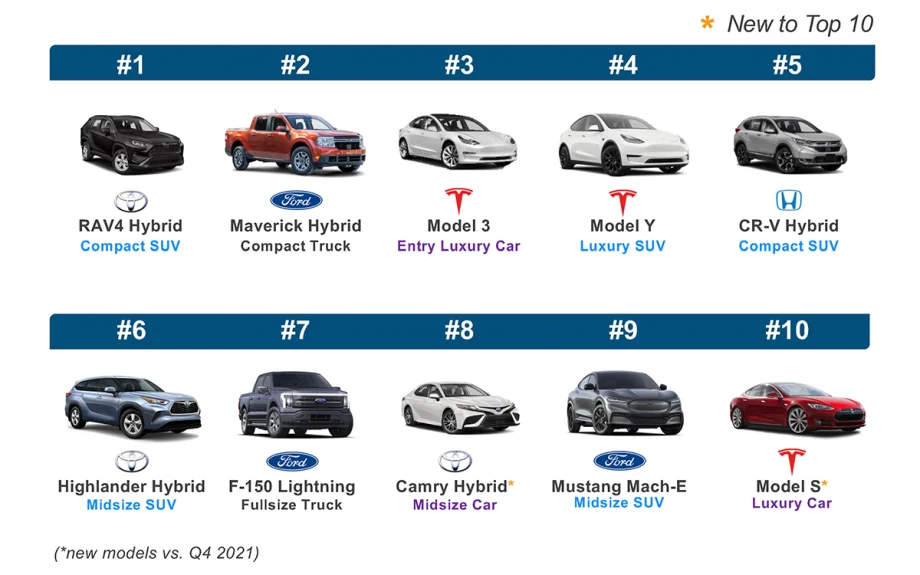
High fuel prices likely helped drive interest in electrified vehicles as well. In Q1, one-in-four shoppers considered an electrified vehicle, particularly EVs and hybrids, a trend likely to accelerate as new models hit showrooms. The top 10 most-shopped electrified vehicles were split evenly between hybrids and EVs. Ford, Tesla and Toyota dominated the list with three models each. The Honda CR-V Hybrid rounded out the top 10.
Still, even with high gas prices and rising costs, SUVs remained king of new-vehicle shopping consideration. Of all non-luxury vehicle shoppers, 66% considered an SUV, a level that has held steady for some time, while 35% shopped pickup trucks, the same as the end of 2021. In Q1, 5% of vehicle shoppers considered minivans, up from 4% at the end of 2021.
Chevrolet and Dodge Consideration Jumps in Q1
Consideration for the Silverado soared, and, for the first time, the Silverado surpassed the Ford F-150 as the most-shopped pickup truck in the quarterly Kelley Blue Book survey. The Silverado was buoyed by GM's announcement in January – with a high-profile Super Bowl ad – of an electric model arriving next year, which stimulated shopping interest and significant media buzz during the quarter.
Dodge was another winner in the quarter. The brand's shopping consideration doubled, driven largely by a notable increase in shopping for the Durango SUV. The Charger and Challenger muscle cars also saw higher shopping consideration in the first quarter.
In the dozen factors most important to non-luxury shoppers, another Stellantis brand – Ram – took the most honors, ranking in 10 of the 12 categories, including Safety, Driving Comfort, and Interior Layout. Honda was second, scoring in 7 of the 12 categories, with top billing in Affordability and Fuel Efficiency. Toyota was third, ranking in 6 of the 12 categories, including placing No. 1 in Durability/Reliability, the single most important factor to new-vehicle shoppers.
BMW Returns as Luxury Brand Leader
On the luxury side, BMW returned to its long-held spot as the most-shopped luxury brand in the first quarter on the strength of its popular and iconic 5 Series and 3 Series sedans. Lexus, which had nosed past BMW in the final quarter of 2021, fell to third place in the first quarter of 2022.
The big surprise was the surge by Cadillac to the No. 2 most-shopped luxury brand. The General Motors luxury brand showed the biggest gain in shopping activity on the strength of the Escalade SUV, which was the most-shopped luxury vehicle in the quarter for the first time.
The other surprise was the fall in shopping for Tesla, which dropped to the fifth most-shopped luxury brand from No. 3 at the end of last year. Still, even with shopping and consideration down, Tesla managed to post record U.S. sales in the quarter and gain market share.
Mercedes-Benz took the most honors in factors most important to luxury vehicle shoppers, ranking No. 1 in Driving Comfort, Interior Layout and Prestige/Sophistication. Scoring in 7 of the 12 categories, Mercedes-Benz placed in Safety, Technology, Durability/Reliability and Exterior Styling as well. Tesla was close behind, scoring in 6 of the 12 categories.
In the last quarter of 2021, Acura overtook Lexus to claim the top spot in the most important factor to shoppers: Durability/Reliability. Acura held onto that coveted top spot in Q1 2022 and scored in Affordability, Reputation, Fuel Efficiency, and Interior Layout.
Originally posted on F&I and Showroom
More Industry

Charger Network Growth Slows
Despite a projected increase in public EV chargers in 2026, charging infrastructure remains a top concern for consumers as the gap between the most and least EV-friendly places remains substantial.
Read More →
Lenders, Consumers Take on More Auto Loan Risk
September records loosened credit access the most in over a decade as buyers took advantage of the conditions to afford trading, though loan applications fell.
Read More →
Next-Gen Hybrids in Sight
Dealerships can expect to see revamped hybrids from Honda next year as the company rolls out a new system and model lineup.
Read More →
Gem State Stores Change Hands
A larger auto group founded in the industry’s early years sold two franchises to a neighbor group that's on a growth spurt.
Read More →
Charging In Motion
Honda has been researching wireless in-motion charging for electric vehicles since 2025, and new technology developments have put it a step closer to a final product.
Read More →
Twin Cities Stores Sell
Minnesota-based Walser Automotive Group made what it called the most significant acquisition in its history with a three-rooftop deal in Minneapolis.
Read More →
U.S. Auto Sales Still Below Prepandemic Levels
Mobility Global industry observers don’t expect the market to return to the higher volumes that became routine before Covid but to stay well below its potential.
Read More →
The Powertrain Shift
Electric-vehicle owners are backpedaling, according to new data, with product availability driving many to shift back to gas-powered engines.
Read More →
Achromatic Autos
The shades that dominate the U.S. car market don’t call attention to themselves, though grayscale may have plateaued after a 30-year upswing, research shows.
Read More →
Used-Vehicle Affordability Worsens
Listing prices in August defied seasonal trends, rising above $27,000 for the second time this year.
Read More →