


Cox: Franchised, Independent Dealers See Two Different Markets
Cox Automotive’s latest Dealer Sentiment Index shows a marked disparity in optimism and fear factors between America’s new- and used-car dealers.


Cox Automotive’s Dealer Sentiment Index ticked up two points for franchised dealers and down two points for independent dealers heading into the third quarter.
Photo courtesy Cox Automotive
ATLANTA — According to the Q3 2019 Cox Automotive Dealer Sentiment Index, U.S. automobile dealers view the current market as negative, with an index score of 48.
Analysts noted the slight decrease from Q2’s score of 49 was not statistically significant. The index reading of 48 indicates that slightly more dealers feel that the current market is weak compared to the number who feel the current market is strong.
In many measures, however, the assessment of the U.S. auto market depends on what type of dealer you ask. Franchised auto dealers expressed a mostly positive view of the market. Independent dealers offered a different perspective.
Franchised dealers, for example, feel the current market is strong, with an index score of 56, a two-point increase from Q2. Independent dealers, on the other hand, feel the current market is weak, with an index score in Q3 of 46, a two-point decrease from Q2.
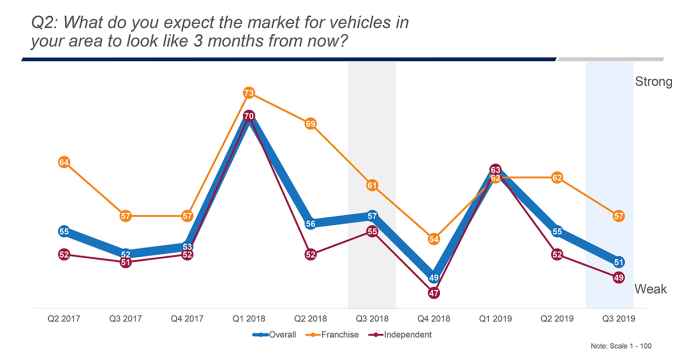
Expectations for the next quarter differ between the two groups as well. Franchised dealers continue to believe the market will remain strong, with an index score of 57. Independent dealers, conversely, expect the market to be weak in the next quarter. Their expectations score fell below 50 for only the second time since the CADSI began in Q2 2017.
“Sentiment consistently skews more positive for franchises compared to independents.”
For both groups, expectations for the future market are down from Q2 but still positive. The overall index score fell to 51 in Q3, below last year and last quarter. The decline in expectations was statistically significant from last quarter’s score of 55.
“Dealers are becoming less optimistic as they consider the future,” said Cox Automotive Chief Economist Jonathan Smoke. “We also continue to see a big difference in outlook by type of dealer, as sentiment consistently skews more positive for franchises compared to independents.”
When asked about factors holding back their businesses, dealers in aggregate reported no change from Q2 to Q3. “Market conditions” remained in the top spot as the most cited negative factor for both groups. “Competition” held in second place. “Limited inventory” remained No. 3, followed by “credit availability for consumers” and “expenses.”
Limited inventory and credit availability was more of a concern for independent dealers. Twenty-two percent of franchised dealers cited “staff turnover” as a top-five factor compared with only 5% of independent dealers.
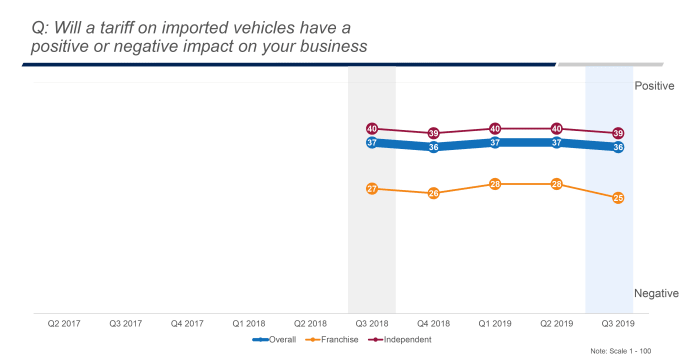
Both groups said costs continue to rise but agreed the threat of tariffs on imported vehicles and parts impacting their profitability is their most negative concern. Overall, only 8% of automobile dealers in the U.S. believe tariffs will have a positive impact on business profitability. Conversely, nearly six in 10 franchised dealers believe the impact will be negative. Independent dealers are more likely to see tariffs as having no impact on their business.
For the first time, dealers participating in the quarterly CADSI survey were asked about the state of the U.S. economy. On this front, there was perfect alignment between franchised and independent dealers. Both groups had an index score of 55, meaning more dealers feel the current U.S. economy is strong compared to the number who feel the current economy is weak.
To download the full report, click here.
Read: Dealer Sentiment ‘Remarkably Stable’ Despite Traffic, Profits
Originally posted on Auto Dealer Today
More Industry
Charger Network Growth Slows
Despite a projected increase in public EV chargers in 2026, charging infrastructure remains a top concern for consumers as the gap between the most and least EV-friendly places remains substantial.
Read More →
Lenders, Consumers Take on More Auto Loan Risk
September records loosened credit access the most in over a decade as buyers took advantage of the conditions to afford trading, though loan applications fell.
Read More →
Next-Gen Hybrids in Sight
Dealerships can expect to see revamped hybrids from Honda next year as the company rolls out a new system and model lineup.
Read More →
Gem State Stores Change Hands
A larger auto group founded in the industry’s early years sold two franchises to a neighbor group that's on a growth spurt.
Read More →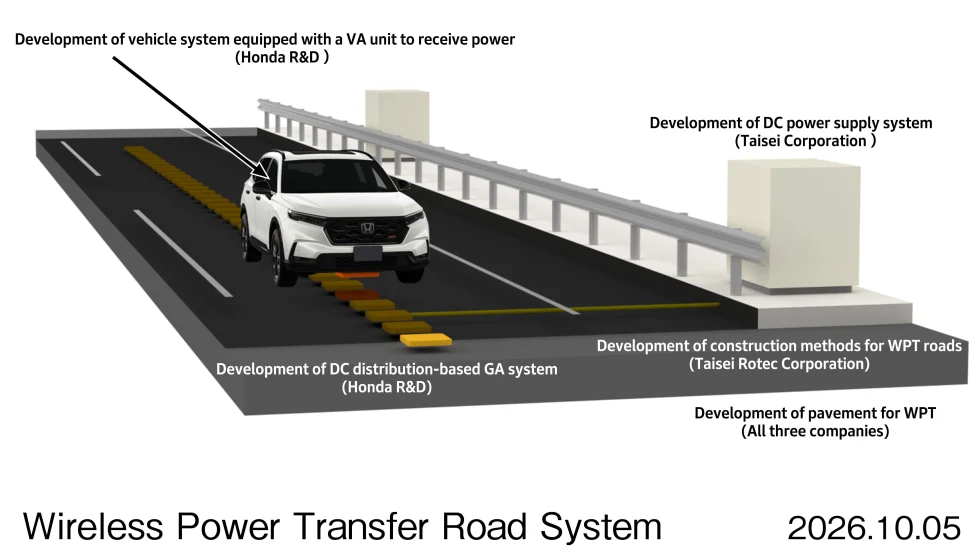
Charging In Motion
Honda has been researching wireless in-motion charging for electric vehicles since 2025, and new technology developments have put it a step closer to a final product.
Read More →
Twin Cities Stores Sell
Minnesota-based Walser Automotive Group made what it called the most significant acquisition in its history with a three-rooftop deal in Minneapolis.
Read More →
U.S. Auto Sales Still Below Prepandemic Levels
Mobility Global industry observers don’t expect the market to return to the higher volumes that became routine before Covid but to stay well below its potential.
Read More →
The Powertrain Shift
Electric-vehicle owners are backpedaling, according to new data, with product availability driving many to shift back to gas-powered engines.
Read More →
Achromatic Autos
The shades that dominate the U.S. car market don’t call attention to themselves, though grayscale may have plateaued after a 30-year upswing, research shows.
Read More →
Used-Vehicle Affordability Worsens
Listing prices in August defied seasonal trends, rising above $27,000 for the second time this year.
Read More →