


EV Market Continued to Evolve in Q2
Most EV buyers still holding onto gas-powered models, and most purchased EVs are in the luxury segment.

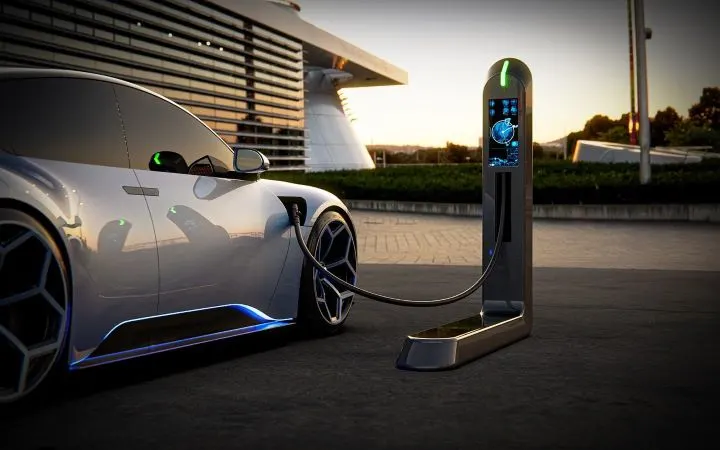
The ownership cost disparity between luxury and mass-market EVs and gas-powered models can be stark, according to a J.D. Power report.
IMAGE: Pixabay/LeeRosario
Two reports shed new light on the evolving electric-vehicle market, one pointing up the relative affordability versus gas-powered models between the premium and mass-market corners of the industry.
A second-quarter Experian report shows that EV adoption is growing, EV models making up 7.5% of U.S. new vehicle registrations, up from 5.7% year-over-year to 2.7 million.
But consumers who take the EV plunge still aren’t all-in. The report shows they tend to keep a gas-powered model in their back pockets, er, their garages, that is. It says a whopping 85% of EV buyers have both, likely due to limited charging infrastructure in many areas.
“As the infrastructure continues to develop, understanding consumers’ needs will enable automotive professionals to better assist them when finding something that fits their lifestyle,” said Kirsten Von Busch, Experian director of product marketing for automotive.
Affordability is another concern when it comes to switching from gas-powered vehicles. Tesla still dominates the EV market, with four of the five leading luxury EV models – and in fact, luxury models in general made up 77% of the U.S. EV market.
The ownership cost disparity between EV and gas-powered models can be stark and is likely hampering adoption. A new J.D. Power report shows that the average U.S. premium vehicle consumer pays 0.4% more for an EV than a comparable gas-powered model while the average mass-market buyer pays 18% more for an EV. It points out that the gap is significant when it comes EV adoption, which can be achieved only if automakers tap deeper into the mass market.
When cost of ownership over time is taken into consideration, the gap appears starker pocketbook-wise. Over five years, J.D. Power says premium compact EV sports-utility vehicle owners on average pay just $287 more than they would for a comparable gas-powered model, or a total of nearly $72,000. For a mass-market compact EV SUV, the difference is more than $9,000, or $60,736 total.
The gaps widen further when one compares the most affordable EVs in the two market segments and when leasing an EV, J.D. Power says.
A sign that the cost imbalance may be turning is the coming debut of the Chevrolet Equinox compact electric SUV, which J.D. Power says should be more comparable to a similar gas-powered model. It says the Equinox will reportedly have a $40,000 starting price and a later base-trim price of $30,000, making it in line with gas-powered compact SUVs.
Originally posted on Auto Dealer Today
More Industry

Charger Network Growth Slows
Despite a projected increase in public EV chargers in 2026, charging infrastructure remains a top concern for consumers as the gap between the most and least EV-friendly places remains substantial.
Read More →
Lenders, Consumers Take on More Auto Loan Risk
September records loosened credit access the most in over a decade as buyers took advantage of the conditions to afford trading, though loan applications fell.
Read More →
Next-Gen Hybrids in Sight
Dealerships can expect to see revamped hybrids from Honda next year as the company rolls out a new system and model lineup.
Read More →
Gem State Stores Change Hands
A larger auto group founded in the industry’s early years sold two franchises to a neighbor group that's on a growth spurt.
Read More →
Charging In Motion
Honda has been researching wireless in-motion charging for electric vehicles since 2025, and new technology developments have put it a step closer to a final product.
Read More →
Twin Cities Stores Sell
Minnesota-based Walser Automotive Group made what it called the most significant acquisition in its history with a three-rooftop deal in Minneapolis.
Read More →
U.S. Auto Sales Still Below Prepandemic Levels
Mobility Global industry observers don’t expect the market to return to the higher volumes that became routine before Covid but to stay well below its potential.
Read More →
The Powertrain Shift
Electric-vehicle owners are backpedaling, according to new data, with product availability driving many to shift back to gas-powered engines.
Read More →
Achromatic Autos
The shades that dominate the U.S. car market don’t call attention to themselves, though grayscale may have plateaued after a 30-year upswing, research shows.
Read More →
Used-Vehicle Affordability Worsens
Listing prices in August defied seasonal trends, rising above $27,000 for the second time this year.
Read More →