


New-vehicle Sales Slowed in June

DETROIT — Sales of new vehicles in the United States slowed in June, automakers and analysts said on Thursday, raising concerns that the market’s recovery could be stalling after months of slow but encouraging gains.
Sales by most carmakers were higher than 12 months ago, the midpoint of a miserable year for the industry, but below the levels for March, April and May, The New York Times reported.
Compared with May, sales last month were lower by 14 percent for Toyota, 13 percent for General Motors, 12 percent for Chrysler and 11 percent for the Ford Motor Company. Auto sales typically fall about 3 percent from May to June each year.
“People feel maybe a little better than they did at this time last year, but their personal financial situation really hasn’t changed a lot,” said Jessica Caldwell, the director of industry analysis at Edmunds.com, a Web site that tracks auto sales. “And until that starts to look better, they still don’t feel comfortable going into a dealership.”
For the first half of the year, the industry was on pace to sell about 11.2 million vehicles nationwide, up from 10.6 million last year. Edmunds estimates sales will total 11.5 million this year, while other forecasts are as high as 12.5 million.
“Even getting to 11.5 is going to be a struggle,” Caldwell said. Edmunds may reduce its forecast if sales do not improve in the coming months, she said.
But automakers say they remain optimistic that demand will improve in the second half of the year. George Pipas, Ford’s chief sales analyst, said the rebound of the industry from last year’s recession was not necessarily expected to be quick or smooth.
“It certainly looks like a modest recovery, which is what we predicted and which is what we’re going to get,” Pipas said in a conference call with analysts and reporters.
On a year-over-year basis, Ford sales rose 13 percent and G.M. sales were up 11 percent. G.M. sales increased 36 percent excluding the four brands it discontinued: Pontiac, Saab, Saturn and Hummer.
In the first half of 2010, G.M.’s active brands — Chevrolet, Buick, Cadillac and GMC — sold 12 percent more vehicles than the company sold a year ago with eight brands.
Chrysler sales rose 35 percent from June 2009, though analysts said much of the increase was the result of more deliveries to business and government customers. G.M. said a cut in so-called fleet sales was largely to blame for its decrease from May.
Chrysler sold 527,219 vehicles in the first half of the year, 48 percent of its full-year goal of 1.1 million.
The South Korean carmaker Hyundai, which has surged as price-conscious consumers seek less expensive but appealing alternatives to competitors’ offerings, said sales rose 35 percent in June and were on track to set a full-year record for the company.
In contrast, sales fell short of expectations again at Toyota, which continued to struggle to recapture momentum after recalling nearly nine million vehicles to fix defective accelerator pedals. Toyota’s sales rose 7 percent in June from a year ago and 10 percent in the first half of 2010 compared with 2009.
Toyota has been offering generous discounts, but they have not been as effective in recent months as they were when introduced.
Toyota’s problems grew Thursday, when company officials in Japan said 270,000 of its vehicles, including some Lexus luxury cars, might have faulty engines. Last week, the company stopped selling a Lexus hybrid car, the HS 250h, and recalled 17,000 of them to address a potential fire hazard.
The research firm J. D. Power and Associates estimated that so-called retail sales, which exclude bulk deliveries to business and government customers, declined to an annualized rate of 8.5 million vehicles. The annualized retail selling rate, a measure that accounts for seasonal variations in vehicle demand, was 8.9 million in May and 9.6 million in March and April.
“It appears that the volatility in the stock market and downbeat economic reports have caused a decrease in consumer confidence, leading to a self-fulfilling prophecy,” Jeff Schuster, J. D. Power’s executive director of global forecasting, said. “Consumers are clearly hunkering down in light of the current environment, waiting for signs of a renewed recovery.”
More Industry
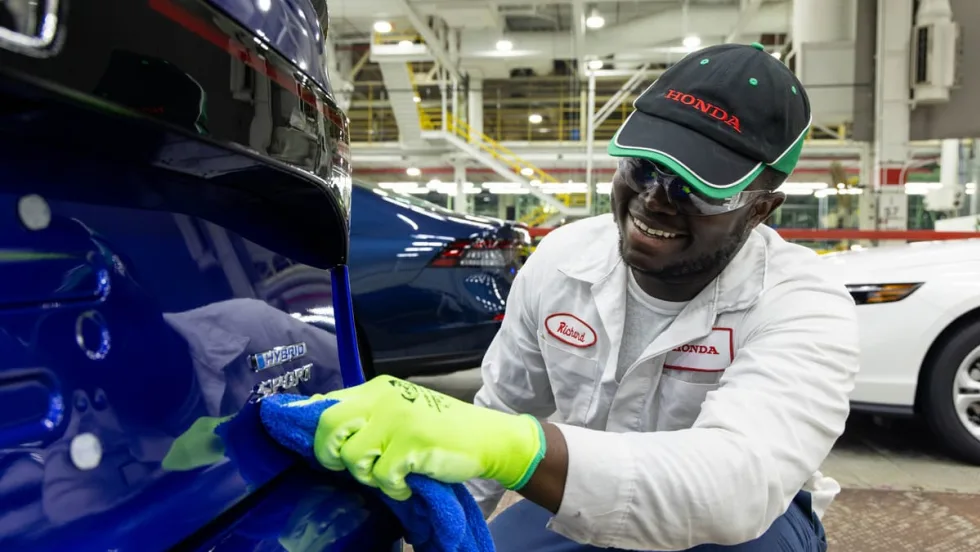
Honda Embraces Hybrid Fever
The automaker plans a new Ohio factory, along with investments in existing U.S. and Canadian plants, to significantly boost hybrid production here.
Read More →
Dealerships Must Show Up Where It Matters
How car buyers find your dealership has fundamentally changed. New evidence reveals the importance of your presence on social media, Google search, and large language models.
Read More →
CPO Sales Could Take Off in the Right Conditions
A recent Cox Automotive consumer survey reveals the size of an undertapped market for the vehicle segment given affordability pressures.
Read More →
Global Consumer Trends Diverge
Price remains a top consideration for U.S. car buyers, and they are the most brand-loyal consumers to established automakers, according to a new survey.
Read More →
Badger State Dealership Gets New Owner
The longtime southern Wisconsin store moved from one area auto group to another, keeping the business in Dairyland.
Read More →
The Cycle of Negative Equity
Third-quarter data shows consumers still rolling over debt and stretching loan terms, raising their risk of remaining underwater.
Read More →
Charger Network Growth Slows
Despite a projected increase in public EV chargers in 2026, charging infrastructure remains a top concern for consumers as the gap between the most and least EV-friendly places remains substantial.
Read More →
Lenders, Consumers Take on More Auto Loan Risk
September records loosened credit access the most in over a decade as buyers took advantage of the conditions to afford trading, though loan applications fell.
Read More →
Next-Gen Hybrids in Sight
Dealerships can expect to see revamped hybrids from Honda next year as the company rolls out a new system and model lineup.
Read More →
Gem State Stores Change Hands
A larger auto group founded in the industry’s early years sold two franchises to a neighbor group that's on a growth spurt.
Read More →