


Report Ranks States on Transportation Spending
California, Massachusetts and Vermont came out on top for what the Natural Resources Defense Council considers their sustainable and equitable transportation plans.

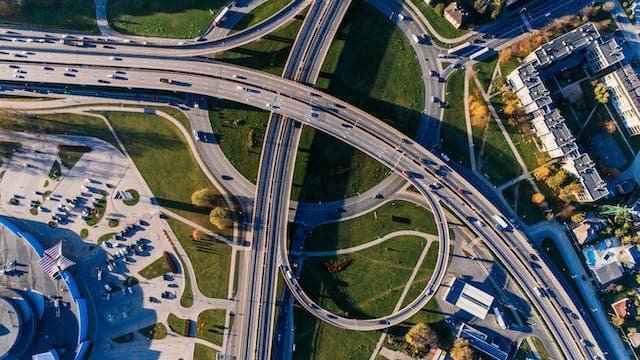
The report suggests funding is needed for vehicle charging stations, public transportation, and bicycle and pedestrian projects, rather than solely highway expansion.
IMAGE: Pexels
The Natural Resources Defense Council, in a new scorecard ranking states on their transportation policies and spending priorities, places California, Massachusetts and Vermont highest.
Alaska, Montana and Mississippi came in at the bottom of the "Getting Transportation Right: Ranking the States in Light of New Federal Funding" scorecard.
The ranking comes two years after passage of the Bipartisan Infrastructure Law, which provided new funding for bridges, roads, bike infrastructure and public transportation. It emphasizes funding for vehicle charging stations, public transportation and bicycle and pedestrian projects, rather than solely highway expansion.
“With the infrastructure law in place, this is a historic opportunity to invest in the kinds of transportation projects that will address inequity while tackling the climate crisis,” said John Bailey, the council's transportation advocate and the scorecard’s co-author, in a press release.
“We can’t shovel new money into the policies and plans of the past. Instead of just pouring more pavement, states need to invest on the best ways to move people to opportunity, reconnect communities, and build a climate-safe transportation sector.”
The report grades and ranks states based on transportation plans for sustainability and equity. It evaluates efforts against 22 key metrics, including procurement practices, electric-vehicle rebate programs, emissions reduction goals, road maintenance prioritization, and clean-car standards.
The report can help states prioritize projects, according to Shruti Vaidyanathan, the council's director of federal transportation.
“The scorecard provides a clear roadmap for state leaders to invest in projects that will provide real benefits to their residents while building a sustainable transportation system."
Originally posted on Auto Dealer Today
More Industry

Charger Network Growth Slows
Despite a projected increase in public EV chargers in 2026, charging infrastructure remains a top concern for consumers as the gap between the most and least EV-friendly places remains substantial.
Read More →
Lenders, Consumers Take on More Auto Loan Risk
September records loosened credit access the most in over a decade as buyers took advantage of the conditions to afford trading, though loan applications fell.
Read More →
Next-Gen Hybrids in Sight
Dealerships can expect to see revamped hybrids from Honda next year as the company rolls out a new system and model lineup.
Read More →
Gem State Stores Change Hands
A larger auto group founded in the industry’s early years sold two franchises to a neighbor group that's on a growth spurt.
Read More →
Charging In Motion
Honda has been researching wireless in-motion charging for electric vehicles since 2025, and new technology developments have put it a step closer to a final product.
Read More →
Twin Cities Stores Sell
Minnesota-based Walser Automotive Group made what it called the most significant acquisition in its history with a three-rooftop deal in Minneapolis.
Read More →
U.S. Auto Sales Still Below Prepandemic Levels
Mobility Global industry observers don’t expect the market to return to the higher volumes that became routine before Covid but to stay well below its potential.
Read More →
The Powertrain Shift
Electric-vehicle owners are backpedaling, according to new data, with product availability driving many to shift back to gas-powered engines.
Read More →
Achromatic Autos
The shades that dominate the U.S. car market don’t call attention to themselves, though grayscale may have plateaued after a 30-year upswing, research shows.
Read More →
Used-Vehicle Affordability Worsens
Listing prices in August defied seasonal trends, rising above $27,000 for the second time this year.
Read More →